

Undersea Battlefield
How conventional submarines are redefining the strategic balance in the IOR
Junaid Suhais
Navalists of the Cold War era argued, with considerable justification, that nuclear submarines were the decisive undersea instruments. They offered unlimited endurance, high transit speeds, and the ability to operate in any ocean without the exposure risk of a snort cycle (snorkeling). The logical corollary was that conventional submarines, however sophisticated, were relegated to the littoral, the choke point, and the defended anchorage. They were tactical instruments in a strategic competition dominated by the SSN.
That framing was constructed for specific strategic geography: the North Atlantic and the Western Pacific, where ranges were vast, transit corridors predictable, and the operational premium on high-speed passage was acute. It was never an accurate description of the Indian Ocean.
The Indian Ocean is not the Atlantic. It is a semi-enclosed basin bounded at its northern terminus by the Indian subcontinent, shaped at its western approaches by the Arabian Peninsula and the Horn of Africa, and punctuated at its eastern exits by the archipelagic chokepoints of the Indonesian archipelago. The consequence of this geography is that the ocean’s principal strategic corridors compress into narrow transits of acute tactical significance: the Strait of Hormuz, through which roughly 21 million barrels of petroleum flow daily; the Bab-el-Mandeb, through which approximately 6.2 million barrels move each day; the Strait of Malacca, transited by an estimated 90,000 vessels annually; and the Sunda and Lombok Straits, which offer alternative passages but impose their own geographic and acoustic constraints.
These chokepoints share three characteristics that render them extraordinarily hospitable to conventional submarine operations. First, they impose depth constraints. The Strait of Hormuz averages between 35 and 90 metres in its navigable channels. The Bab-el-Mandeb’s main channel rarely exceeds 100 metres. At such depths, nuclear submarines sacrifice many of their acoustic and manoeuvring advantages while conventional submarines, optimised for littoral operations, operate within their designed performance envelope. Second, they concentrate traffic into predictable corridors, reducing the area-search problem that makes open-ocean interception operationally demanding. Third, the acoustic environment in high-traffic, shallow-water straits is inherently complex: propeller cavitation from commercial shipping, biological noise, salinity gradients, and thermal layering collectively degrade passive sonar performance and extend the detection ranges that a competent SSK crew requires to survive.
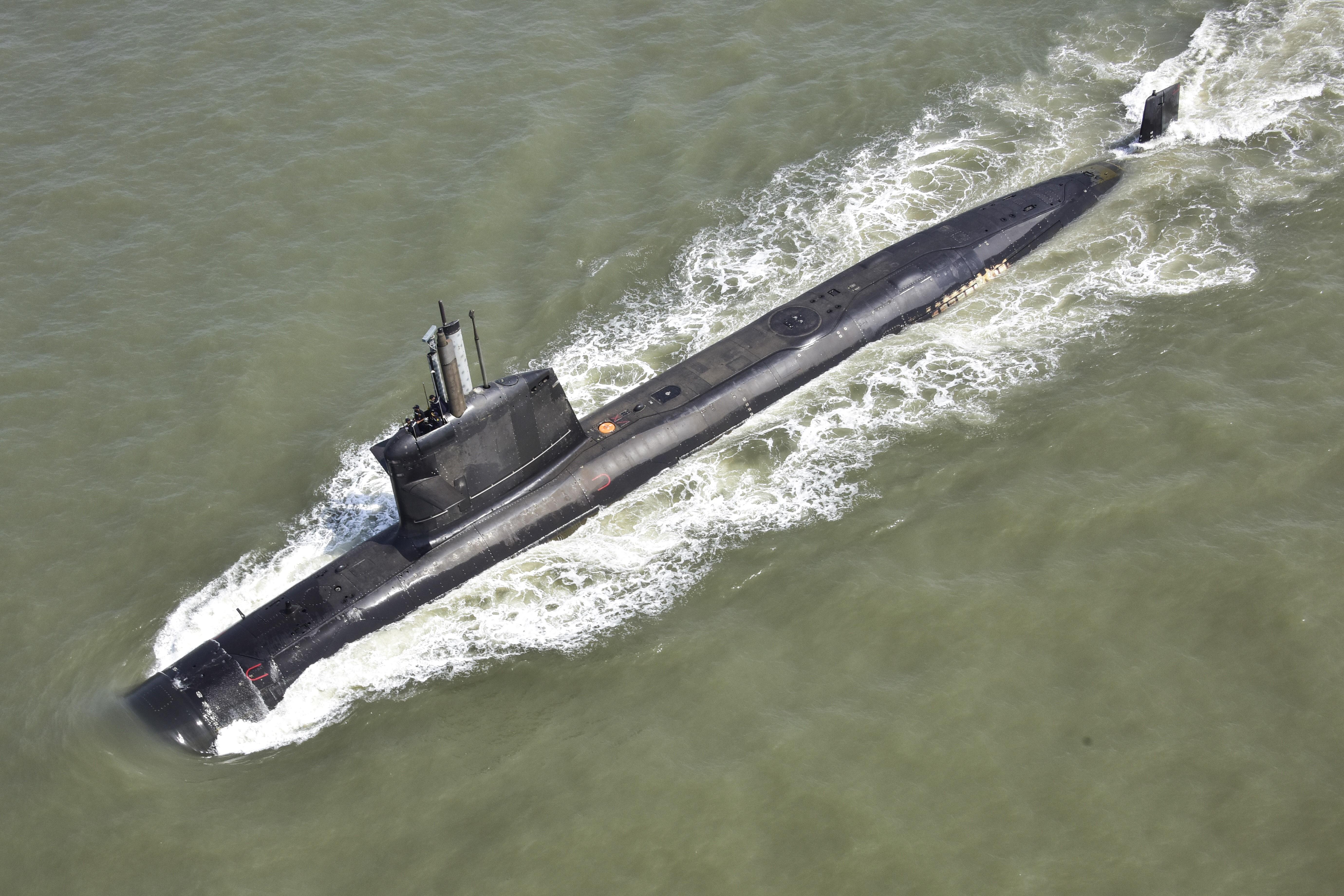
The strategic implication is both simple and consequential. In the Indian Ocean, geography does not merely favour conventional submarines as coastal defenders. It makes them instruments capable of threatening the seaborne commerce upon which every regional economy depends, of interdicting naval force movements through critical transits, and of imposing disproportionate costs on adversaries with expensive, deep-water-optimised Anti-Submarine Warfare (ASW) assets. The ocean’s geometry is a force multiplier for the SSK.
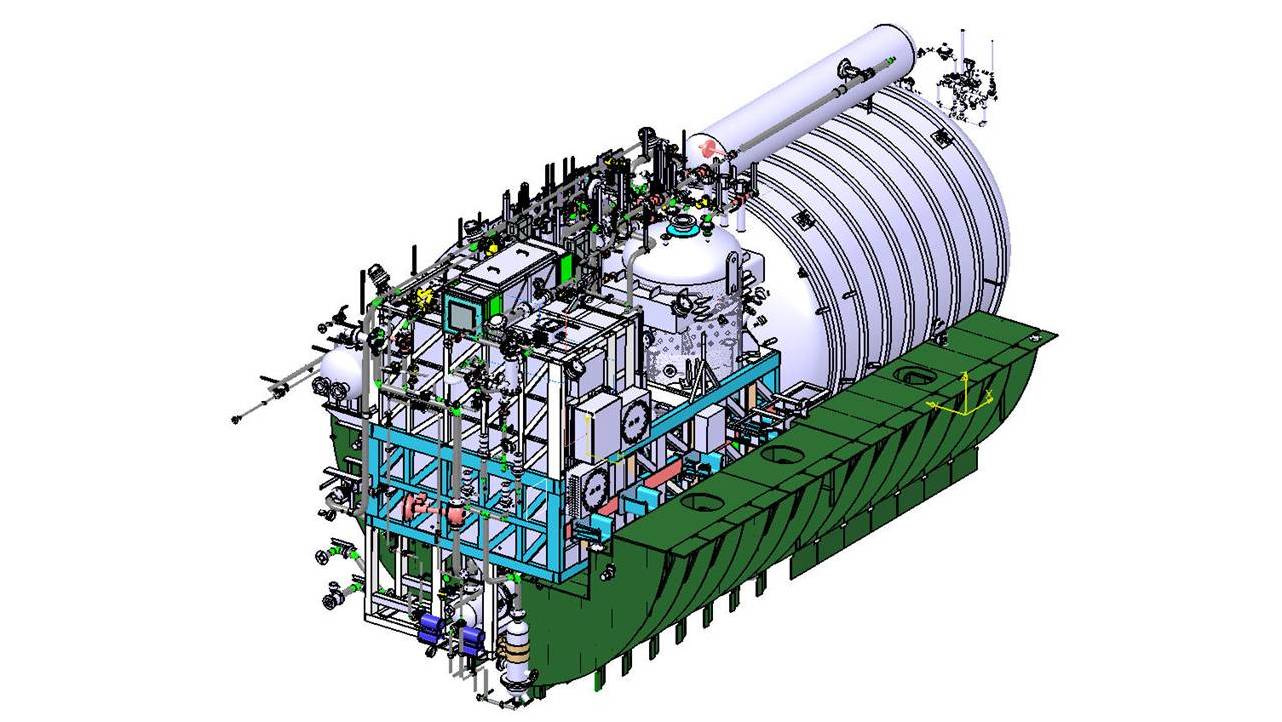
INDIGENOUS MILESTONE An illustration showcasing DRDO’s AIP system
This is not a theoretical proposition. China’s People’s Liberation Army Navy (PLAN) has recognised it. Pakistan’s Navy is operationalising it. Iran’s submarine doctrine is built around it. The strategic question for India is whether its force structure and procurement trajectory are calibrated to operate effectively in the same geometry, or whether institutional inertia and programme delay are ceding the undersea competition before the contest has fully formed.
Indian Ocean & the SSK
The conventional wisdom that nuclear submarines are intrinsically superior to conventional submarines requires systematic interrogation before it can be applied to Indian Ocean operational scenarios. The SSN’s advantages are real but not universal, and they diminish substantially in the environments that define Indian Ocean competition.
Endurance without indiscretion: The SSN’s primary operational advantage is genuinely unlimited submerged endurance. A conventional submarine must periodically raise its snorkel mast to run diesel generators, creating a detectable acoustic and electromagnetic signature. In open-ocean environments with capable adversarial ASW patrols, the indiscretion rate of a snorting SSK constitutes a measurable threat to its survivability. In the congested chokepoints and littoral approaches of the Indian Ocean, however, the acoustic environment is sufficiently complex that a well-managed snort cycle in high-traffic waters represents an operationally manageable risk. The threat calculus changes when the ocean itself provides acoustic cover.
Speed and transit time: The SSN’s high submerged sprint speed is decisive for oceanic transit—repositioning from the Atlantic to the Indian Ocean or racing to support a carrier strike group. In the Indian Ocean’s confined strategic corridors, however, sprint speed confers diminishing operational returns. A submarine positioned in the Malacca approaches, or the western Arabian Sea, does not require 25-knot submerged transits to execute its mission. It requires persistence, quieting, and endurance at patrol speed. At three to five knots, a modern fuel-cell Air Independent Propulsion (AIP) submarine is acoustically indistinguishable from the ambient noise floor of the surrounding ocean in most Indian Ocean environments, as noted in US Naval Institute (USNI) Proceedings analysis of AIP operational implications.
Cost and numbers: This may be the most strategically decisive variable. A Virginia-class SSN costs approximately USD 3.4 billion per hull. A modern AIP-equipped SSK, depending on specification, ranges between USD 400 million and USD 1.2 billion. The cost differential of three to eight times means that a navy with a fixed capital budget can field three to eight conventional submarines for every nuclear attack boat. In a contested littoral environment where multiple simultaneous commitments are the operational baseline, mass matters. India’s strategic requirement is not to win a single engagement against a peer SSN in open water. It is to sustain credible underwater presence across the Arabian Sea, the Bay of Bengal, and the Andaman Sea simultaneously, while maintaining sufficient operational reserve for surge deployments and refit cycles. No credible fiscal projection supports meeting that requirement exclusively with nuclear attack submarines within the relevant planning horizon.
The Pacific comparison: The contrast with the Western Pacific is analytically instructive. In the Pacific’s vast oceanic distances, the SSN’s speed, endurance, and deep-water performance advantages are genuinely decisive. The US Navy’s decision to operate no conventional submarines reflects the operational demands of that specific theatre. The AUKUS agreement, which will provide Australia with Virginia-class SSNs rather than advanced SSKs, similarly reflects a strategic judgement about Pacific range and endurance requirements. Applying the same logic to the Indian Ocean is a category error. The geography is different, the operational requirements differ, and the acoustic environments differ. SSKs operating in their designed envelope in the Indian Ocean are not a second-rate substitute for SSNs; they are often a better fit for the specific operational demands of the region.
The Endurance Revolution
The technological evolution of the conventional submarine over the past three decades constitutes one of the most significant and underappreciated developments in contemporary naval warfare. It has not, as some enthusiastic commentary suggests, eliminated the gap between SSK and SSN performance. It has, however, shifted the operational threshold at which that gap becomes strategically decisive.
The core technological challenge facing conventional submarine designers has always been the energy budget. Stored electrical energy determines submerged endurance at any given speed. Lead-acid batteries, which powered virtually all conventional submarines until the Nineties, imposed a hard operational ceiling: typically, between two and five days of submerged endurance at low patrol speeds before a snort cycle became mandatory. AIP systems, by providing a secondary energy source that requires no atmospheric oxygen, extended that ceiling substantially.
The Stirling engine AIP system, pioneered by Sweden for the Gotland-class and adopted by Japan for the Soryu-class, generates electricity through an external combustion cycle using stored liquid oxygen and diesel fuel. In an operational context, Stirling AIP enables approximately two weeks of submerged endurance at low patrol speeds. The Japanese Maritime Self-Defence Force demonstrated the operational implications of Stirling technology decisively during the 2006 Rim of the Pacific exercises, when the Soryu-class boat JS Hakuryu reportedly achieved simulated kills on US surface combatants during unrestricted ASW exercises, including conditions where the submarine was declared ‘undetected.’ The German Type 212 series employ proton exchange membrane fuel cells rather than Stirling engines, offering somewhat greater efficiency and a corresponding extension of submerged endurance that TKMS estimates at up to three weeks under quiet patrol conditions.
These represent significant but not transformative extensions. The more consequential development is the transition from AIP supplementation to lithium-ion battery architecture as the primary energy storage system. Japan’s Taigei-class, which entered service in 2022, eschews AIP entirely and instead relies on lithium-ion batteries that offer two to three times the energy density of conventional lead-acid cells in the same volume. The operational consequences extend beyond raw endurance. As USNI Proceedings has noted, lithium-ion batteries discharge at higher rates, enabling faster acceleration and higher sustained submerged speeds, thereby extending tactical manoeuvring options. They also recharge 40 to 60 per cent faster under equivalent charging power, reducing the duration and frequency of the indiscretion cycle and improving survivability in ASW-contested environments.
The strategic implication of these converging technologies is that the modern SSK operating in the Indian Ocean’s confined chokepoints can sustain submerged endurance sufficient to cover multiple patrol cycles without the resupply and maintenance interruptions that historically constrained conventional submarine operational patterns. A boat with three weeks of genuine submerged endurance, operating in an environment where the acoustic and geographical conditions favour concealment, can maintain a patrol barrier at Malacca or Hormuz with a degree of persistence that would have required nuclear propulsion a generation ago. The operational distance between an AIP SSK and an SSN, measured in terms of theatre-relevant mission execution rather than open-ocean sprint performance, has narrowed materially.
What this does not mean is equally important. AIP submarines cannot match SSNs in sustained high-speed transit, blue-water endurance, or the ability to project power across oceanic distances without forward basing. The gap between SSK and SSN is not closed; it is contextually managed. In the Indian Ocean, where geography compresses the operational requirement, that contextual management is sufficient to render the conventional submarine a genuine strategic instrument rather than merely a coastal threat.
China’s Expanding Undersea Presence
China’s submarine deployments in the Indian Ocean have attracted considerable analytical attention, much of it speculative. Separating confirmed operational behaviour from inferred strategic intent requires methodological discipline.
What the evidence supports is the following. The PLAN has conducted periodic long-range submarine deployments into the Indian Ocean since at least 2013, when a Type 093 SSN and a Song-class SSK transited the region during what Chinese official statements described as counter-piracy operations. USNI Proceedings analysis by Rear Admiral Monty Khanna (retd) has confirmed that the frequency of such deployments has increased across the subsequent decade. The PLAN has simultaneously expanded its deployment of oceanographic survey and hydrographic research vessels in the Indian Ocean, activities that generate the bathymetric, thermal gradient, and acoustic environment data that are prerequisites for effective submarine operations. As the USNI assessment notes, this data-gathering activity represents the foundational undersea intelligence preparation without which sustained submarine deployment in unfamiliar waters carries unacceptable operational risk.
The PLAN’s conventional submarine inventory is dominated by the Type 039A and 039B Yuan-class, which incorporates Stirling AIP and represents China’s most operationally relevant SSK platform. The US department of defence’s 2024 Military Power Report credits the PLAN with six nuclear-powered ballistic missile submarines and six nuclear-powered attack submarines, alongside a substantial conventional submarine force. By 2035, the PLAN fleet is projected to reach approximately 80 submarines across both conventional and nuclear categories. The Yuan-class AIP capability, combined with Chinese access to logistics infrastructure in Djibouti (China’s first overseas military base, formally established in 2017) and the Chinese-developed commercial port at Gwadar in Pakistan, creates the conditions for more persistent submarine forward presence in the Indian Ocean than China currently exercises.
The strategic logic for such presence is multi-layered and deserves disaggregation. At the operational level, persistent PLAN submarine deployments in the northern Indian Ocean and the Arabian Sea would complicate any Indian naval response to a Sino-Indian crisis by requiring the Indian Navy to allocate significant ASW resources to the western approaches rather than concentrating effort against the primary axis of Chinese maritime pressure. At the intelligence level, Indian Ocean deployments allow the PLAN to accumulate operational experience in acoustically and hydrographically complex environments that differ substantially from the South China Sea or the Western Pacific. At the strategic signalling level, visible submarine presence in waters India considers its primary maritime domain carries deterrent weight that transcends specific operational missions.
What the evidence does not support is the conclusion that China currently maintains a sustained, near-continuous submarine patrol presence in the Indian Ocean comparable to Cold War US or Soviet deployments in the Atlantic. The logistical infrastructure for such presence, while developing at Djibouti and potentially Gwadar, does not yet support the maintenance, crew rotation, and replenishment cycles that sustained forward submarine deployment requires. The analytical risk is projecting current trajectory forward as present reality. China’s Indian Ocean undersea posture is better characterised as capability development and operational reconnaissance than as established sea control or sea denial.
Pakistan’s Hangor Programme
The most immediately consequential development for India’s near-term undersea security environment is not China’s long-range strategic positioning but Pakistan’s accelerating acquisition of AIP-equipped conventional submarines under the Hangor-class programme.
On 30 April 2026, PNS Hangor was formally commissioned into the Pakistan Navy at a ceremony in Sanya, China, becoming the first of eight submarines under a programme that constitutes the largest defence acquisition contract in Pakistan’s naval history. The Hangor-class is an export variant of the Chinese Type 039B Yuan-class, incorporating AIP propulsion derived from the Stirling system architecture and configured for extended operations in the northern Arabian Sea and its approaches. The programme, contracted in 2015 for a total of eight hulls split between Chinese construction (the first four) and licensed production at Karachi Shipyard and Engineering Works (KS&EW), the remaining four, is valued at approximately USD 5 billion.
The analytical significance of the Hangor programme lies not primarily in its numerical contribution to Pakistan’s submarine inventory. Pakistan currently operates eight Agosta 90B-class boats, of which three are AIP-equipped, alongside older legacy platforms. The Hangor-class will over the next five years bring that inventory to a level where simultaneous multi-sector submarine deployment becomes operationally viable rather than a theoretical aspiration. The more consequential dimension is qualitative. A Yuan-derivative with Stirling AIP operating in the northern Arabian Sea can maintain submerged endurance of approximately two weeks at patrol speeds, substantially complicating Indian ASW barrier operations along the approaches to Karachi and the CPEC-linked Gwadar port complex.
Stockholm International Peace Research Institute (SIPRI’s) 2024 arms transfer data indicates that approximately 63 per cent of Chinese arms exports in the 2020 to 2024 period were directed to Pakistan, a concentration that reflects a strategic relationship extending well beyond platform acquisition to encompass training, doctrine, and operational integration. The transfer of Yuan-class technology to Pakistan is therefore not merely a commercial transaction; it represents the extension of Chinese undersea operational doctrine into the Arabian Sea, with attendant implications for the tactical procedures, sensor exploitation, and weapons integration that the Pakistan Navy will develop around the new platform.
Pakistan’s reported testing of the Babur-3 submarine-launched cruise missile from an underwater platform, while the specific integration timeline with the Hangor-class remains unconfirmed in open sources, signals a strategic ambition that extends beyond conventional sea denial. A conventionally armed SLCM capability of the range attributed to Babur-3 (approximately 700 kilometres) would give Pakistan the ability to threaten Indian coastal infrastructure and naval bases from survivable submarine platforms, introducing a sub-strategic deterrent dimension that has not previously characterised Pakistani undersea operations.
A calibrated assessment must also note the limitations. Pakistan’s submarine maintenance infrastructure, while improving through the KS&EW expansion associated with the Hangor programme, has historically struggled to maintain high availability rates for complex AIP-equipped platforms. The technology transfer associated with the domestic construction of the final four Hangor boats will generate indigenous capability over time, but the learning curve for quantum-leap AIP technology in a shipyard without prior AIP construction experience will impose delays and initial quality constraints. The Pakistan Navy’s Hangor programme is a genuine capability investment, not a paper force; but translating signed contracts and launched hulls into sustained operational effectiveness is a multi-year process whose trajectory warrants continued monitoring rather than alarmist assessment.
The Distributed Undersea Threat
Strategic analyses of undersea competition in the Indian Ocean frequently underweigh the contribution of mid-tier submarine forces to the overall deterrent architecture of the region. The analytical tendency to focus on the India-China-Pakistan triangle obscures the extent to which a cluster of smaller but credibly capable submarine forces is collectively restructuring the undersea balance.
Iran’s submarine posture merits particular attention given its geographic position at the Strait of Hormuz, through which an uninterrupted flow of Gulf energy exports remains critical to the economies of India, China, South Korea, and Japan. Iran operates between 19 and 30 submarines across a deliberately heterogeneous force structure: three Russian-built Kilo-class boats for deeper-water operations, a small number of Fateh-class coastal submarines of indigenous design, and approximately 20 Ghadir-class midget submarines optimised for the shallow-water, high-salinity, acoustically complex environment of the Persian Gulf and Strait of Hormuz.
At 117 tonnes surfaced displacement and armed with two 533-millimetre torpedo tubes, the Ghadir is not a blue-water instrument. It is an ambush system designed to exploit the Hormuz transit’s physical characteristics: depths ranging from 30 to 60 metres at the navigable centre lines, shipping concentrations so dense that sonar discrimination is severely degraded, and thermal gradients driven by extreme surface temperatures that create an unpredictable sound velocity profile. As defence analysts have noted, the absence of AIP across most of Iran’s Ghadir fleet does not substantially degrade its operational utility in an environment where ambient noise and salinity-driven acoustic complexity already provide the concealment that other navies require technology to achieve. Iran unveiled an AIP-equipped variant of the Fateh-class at DIMDEX 2024.
Iran’s operational model offers a broader strategic lesson: that a numerically modest submarine force, correctly designed for its operating environment and supported by coherent tactical doctrine, can impose costs on adversaries possessing vastly superior aggregate naval capabilities. The 2010 sinking of ROKS Cheonan by a North Korean midget submarine, at a loss of 46 lives, remains the most recent demonstration of the disproportionate impact that a correctly employed midget submarine can achieve against forces not adequately configured for littoral ASW.
Singapore’s acquisition of four Type 218SG submarines from TKMS, equipped with fourth-generation fuel cell AIP, represents a qualitatively different model: a small navy deploying world-class submarine technology to defend a maritime chokepoint of singular commercial importance. The Malacca Strait processes approximately USD 3.4 trillion in trade annually. Singapore’s Type 218SG boats, with their German fuel-cell AIP systems, provide a credible underwater deterrent capability that shapes the strategic calculations of any actor contemplating interference with Malacca transit. Indonesia’s submarine force, comprising German-built Type 209 derivatives with AIP retrofits under development, and Bangladesh’s Chinese-origin Ming-class boats, complete a picture of the Indian Ocean’s undersea proliferation that is more extensive and more capable than assessments anchored to the bilateral India-Pakistan framework typically capture.
The structural consequence of this distributed proliferation is that India’s naval planners cannot focus ASW resources on a single threat axis. The Arabian Sea, the Bay of Bengal, the Andaman Sea approaches to the Malacca Strait, and the deep-water zones of the central Indian Ocean all require credible undersea surveillance and ASW capabilities simultaneously. Force structure decisions made today will determine whether those requirements can be met across a 20-year operational horizon.
India’s Submarine Force
India operates approximately 17-19 conventional submarines in 2025-2026, supplemented by two commissioned Arihant-class SSBNs and a third approaching operational status. The conventional force comprises six Kalvari-class (Scorpene-derivative) boats from Project 75, the surviving Kilo-class (Sindhughosh-class) boats of Soviet origin now approaching or exceeding 35 years of service, and a small number of German-built Shishumar-class Type 209 submarines that are similarly long in the tooth. As the Observer Research Foundation (ORF) has assessed: of India’s 17 conventional boats, approximately 11 are legacy German and Russian platforms over three decades old, and only six are the newer French-designed Scorpenes. The bottom-line assessment from that analysis is stark: India has no AIP-equipped submarine currently in operational service, its nuclear attack fleet is a decade away, and two-thirds of its conventional force is approaching the end of its service life.
The Kalvari-class programme under Project 75 represents a genuine industrial achievement for Mazagon Dock Shipbuilders (MDS) and for India’s indigenous defence production programme. The commissioning of INS Vaghsheer in January 2025 completed the six-boat first tranche. However, the programme’s strategic significance is moderated by the absence of AIP. Defence Research and Development Organisation (DRDO) and Larsen & Toubro (L&T) signed a contract in June 2023 to supply two Air Independent Propulsion System (AIPS) modules incorporating DRDO’s Naval Materials Research Laboratory (NMRL) fuel cell technology, and an AIP Integration and Testing facility was inaugurated at the AM Naik Heavy Engineering Complex in July 2024. The indigenous fuel-cell AIP is expected to be built and tested by end-2025 and retrofitted into INS Kalvari during its first major refit in 2025-26, a process that requires the submarine to be physically bisected and an additional hull section containing the AIP module to be inserted. This represents a credible domestic capability development, but the timeline from first retrofit to fleet-wide AIP availability across the Kalvari class extends well into the 2030s.
Project 75(I) carries the weight of India’s next-generation undersea ambition. Planned to deliver six conventional submarines with AIP, vertical launch capability for land-attack cruise missiles, and substantially enhanced sensors, the programme has been beset by the procurement failures that are well-documented in Indian defence acquisition literature: insufficient planning, inadequate competition due to the effective duopoly of eligible vendors, and a cost framework that failed to anticipate currency movements and technology evolution over a decade-long procurement cycle.
By September 2025, MDL and TKMS had completed all services under their Concept Design Agreement and commenced formal contract negotiations with the Indian procurement authority, with MDL’s management publicly targeting contract signature before the close of the financial year ending March 2026. Cost negotiations between the ministry of defence (MoD), MDL, and TKMS concluded in February 2026, with the proposal placed before the Cabinet Committee on Security for final approval at a programme valuation of approximately Rs 66,000 to 70,000 crore.
The submarines originally scheduled for service entry in the late 2020s are now realistically projected for mid-2030s delivery. A separate consideration, reported in Indian defence media, is the possibility of the programme being expanded from six to nine boats to absorb the cancelled tranche of additional Scorpenes, though this remains speculative pending formal government decision.
Project 76, which envisions indigenous design and construction of a next-generation conventional submarine with AIP and advanced air-independent capabilities, represents an even more distant capability horizon, notionally targeting induction in the 2030s and beyond under the Aatmanirbhar Bharat naval production initiative.
The force structure arithmetic is sobering. India’s simultaneous strategic requirements encompass primary deterrence in the Arabian Sea against Pakistan’s increasingly capable submarine force, surveillance and sea denial in the Bay of Bengal, Andaman Sea operations to cover the Malacca approaches, and a residual capability for longer-range deployments that can signal strategic reach to China. Meeting these concurrent requirements demands a minimum of 18 to 24 operationally available conventional submarines: the lower bound drawn from the Indian Navy’s own Maritime Capability Perspective Plan of 2012, the upper bound from Vice Admiral A.K. Chatterji’s 30-year construction plan approved by the CCS in 1999. Accounting for availability rates of 50 to 60 per cent that characterise ageing conventional submarine fleets, consistent with Indian Navy testimony to parliamentary oversight committees, India’s current force structure does not meet that threshold. The projected decommissioning of all Shishumar and Sindhughosh platforms by the mid-2030s will widen the gap materially before Project 75(I) deliveries can begin to close it.
This is not to suggest that India’s submarine posture is strategically bankrupt. The Kalvari-class boats are operationally credible platforms. The indigenous AIP development represents a genuine technological investment that will yield long-term dividends. The SSBN programme has established a credible sea-based nuclear deterrent that operates in a separate strategic register from the conventional force. But the mismatch between India’s declared maritime strategic ambitions and the force structure required to underwrite those ambitions is real, measurable, and widening: of the 24 submarines the 1999 plan promised by 2029, India has inducted exactly six, with the remaining 18 trapped in procurement delay at precisely the moment when the undersea competition in the Indian Ocean is intensifying across multiple axes simultaneously.
Beyond AIP
The technologies that will define undersea competition in the Indian Ocean over the next decade extend considerably beyond AIP and lithium-ion propulsion. Three developments warrant particular analytical attention: the maturation of unmanned underwater vehicles as operational naval assets, the integration of artificial intelligence into sonar signal processing and tactical decision support, and the emergence of persistent seabed sensor networks as a theatre-wide Intelligence, Surveillance and Reconnaissance (ISR) architecture.
Unmanned Underwater Vehicles: The integration of UUVs into submarine operations is progressing from experimental deployment to operational doctrine across leading navies. The CSIS assessment of China’s undersea capability notes that the PLAN is actively integrating autonomous systems across its submarine force structure on two parallel tracks: at the 2025 Dubai Airshow, China unveiled the Wing Loong X, an AI-enabled fixed-wing ASW drone capable of 40-hour autonomous endurance with deployable sonobuoys and lightweight torpedoes; separately, China’s extra-large uncrewed underwater vehicle programme fields platforms configured for long-endurance surveillance, mine delivery, and offensive strike, assessed as now without peer globally in scale and operational ambition. For conventional submarine operations specifically, UUVs offer a transformative tactical dividend: the ability to extend sensor reach beyond the parent hull through standoff surveillance and target cueing that keeps the manned platform beyond adversary sonar detection range. A Kalvari-class boat conducting a UUV picket at a contested port approach generates actionable ISR without exposing its own acoustic signature to the adversary’s fixed or towed array infrastructure.
AI-Assisted Sonar and Signal Processing: The acoustic environment of the Indian Ocean is simultaneously the medium through which submarines conceal themselves and the medium through which ASW forces attempt to find them. In the region’s tropical littoral waters, dense biological noise, salinity gradients, and extreme thermal layering already degrade passive sonar performance to a degree that favours the submarine. The historically binding constraint on passive sonar was not sensor sensitivity but human cognitive capacity: no sonar operator, however experienced, can continuously discriminate a submarine’s tonal signature from broadband noise across multiple frequency bands at the speeds required for real-time contact prosecution. Machine learning applied to acoustic signature libraries and real-time spectral analysis is systematically eroding that constraint, enabling AI-assisted processing systems to monitor broad-spectrum data continuously and cue human operators to anomalies consistent with submarine signatures at a speed and consistency that exceeds unaided human performance. The same technology applied to submarine passive sonar suites improves detection and classification performance against adversary platforms in the very acoustic conditions the Indian Ocean imposes. The competitive dynamic is bilateral and self-reinforcing: AI sharpens both the submarine’s ears and the hunter’s, and the operational premium will accrue to whichever navy integrates these capabilities most effectively into its tactical employment concepts rather than treating them as bolt-on sensor upgrades.
Persistent Seabed Surveillance: The concept of wide-area acoustic surveillance through distributed seabed sensors is not new, having its origins in the US Sound Surveillance System of the Cold War, which is now used primarily for scientific research rather than operational submarine tracking. What has changed is the cost and deployment architecture. Anduril’s Seabed Sentry system, unveiled in April 2025, exemplifies the next-generation model: modular, AI-enabled sensor nodes deployable by AUV to depths exceeding 500 metres, designed to remain unattended for months and to be far more adaptable and affordable than legacy fixed-array infrastructure. For India, this technology transition carries strategic significance in both directions.
The Indian Navy and DRDO’s Naval Physical and Oceanographic Laboratory are actively developing a distributed undersea sensor network targeting the Ninety East Ridge, the Bay of Bengal, and the Andaman and Nicobar Islands, integrated with the Information Fusion Centre at Gurugram and aligned with Quad partners under the Indo-Pacific Maritime Domain Awareness Initiative. This represents a publicly committed capability investment, not a theoretical aspiration. The adversarial dimension is equally concrete: Chinese hydrographic survey vessels operating across the Indian Ocean, including a confirmed month-long survey by the research vessel Dong Fang Hong 3 along the Ninety East Ridge, are generating the acoustic environment and bathymetric data that would support precisely this kind of seabed sensor architecture in waters critical to Indian naval operations.
The aggregate question these technologies pose is whether future undersea advantage will accrue to the submarine or the ASW hunter. The historical pattern, from the acoustic quieting revolution of the Eighties through the advent of towed array technology, suggests that stealth and detection technologies advance in rough parallel, with periodic asymmetric breakthroughs that are eventually answered by countermeasures. The current period is one of genuine bilateral uncertainty. Neither submarines nor ASW platforms can bank on decisive advantage, and that uncertainty is itself a form of deterrence stability: it encourages investment in resilience and redundancy rather than dependence on pre-emptive first-mover capabilities that may prove ephemeral.
Final Takeaway
Have advances in propulsion, energy storage, quieting technologies, and undersea warfare systems transformed conventional submarines from coastal defensive assets into strategic platforms capable of shaping the balance of power across the Indian Ocean? The evidence supports an affirmative answer, with essential qualifications.
The transformative dimension is real. Fuel-cell AIP submarines with two to three weeks of genuine submerged endurance, operating in chokepoints where geography concentrates traffic and acoustic complexity provides concealment, are capable of sea denial missions that previously required nuclear propulsion. PNS Hangor, commissioned 30 April 2026 as the lead vessel of an eight-boat class with full operational capability projected by 2028; the PLAN’s Yuan-class and its S26 export derivative; and the distributed proliferation of AIP technology across Singapore, Indonesia, and Iran’s developing force collectively constitute an undersea environment qualitatively more contested than a decade ago. The conventional submarine is no longer a coastal placeholder. It is a credible instrument of sea denial at every chokepoint through which Indian Ocean commerce flows and Indian military power must transit.
The essential qualification is equally important. Transformative potential is not demonstrated strategic effect. The gap between what advanced SSKs can technically achieve and what fielding navies can operationally execute is governed by maintenance quality, crew proficiency, tactical doctrine, and the accumulated operational experience that takes decades to build. China conducts periodic Indian Ocean submarine deployments and is systematically bridging far-seas capability gaps, but those deployments have historically required tender-ship accompaniment, distinguishing periodic forward presence from self-sustaining sea denial. Pakistan’s Hangor programme will yield a materially more capable force, but the transition from commissioned hull to sustained operational effectiveness in an unfamiliar AIP platform will extend across the better part of a decade.
For India, the policy space is tightly constrained. The undersea competition is intensifying across multiple axes simultaneously while India’s conventional force ages faster than it is replaced. Project 75(I), with cost negotiations concluded and Cabinet Committee on Security approval pending, will not close the capability gap before the mid-2030s. That timeline is uncomfortable given concurrent Hangor inductions and China's accelerating Indian Ocean undersea engagement.
The prescription is neither novel nor comfortable: sign Project 75(I) contracts without further delay; complete AIP retrofits on the Kalvari class at the fastest achievable tempo; integrate AI-assisted sonar and UUV teaming to extend operational reach where numbers remain constrained; and accelerate seabed sensor deployment in the Andaman Sea and Arabian Sea approaches to generate the persistent undersea situational awareness that manned platforms alone cannot sustain.
The Indian Ocean is the world’s most favourable operating environment for advanced conventional submarines. Whether that geography describes an advantage for India or a compounding strategic liability will be determined not by the submarines themselves but by the procurement discipline, institutional coherence, and strategic urgency India brings to a competition already underway.

VIDEO






