

Interview | Dr Thangjam Dhabali Singh
‘A structured FMR could boost local trade and diversify income by encouraging legal cross-border movement of goods and services’
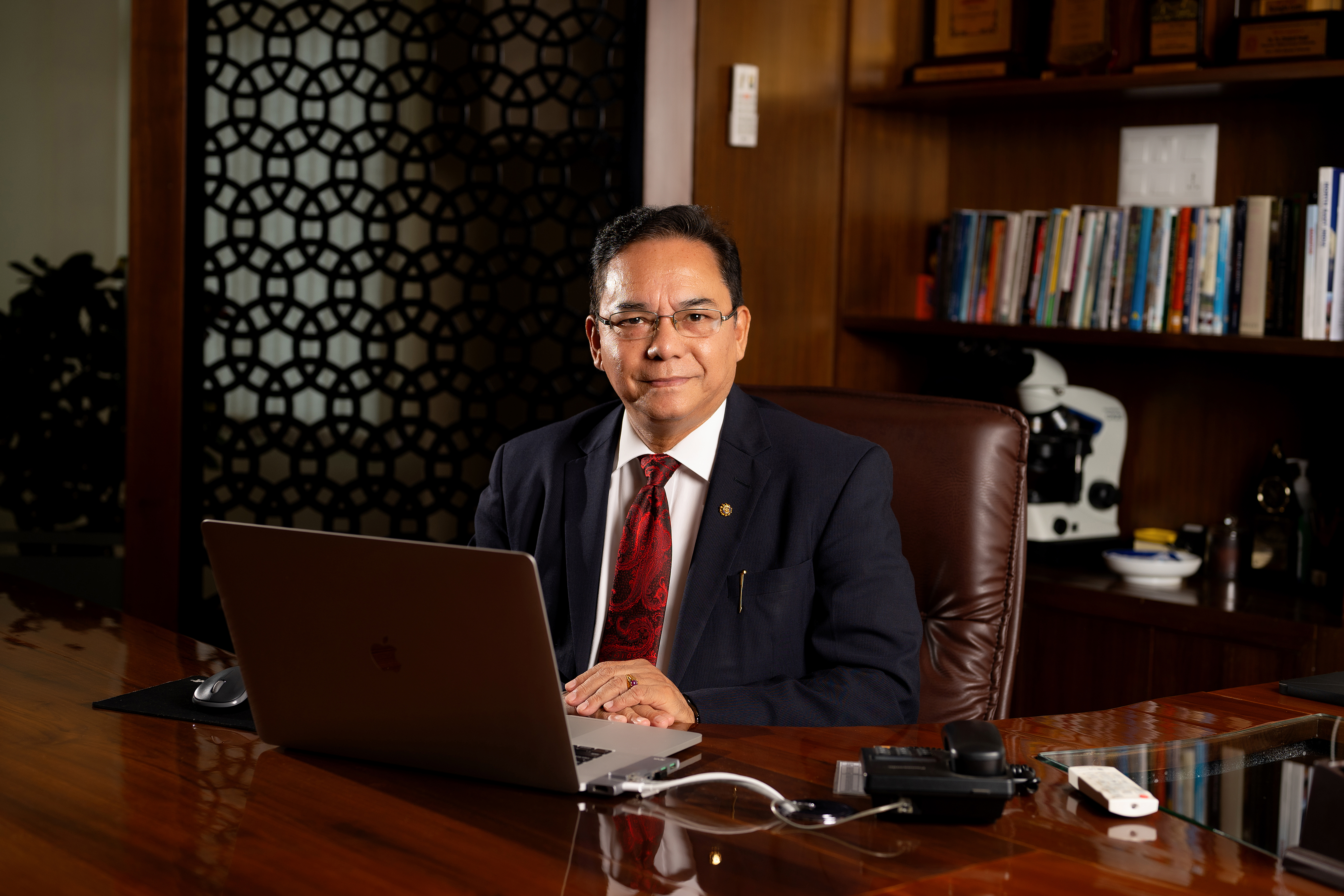
Dr Thangjam Dhabali Singh is the chief consultant pathologist and managing director of BABINA Diagnostics, the largest diagnostic laboratory and the first NABL-accredited lab in the Northeast. Beyond healthcare, Dr Dhabali Singh, a Meitei, is also a promoter of the Classic Group of Hotels and the AOI-BABINA Specialty Hospital, which is Manipur’s first comprehensive cancer centre. He also runs Classic Hospitality Training Institute and Babina Institute of Nursing, employing over 1,350 people
How do you see the Hill/ Valley divide? This grievance has led to many disruptions, economic losses and poor infrastructure impeding economic growth across Manipur. What can be done to bridge this gap?
The Hill / Valley divide in Manipur poses a major challenge due to neglect, land disputes, resource inequality, and unresolved issues causing bandhs and blockades. These disrupt growth, harm traders, workers, students, and halt development, including ongoing highway blockades that have lasted nearly two months without resolution. For Manipur to prosper, we must narrow the gap through concrete investments and policies, not just speeches.
There is a need to prioritise infrastructure in hill areas, such as roads, power, telecom, health centres, and schools. The hill residents should cooperate with authorities and support development efforts instead of disrupting projects or demanding large compensations, which hinder progress. I have heard that in some northeastern hill states people donate land for infrastructure. Additionally, economic programmes must be developed with local communities by expanding rural banking and digital payments, supporting sustainable enterprises, and providing skills to prevent migration and illegal activities.
Governance should be made more inclusive by strengthening local bodies and publishing spending data to rebuild trust. Interaction between hill and valley communities must be promoted, especially among students, professionals, and businesses. Political dialogue, respect for law, and fighting crime are crucial. Leaders from the hills and the valley must be proactive and transparent. They should avoid blame games that confuse the public.
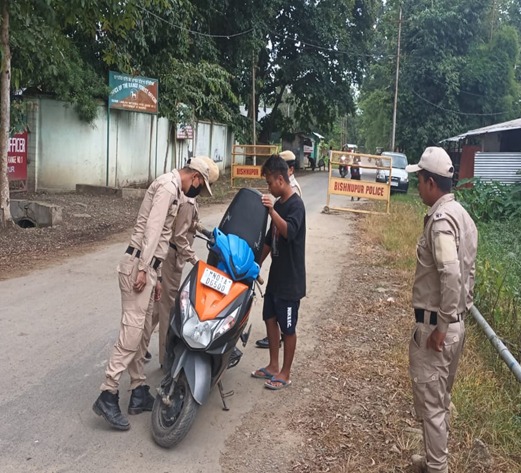
One of the signs of the divide are the banks. While banking penetration in Manipur remains low and spatially uneven, of 143 scheduled/ commercial bank branches, 71 are concentrated in Imphal, leaving the hills and peripheral districts underserved; many RBI licences have been surrendered. You too had problems getting a bank loan to start your business. One of the ways people in rural areas can get loans is through the Grameen banks or the Manipur Rural Bank, yet many of their branches are non-functional.
Weak and uneven banking access has deepened Manipur’s Hill / Valley divide and has blocked rural entrepreneurship. While farmers elsewhere access cheap credit even against cattle, many rural branches in Manipur are non-functional, and their licences have been surrendered, leaving people dependent on informal lenders, thereby missing out on growth opportunities.
But banks are business establishments. They need to maintain a level of sustainable banking activity, otherwise, the units have to be closed down, so it’s a two-way traffic. The security and safety of banks and their employees in remote areas may be a matter of concern.
According to some reports, much of the violence in Manipur is insurgency-related, specifically over control of the illegal trade in drugs and arms. The battles over Moreh and, more recently, in Kamjong are directly related to the illegal trade along the Indo-Myanmar border. Apparently, this illegal trade is being conducted using cryptocurrency. How is it undermining Manipur’s economy and growth?
The illegal trade in drugs and arms is a serious yet hidden threat to Manipur’s economy, creating an underground economy that undermines honest investment and business.
It distorts incentives by attracting youths to drugs and weapons, diverting them from education, entrepreneurship, and stable jobs in sectors like agriculture and tourism. This weakens the culture of hard work. Violence and extortion over trafficking routes have made Moreh and Kamjong more valuable for smuggling than legal trade. Illegal trade corrupts institutions. When crime is more profitable than honesty, trust in banks, taxes, and law diminishes, harming Manipur’s fragile economy.
If reports are correct, the problem worsens as digital currencies cross borders quickly, making them harder to track. A purely physical response, such as a ‘smart wall’, is not enough. What we need is integrated border management, stronger institutions and more legal economic opportunities so that border communities benefit more from lawful trade than from the illegal economy.
What do you think about projects like the Palm Oil Mission and introduction of rubber plantations? These have proved to be very destructive in Malaysia.
Large-scale palm oil and rubber plantations are risky for Manipur if following the same destructive Malaysian model. Manipur’s fragile, forest-rich ecology is vital for water, agriculture, and indigenous livelihoods. Such plantations require clearing biodiverse forests, using water and chemicals, and leading to soil degradation, landslides, and floods, thereby destabilising the ecosystem.
Coming to more recent events that have adversely affected business in Manipur. First was the Covid-19 pandemic, which deeply affected the economy. What was the impact of Covid-19 on Manipur’s economy?
Covid-19 hit Manipur’s economy hard. The hospitality and healthcare sectors felt it immediately. Overnight, travel stopped, our hotels were almost empty, and one had to be converted into a quarantine facility. Supply chains were disrupted. Medical equipment and basic materials became harder and more expensive to source. There was widespread anxiety among employees and their families. Revenue collapsed, but we still had to pay staff salaries at a reasonable level to support their families, maintain the properties, and adhere to strict safety protocols.
For a small, landlocked state like Manipur with limited tourism and other industry, the shock was severe. Many small businesses had no financial cushion. Even after restrictions eased, people remained afraid to travel, slowing recovery. The pandemic highlighted the need for local healthcare and responsible business practices. We adapted, cut costs without mass layoffs, and focused on long-term stability. Support from financiers like NEDFi, through additional loans and restructuring, helped us manage the crisis.
Manipur had barely recovered from Covid, when violence broke out in 2023, leading to creation of buffer zones. The bandhs further made it difficult to transport material. Can you talk about the difficulties you faced and if the government, both the state and the Centre, had any schemes to help businesses and industry.
In 2023, businesses in Manipur encountered various difficulties due to violence, such as safety risks, property destruction, closures, supply disruptions, cash flow troubles, and mental stress. Although some support, in the form of restructuring of existing loans and sanctioning fresh loans from banks, was available, a comprehensive compensation plan was absent. Even today, after three years, business activities are yet to return to normal. Many have migrated to favourable places outside the state.
What is the role of the ministry of development of the North Eastern Region (DoNER) and the North East Council in improving Manipur’s economy? What more can be done to protect businesses from the effects of insurgency?
The ministry of DoNER and NEC are crucial to Manipur’s and the Northeast’s long-term growth, focusing on infrastructure, regional integration, sectoral schemes, and capacity building. To protect businesses from insurgency, they should prioritise security infrastructure, create risk funds, link development to law and order, support local entrepreneurship, and facilitate stakeholders’ dialogue. They need to shift from asset-building to safeguarding firms against conflict shocks, thereby making investments safer and more predictable.
How do you view the idea of a Free Movement Regime between India and Myanmar, formalised in 2018 in pursuit of India’s Look East Policy? Now there is talk of a smart wall separating the two countries. How will it affect the economy, both legal and illegal?
A Free Movement Regime (FMR) between India and Myanmar, if properly regulated, could have been a net positive for Manipur’s economy. Historically, communities along the Indo-Myanmar border have traded and interacted for generations. A structured FMR could boost local trade and diversify income by encouraging legal cross-border movement of goods and services. However, there are valid security concerns including insurgent movement, smuggling, and unregulated migration.
A ‘smart wall’ with fencing and sensors will certainly check unregulated migration and insurgent movement. It may, however, disrupt traditional livelihoods along the borders.
Japan has shown interest in investing in the Northeast. How could Japanese investment help Manipur, and in what sectors? On the flipside, could it cause a conflict with China?
Japanese investment can aid Manipur by focusing on essential needs over geopolitics. Improving roads, border links, and logistics hubs would reduce transport costs and boost legal trade. Japan’s healthcare and tech expertise can upgrade hospitals, diagnostics, and telemedicine, creating skilled jobs by training local nurses and technicians. Investing in renewable energy and resilient infrastructure like small hydropower, solar, safer roads, and bridges can address power shortages and reduce landslides and floods. Supporting high-value, low-impact agriculture, food processing, tourism, and MSMEs can provide youth with dignified local jobs.
Regarding fears of a conflict with China, the key is project design. Transparent, civilian, and environmentally responsible projects tend to foster stability and cooperation rather than rivalry.

 VIDEO
VIDEO