Cybercrime has risen more than 17 per cent in a year, says latest NCRB report
Subhashis Mittra
The latest National Crime Records Bureau (NCRB) report has brought to light a disturbing fact that cybercrime cases crossed the one-lakh mark for the first time in 2024—rising more than 17 per cent in a year. The Crime in India 2024 report, released by the NCRB, shows that as many as 1,01,928 cases were registered under cybercrimes in 2024, over 86,420 such cases in the previous year. Crime rate under this category rose from 6.2 in 2023 to 7.3 in 2024. ‘During 2024, 72.6 per cent of cybercrime cases registered were for the motive of fraud (73,987 out of 1,01,928 cases) followed by sexual exploitation with 3.1 per cent (3,190 cases) and extortion with 2.5 per cent (2,536 cases),’ the report said.
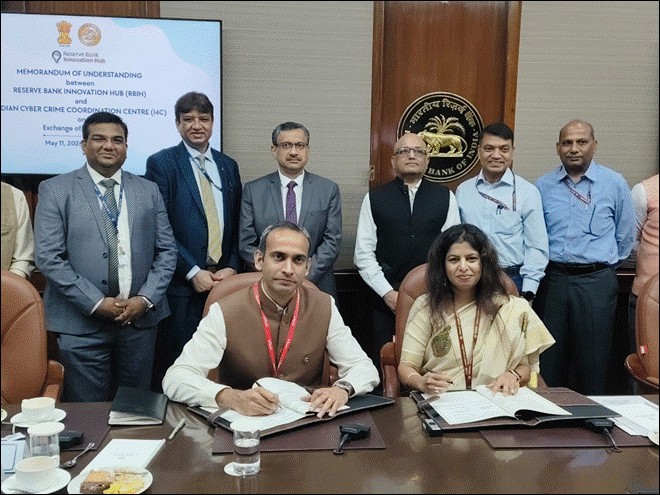
Anguished over the findings, the Indian Cyber Crime Coordination Centre (I4C), ministry of home affairs (MHA), and Reserve Bank Innovation Hub (RBIH) signed a memorandum of understanding (MoU) in New Delhi to strengthen collaboration to combat cyber-enabled financial frauds and curtail mule accounts across the banking and digital payments ecosystem. The MoU aims to facilitate cooperation in fraud-risk intelligence sharing, analytical support, and operational coordination for proactive fraud detection and prevention mechanisms.
Mule accounts are bank accounts used by criminals to illegally receive, transfer and launder the proceeds of cybercrimes with or without the knowledge of account holders.
The MoU to strengthen AI-driven detection of mule accounts and cyber financial frauds comes against the backdrop of the government’s tireless efforts to ensure a cyber secure Bharat, said Union home minister Amit Shah. In a post on X, Shah said, “Modi government is tirelessly working for cyber secure Bharat. Mule accounts are big hurdles in curbing cyber-crimes. The I4C under MHA signed an MoU with RBIH unleashing the power of Artificial Intelligence to combat cyber fraud. The move will swiftly detect and cull hidden mule accounts by feeding the data from the I4C’s Suspect Registry to the AI-driven fraud detection system and serve the citizens as their next gen shield against cybercrime.”
The MoU was signed by Roopa M, IG (Admin), I4C and Sahil Kinni, CEO, RBIH in the presence of Rohit Jain, Deputy Governor, RBI; Anand Swaroop, Special Secretary (Internal Security), MHA; Rakesh Rathi, Joint Secretary (Cyber and Information Security), MHA; Rajesh Kumar, CEO, I4C; and other senior officers from RBI, RBIH and I4C.








 VIDEO
VIDEO