

Seize the Moment | July 2026
The US-Iran ceasefire has re-organised the region’s power geometry, New Delhi must not squander this opportunity
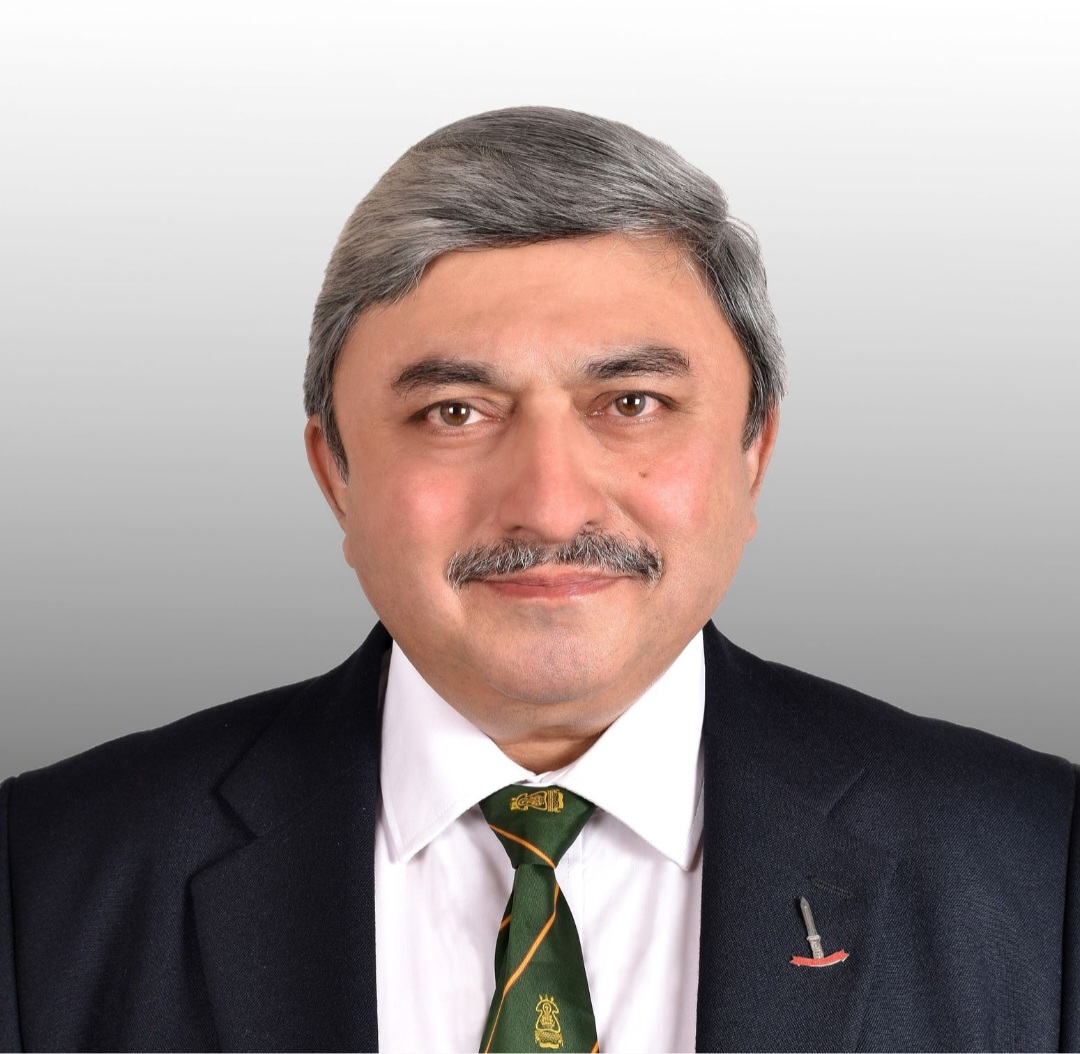 Maj. Gen. Neeraj Bali (retd)
The 14-point Memorandum of Understanding (MoU) between Washington and Tehran is being celebrated in a few quarters as a diplomatic triumph and condemned in many others as a capitulation. In their enthusiasm, both the critics and the supporters seem intent on overlooking the obvious that even the signatories have been at pains to point out: the MoU is not an ending, but at best a comma. It is a fragile start, shaky and fraught with multiple possibilities of failure. However, for us in India, the question that matters most is not whether the document survives its own contradictions, but what the region looks like on the morning after, regardless of whether it does.
With negotiators from the US and Iran, and the mediators, all gathered in the lakeside city of Lucerne to thrash out the finer details, that morning had already dawned. Is India awake to it with sufficient situational awareness?
A Region Re-organised, Not Resolved
Let us be precise about what has actually changed in the Middle East, and what has merely been papered over.
Iran has emerged from the conflict battered but unbowed. Its nuclear infrastructure has absorbed tremendous damage; its economy, already under the boot of years of sanctions, has worsened. But the regime has survived. Its narrative of resistance — of having taken on the combined military weight of the US and Israel and not capitulated — is politically even more credible in the eyes of its citizens and in many parts of the world. Tehran has, paradoxically, converted military punishment into political capital. The hardship has been internalised not as regime failure, but as adversarial hostility. It is an old playbook, and it works every time, yet it is rediscovered with equal surprise each time it is deployed.
The MoU has only strengthened Iran’s hand. Fox News reporter Peter Doocy reminded the President that in January 2020 following the killing of Iranian General Qasem Soleimani, Trump had remarked, “Iran never won a war, but never lost a negotiation.” The MoU tells us that President Trump was prescient — at least on the matter of negotiations.
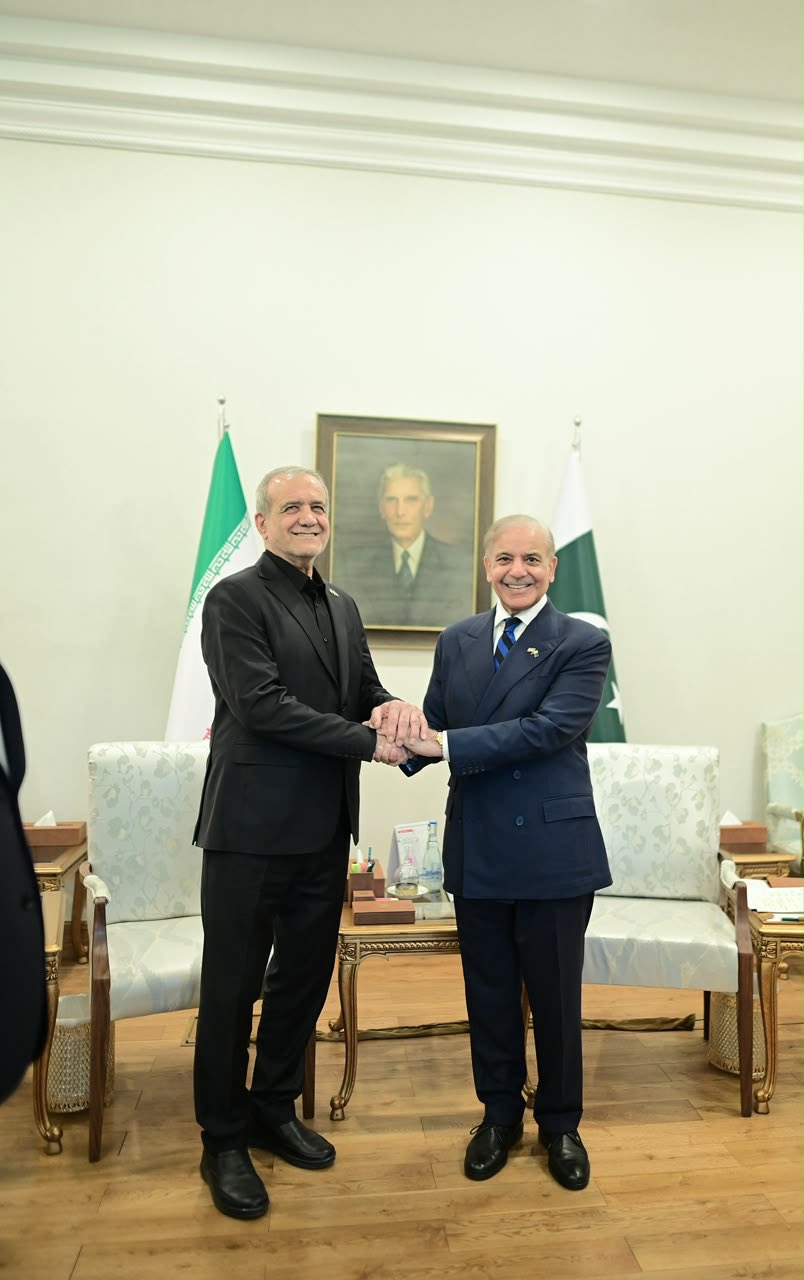
PROFITABLE EQUATION Iranian President Masoud Pezeshkian in Pakistan with
Prime Minister Shehbaz Sharif during his June 2026 visit
Israel’s position is less triumphant and its media is openly acknowledging that. A poll of 3,644 respondents, conducted between June 17 and 20 by the Hebrew University of Jerusalem and reported by the Times of Israel found that even among voters who support the right-wing bloc led by Prime Minister Benjamin Netanyahu, 93.1 per cent believed Iran had won. In the long-term prognosis, 82.9 per cent of respondents believed the six-week campaign against Iran weakened Israel’s long-term security. Eighty-six per cent had a negative attitude toward the MoU, and 87.8 per cent of Israelis said that the country failed to achieve the objectives it launched the offensive to achieve.
What were these goals? The declared objectives at the outset of the conflict — the dismantling of Iran’s nuclear programme, the destruction of its ballistic missile capability, the severing of its network of regional proxies — have not been achieved. The MoU itself, which Israeli media outlets have variously described as a “bad agreement”, a signal of “weakness”, and a “disaster”, does not require Iran to dismantle a single centrifuge. It does not address the missile programme. And it says nothing whatsoever about Hezbollah, Hamas, or the Houthi formations that have functioned as Tehran’s forward operating presence across the region. Netanyahu’s silence during the finalisation of the MoU was noted by his own press — and silence, in that particular political tradition, is rarely acquiescence. The widespread criticism of the MoU — and President Trump — in Israel, and the public pushback by US vice president J D Vance, is an unprecedented occurrence in the US-Israeli relationship. It may not yet be a full-blown fracture, but it looks like a precursor to the souring of relations.
Subscribe To Force
Fuel Fearless Journalism with Your Yearly Subscription
SUBSCRIBE NOW
We don’t tell you how to do your job…
But we put the environment in which you do your job in perspective, so that when you step out you do so with the complete picture.
 VIDEO
VIDEO