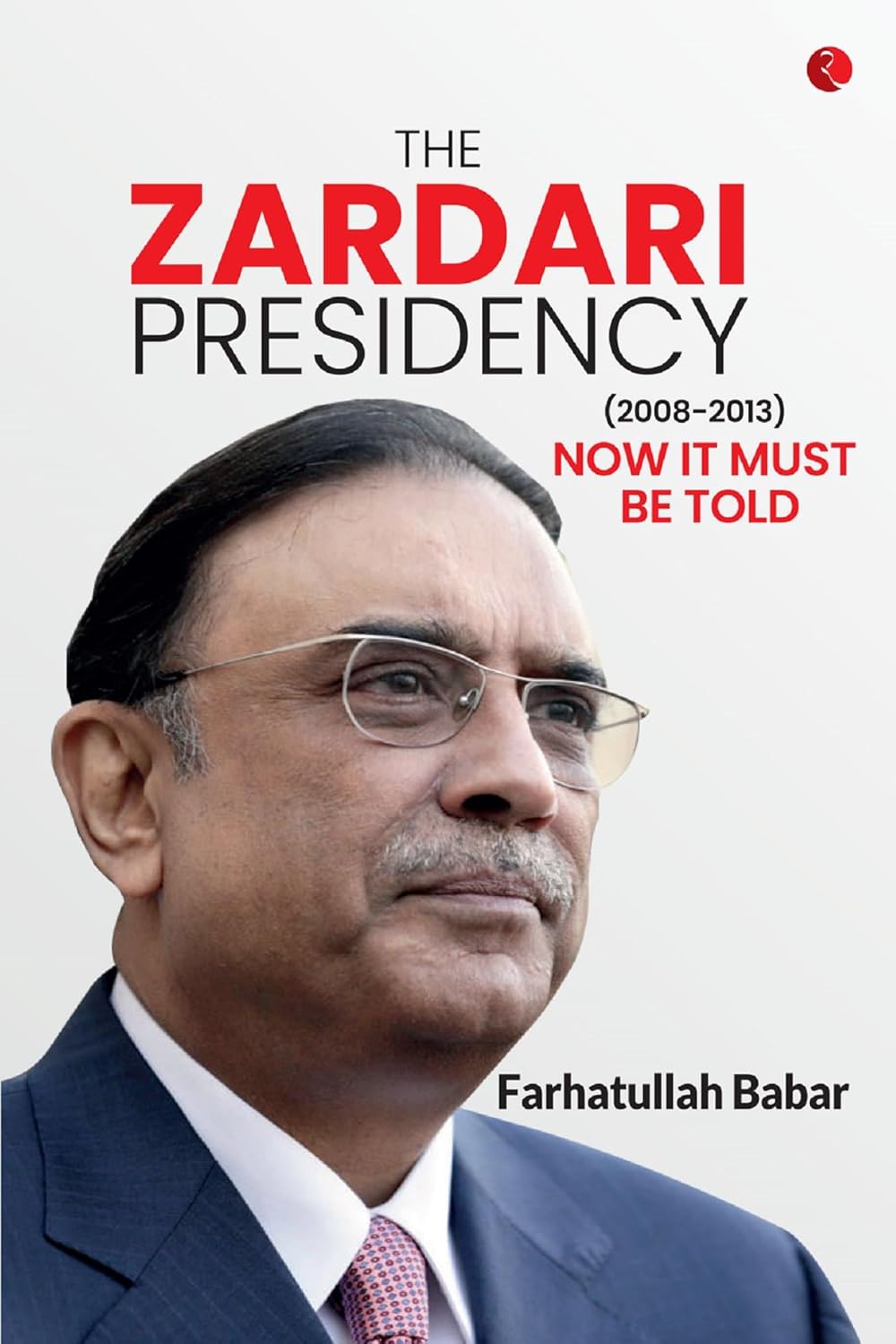
 Farhatullah Babar
Zardari did not
subscribe to the view that Pakistan’s existential threat came from across its borders.
Rather, he believed that the numerous fault lines posing existential threats to
the country, such as militancy, ethnicity and poverty, lay within its borders.
Indeed, he said as much while addressing a gathering of senior former
bureaucrats whom he had invited to the Presidency for a brainstorming session.
The press release of his address received wide media coverage and was also
applauded by some foreign dignitaries who met him in those days.
However, some
time afterwards, Zardari told me I should not have highlighted his address at
the meeting. He said it was not well received by the army leadership.
The generals
had no love for him. According to WikiLeaks’ revelations in early 2009, Army
Chief General Ashfaq Parvez Kayani discussed with the Americans the possibility
of “persuading” President Zardari to resign—replacing him with ANP (Awami
National Party) leader Asfandyar Wali Khan. General Kayani also said he would
keep Prime Minister Yousaf Raza Gilani in place.
In another
cable, then U.S. Vice President Joe Biden recounted to Britain’s then Prime
Minister Gordon Brown a conversation with Zardari a year before. Zardari had
told him that Kayani and the ISI “will take me out”, according to the cable.
The cables also showed that Zardari had made extensive preparations in case he
was killed. Indeed, he kept weapons in his bedroom in the Presidency. A leading
anchor person who had called on him in the living area of the Presidency witnessed
the arsenal and wrote about it in a column.
The generals
believe that the military alone can save the country from “corrupt politicians”
as well as from the “existential threat” from across the borders. They seem to
believe they alone have the right to determine the contours of crucial state
policies. A major reason for their dislike of Zardari was rooted in his disdain
for this view. Tensions between Zardari and the army leadership for most of his
tenure have been no secret. Coup rumours have often been circulating and, tongue
in cheek, gleefully regurgitated by media persons close to the establishment.
Zardari, however, never look them seriously. His posture, whether natural or
assumed, was as if he couldn’t care less.








 VIDEO
VIDEO