Anti-submarine warfare (ASW) is known to be one of the most tactical and difficult operations that a navy has to carry out. With increasing contestations at sea across the world, it becomes important for navies today to keep an eye on enemy submarines venturing into their waters. Unlike other naval platforms, a submarine can move around underwater and is designed to be stealth. It holds capabilities such as intelligence collection, a quality which navies usually use for spying. What’s more, the strategic use of submarines lies in their capabilities to protect surface ships stealthily, they can lay and detect mines, torpedoes can be fitted to attack and are also capable of deploying forces.
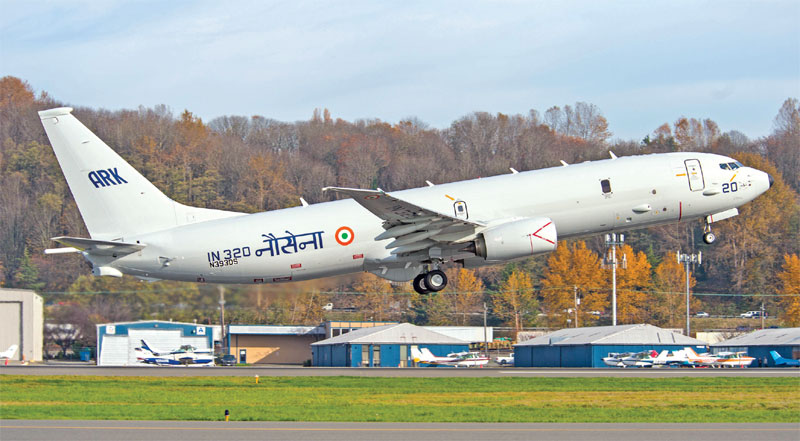
The P8I will provide the Indian Navy with unmatched surveillance capability in the Indian Ocean region
Although it may seem contemporary, the idea of anti-submarine warfare is not new. In World War I, countries carried out submarine and anti-submarine warfare against one another.
China’s unwelcome forays into the Indian Ocean are well known. Its setting up of a base on the Djibouti islands is already seen by India as a threat to its own space in the Indian Ocean. Moreover, in the past few years Chinese submarines have been frequenting the Indian Ocean. In 2014, Chinese submarines docked at a port in Colombo. Satellite imagery in January 2017 revealed two Chinese submarines docking at Karachi. The spotted submarine types were Type 091 Han-class nuclear powered submarine and the Type 039 Song-class diesel electric submarine. Moreover, as recently as in January 2020, China and Pakistan conducted their Sea Guardian exercise wherein a Pakistani Agosta-90B type submarine was being operated alongside the Chinese warships. Given the situation in India today, anti-submarine warfare stands a crucial chance.
The threat of submarines violating Indian territory is real. Thus, there is a need to launch an anti-submarine warfare when the situation arises.








 VIDEO
VIDEO