

Threat from China
India’s strategic mistakes are making it very vulnerable
 Pravin Sawhney
The already complex relations between India and China worsened with the coming of the Modi government in 2014, a year after the world became multipolar, with China as one of the three major powers (the other two being the US and Russia) in the once-in-a-century change. Unwilling to accept China as a major power, India repeatedly said that a ‘multipolar Asia is necessary for a multipolar world’, implying that China publicly accept India as a pole like China in Asia.
Since China would not do this for two obvious reasons, India, after the 15 June 2020 Galwan killings, made border peace conditional to normalisation of ties with China. This issue being too complex to be resolved became the third reason for India to not normalise ties with China. The earlier two reasons were (a) for China, whose rise is based on trade and commerce with nations, all 193 nations in the world are equal poles. In these terms, India is as much a pole for China as Pakistan is. And (b) in geopolitical terms, China acknowledges only the major powers as distinct from the remaining poles in the world.
On the border issue, the reality today is what India finds hard to accept. Of the 3,488km long border that India claims to have with China, the latter accepts a mere 544km as its border (that too disputed) called the middle sector with India. For the rest, China claims Indian state of Arunachal Pradesh in the eastern sector as its territory, which it calls Zangnan (south Tibet). In the western sector, China claims India’s Union Territory of Ladakh. The middle sector, which comprises Indian states of Himachal Pradesh and Uttarakhand, has Barahoti as a prominent disputed area.
The existing state of the border has much to do with India which has mindlessly allowed the single border to become two borders and two military lines (one each claimed by India and China). This border complexity has been made worse by the reality that today, China is militarily far more powerful than India. Moreover, the People’s Liberation Army (PLA) has invested a lot in grey zone operations: activities where no shots are fired which could escalate into a hot war. With Modi government in India, which has repeatedly shown its unwillingness to fight with China, the grey zone operations on the disputed border work well for China to put pressure on India. Hence, on the one hand, China, by slowly gobbling up Indian territory continues to gain ground, especially in Arunachal Pradesh; and on the other hand, India continue to pretend that no territory has been lost.
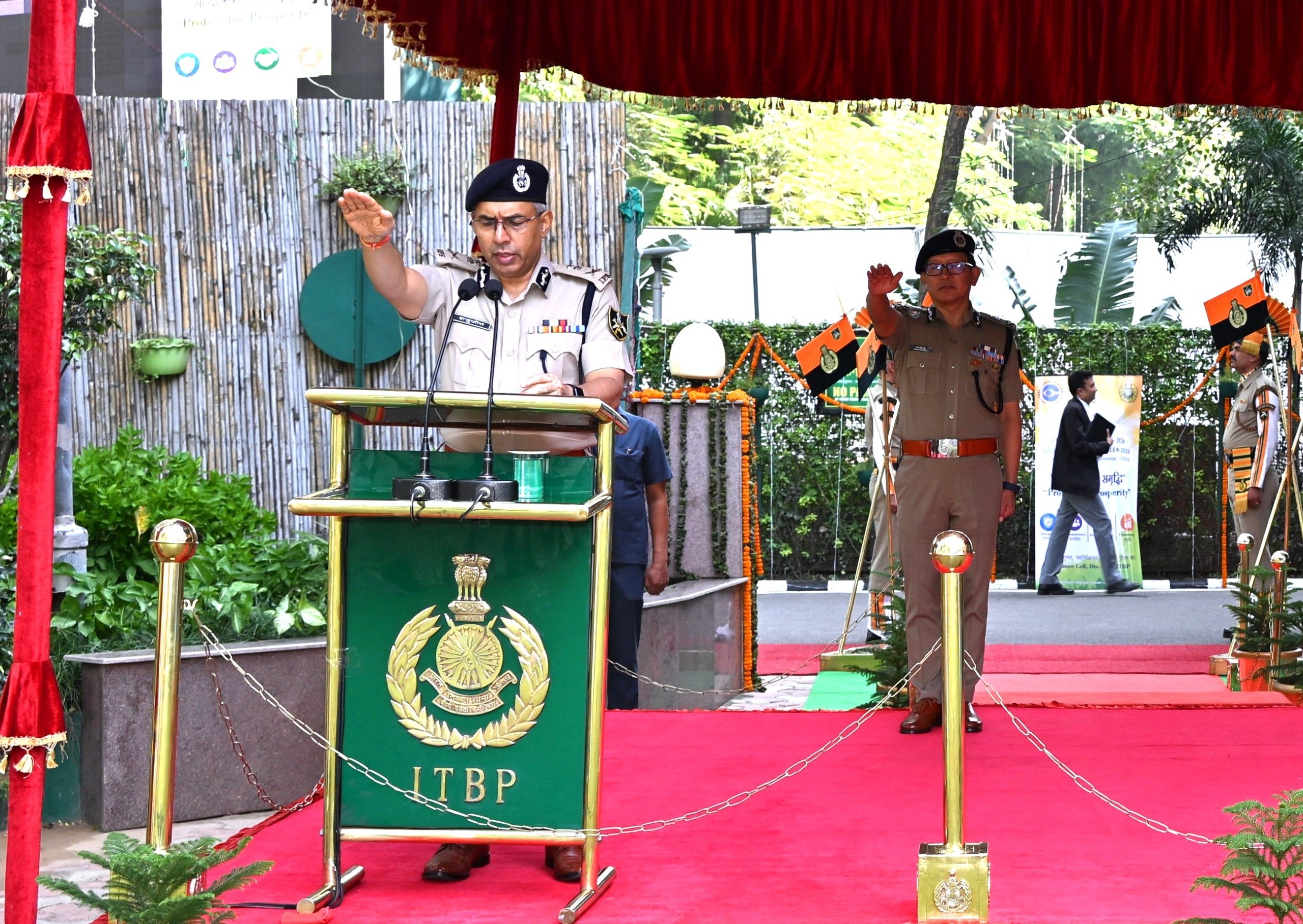
LEFT & BELOW ITBP Plantation drive in Leh; DG ITBP Shatrujeet
Kapur administering oath on Vigilance Day
The recent incident of October 22, when the director general, Indo-Tibet Border Police (ITBP), Shatrujeet Kapur said that face off was continuing with Chinese forces in Upper Subansiri district of Arunachal Pradesh since July, has once again brought the Indian helplessness to the fore. Moreover, The Hindu reported that the PLA had occupied seven to eight kms of Indian land in Upper Subansiri, with local journalists saying on videos that Chinese were 50-60km inside India. To recall, the Bharatiya Janata Party (BJP) Member of Parliament (MP) from Arunachal Pradesh west, Tapir Gao, had said this in the Parliament in 2019. The government, however, has consistently denied any occupation of Indian land by vague explanations.
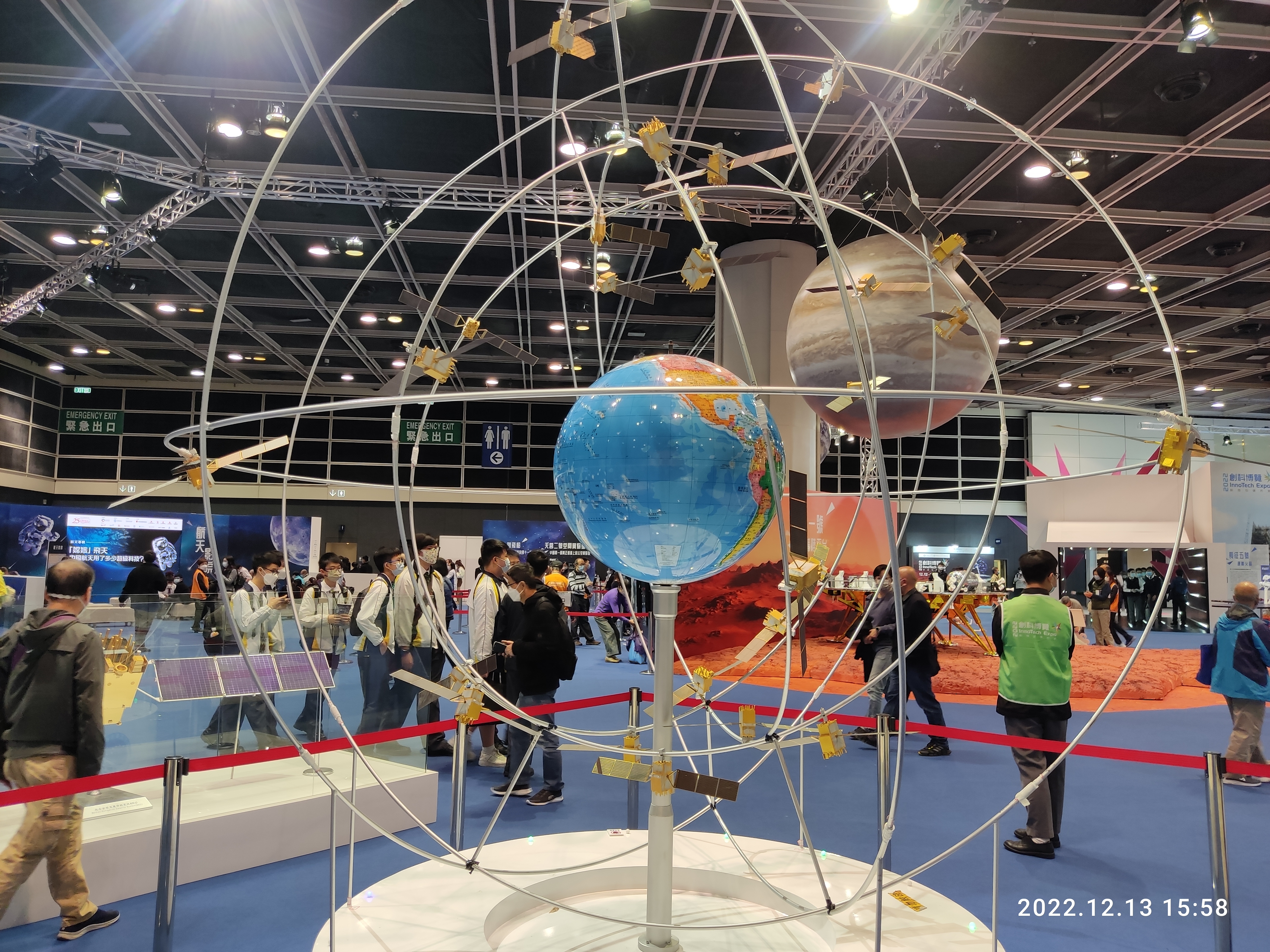
VIEW OF THE WORLD Model of the Chinese satellite system
Given that India will neither normalise ties with China, nor stand up to the PLA for its land grab by grey zone operations, it would be in order to know how we reached here. After the 1962 war, it was during the December 1988 visit of Prime Minister Rajiv Gandhi to China, when both had near similar Gross Domestic Product (GDP), they agreed to a modus vivendi. It was decided that the border issue would be addressed as one of the bilateral, with the focus on supporting each other’s development so that an Asian century become a reality. The big breakthrough required that subsequent Indian governments understand what needed to be done to take the bilateral understanding to its fruition.
Given the fact that the Britishers had left India with unclear western (Ladakh) and eastern (North East Frontier Province, which in 1975 became the state of Arunachal Pradesh) sectors bordering China, the need was to focus on border management. Build roads and other civil infrastructure, which China did, but India did not do. When the British left India, there was no border in the western sector. It was open trade between Ladakh and Xinjiang. In the eastern sector, Britain’s Sir Henry McMahon called the Simla conference in 1914 where he drew a line on a map of the eastern sector as the border between Tibet and China. Tibet accepted it, but the Chinese representative did not. Thus, two borders came into being. India as the successor state of British India accepted the McMahon line as the international boundary, but China called it a border (unlike boundary which is agreed to by both sides, a border is not agreed by one or both sides).
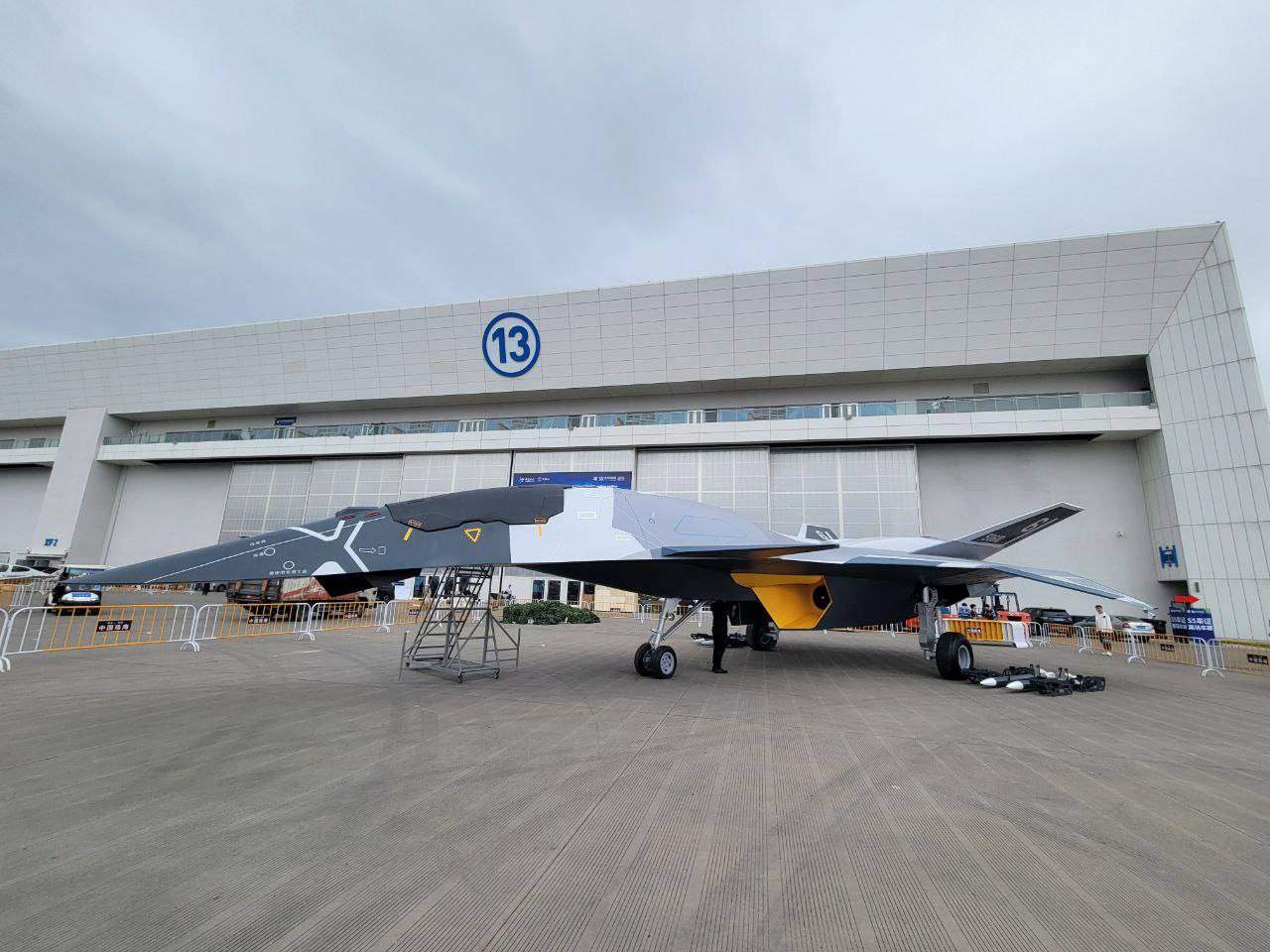
THE GAMECHANGER China’s recently revealed 6th Generation fighter jet
Another thing subsequent Prime Ministers who visited China should have done was to see how the border problem left by the British were mitigated. Instead, in the zeal to show that their visit matched the success of Rajiv Gandhi’s visit, they, by signing of new agreements, added to India’s border woes. For example, during the 1993 visit of Prime Minister PV Narasimha Rao to Beijing, India proposed and China readily accepted the entire border as the Line of Actual Control (LAC, a military line). Indian diplomats did not know the critical difference between a border and a military line. While both are not mutually agreed boundary, the latter, being a military one, must be held by force at all times since it could be moved to tactical advantage by the side with power and will to do so. And this is what the PLA has been doing by its grey zone operations.
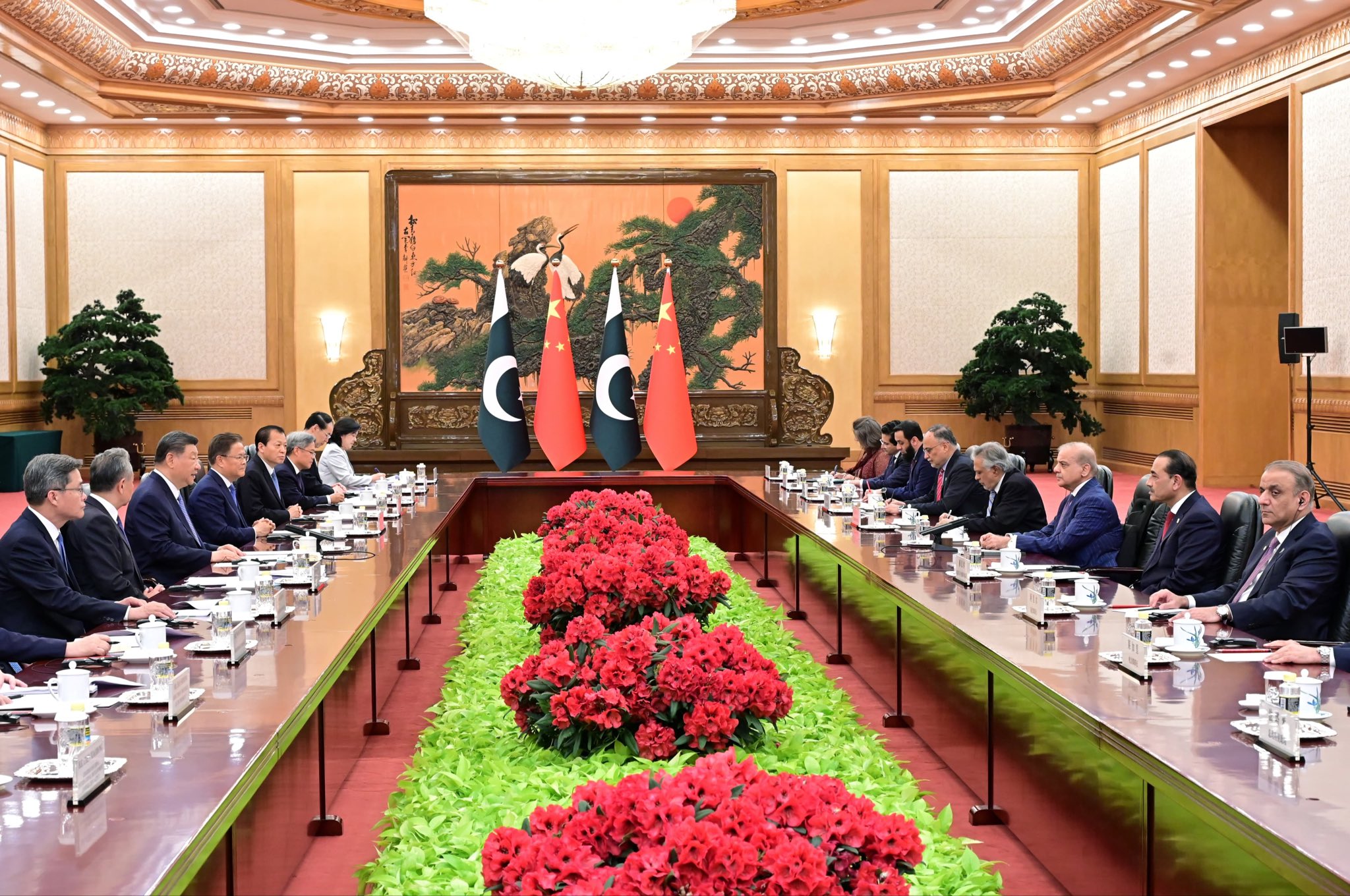
HIGHER THAN THE MOUNTAIN, DEEPER THAN THE SEA Pakistan Prime Minister Shehbaz
Sharif and army chief Field Marshal Asim
Munir with Chinese President Xi Jinping during a visit to Beijing in May 2026
Moreover, in the western sector, two military lines were formed. One was the 1993 LAC held by the Indian Army and the other was China’s claim line of 1959. The 1993 peace and tranquility agreement signed during Narasimha Rao’s China visit did not specify the LAC as 1993 or 1959. Thus, when the PLA in April 2020 came and occupied Indian territory in east Ladakh and came close to its 1959 claim line at most places in the western sector, the Modi government, unwilling to join issues with China that could have led to an escalation of hostilities, did worse than quietly acquiesce. In a public declaration on 19 June 2020 after the Galwan killings, the Prime Minister gave a clean chit to China by saying no one was occupying Indian territory. Thus, India accepted China’s 1959 arbitrary claim line which had no basis, instead of insisting on the 1993 LAC held by the Indian Army.
Worse, when India announced the bifurcation of the state of Jammu and Kashmir into two Union territories on 6 August 2019, China rejected India’s ownership of Ladakh Union Territory. Moreover, when India announced new names for 28 places in Ladakh in October 2026, China publicly laid claim to the whole of Ladakh.
In the eastern sector, Prime Minister Vajpayee’s 2003 China visit complicated matters for India. Without realising that China had not accepted the 1914 McMahon line as the boundary, India formally accepted Tibet Autonomous Region (TAR) as a part of China. This done, China since 2005 started issuing stapled visas to residents of Arunachal Pradesh, saying they were Chinese citizens. Then, in 2010, during the visit of Chinese premier Wen Jiaboa to India, China announced that its border with India was mere 2,000km. This excluded Arunachal Pradesh.
With all this baggage, it was evident that a militarily powerful China would continue grabbing Indian territory at will along the LAC. Especially, when, the Indian government is unwilling to normalise ties with China which allows it to pretend to its people that it has the determination to meet the PLA challenge on the LAC. This led to another disaster: the Agniveer issue where the chickens have come home to roost. The scheme was meant to generate more manpower for the LAC to meet the PLA’s grey zone operations challenge, without the liability of pension and other facilities meant for retired soldiers. This scheme created two sets of soldiers in a single unit, doing similar tasks, but with different benefits on retirement. It was forgotten that a unit’s espirit de corps or fighting spirit comes from soldiers who are equal in all respects. Finally, the government has realised its folly and reviewed the scheme, something it should have not done in the first place.
Sadly, the government has still not realised that not normalising ties with China, which today is a major power, has created its own set of geopolitical, economic and military problems. The Asian century, that Rajiv Gandhi sought, has come but India has decided not to be its part. While geographically in Asia, India wants to be identified with the declining West and its leader, the US.
 VIDEO