

The Shrinking Pie
Stockholm International Peace Research Institute (SIPRI) released its (much anticipated) annual report titled ‘Trends in International Arms Transfers-2020’ in March this year. India has been the second largest importer in the world for the period 2016-20. India also has a podium position as the third largest military spender (behind US and China) for the year 2020 and indeed, has increased its spending by 2.1 per cent over 2019, despite being in the throes of a pandemic.
The fact that the world’s third largest military spender should be the second largest arms importer is not only a cause for embarrassment but also a pointer to deep dents on an economy that can ill afford the patently high costs of foreign defence wares. The dismal state of our defence budget is lamentable and so is our priority as a nation to defence spending; the defence budget as a proportion of GDP has been shrinking steadily and, last year, the overall defence budget was 2.1 per cent of the GDP, the lowest since 1960s.
Consequently, as a nation, we have a defence budget that is inadequate to affording the defence equipment we need. With capital expenditure demands overwhelming the budget, lease has become the pragmatic, albeit less dignified, stratagem. This article addresses the enshrinement of ‘Leasing’ as a new category for acquisition in the current defence acquisition philosophy, the services’ exploitation thereof, and the benefits and shortcomings of defence equipment leasing.
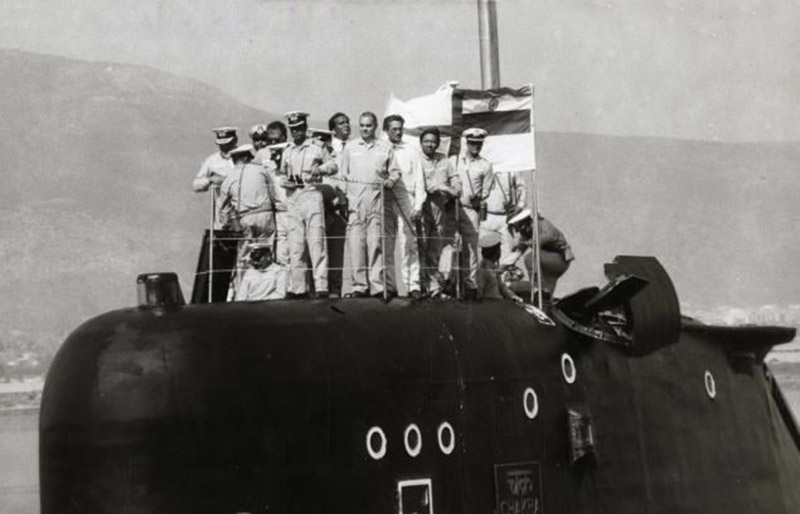
Indian Navy has been operating the leased INS Chakra since 1988. The current Chakra (formerly Akula) was leased in 2012
Leasing as A New Acquisition Category
The Defence Procurement Procedure (DPP) was first promulgated in 2002 and, while retaining that title, has undergone several mutations since then. The draft of the latest version, DPP 2020, was uploaded on the ministry of defence (MoD) website on 20 March 2020 and comments, recommendations and suggestions were invited from all stakeholders. The final document (to be effective October 1 last year) was titled Defence Acquisition Procedure (DAP) 2020 (and not DPP 2020). The subtle change in nomenclature possibly reflects the almost imperceptible difference between ‘procurement’ which conveys a purchase process and ‘acquisition’ with the accent on obtaining it.
The inclusion in DAP 2020 of a whole new chapter (running into 34 pages and called ‘Chapter IX: LEASING’) underscores that nuance and opens up a whole new gambit for the services. The document states that ‘leasing provides means to possess and operate the asset without owning the asset and is useful to substitute huge initial capital outlays with periodical rental payments’. Two types of leases are laid down: Operating Lease where ownership is not gained anytime over the lease period, and Finance Lease where the cost of the equipment leased is paid over the period of lease with an option to take ownership at the end of it at a predetermined payment. The chapter stipulates two sub-categories: Lease (Indian) and Lease (Global) and goes on to lay out cases where lease may be preferred to outright purchase. As a counter to budgetary outlay deficits, the introduction of leasing is an innovative reform, much needed at this time. Let us address the disparate approach of the three services to leasing.
The Indian Navy: The navy’s brush with leasing precedes the DAP 2020 by more than two decades as it leased its first Charlie class nuclear submarine (INS Chakra) in 1988; this was returned to Russia in 1991. After a huge hiatus, it leased an Akula Class nuclear submarine in 2012 for a ten-year period. This was also named INS Chakra and should have gone back to Russia in 2022 but may be retained for another three years.
This is because a new submarine for which a ten-year lease has already been signed is due to be inducted in 2025. The new inductee will also be named INS Chakra. All three are SSNs (short for Submersible Ship Nuclear) as distinct from SSBN (which is Submersible Ship Ballistic Missile Nuclear) which carries nuclear ballistic missiles; the current and future INS Chakras have strategic weapon capability which has been kept out of the lease deal in deference to Missile Technology Control Regime (MTCR).
Subscribe To Force
Fuel Fearless Journalism with Your Yearly Subscription
SUBSCRIBE NOW
We don’t tell you how to do your job…
But we put the environment in which you do your job in perspective, so that when you step out you do so with the complete picture.






 VIDEO
VIDEO