The New World Order

Stuck in the past, India is slow in recognising it
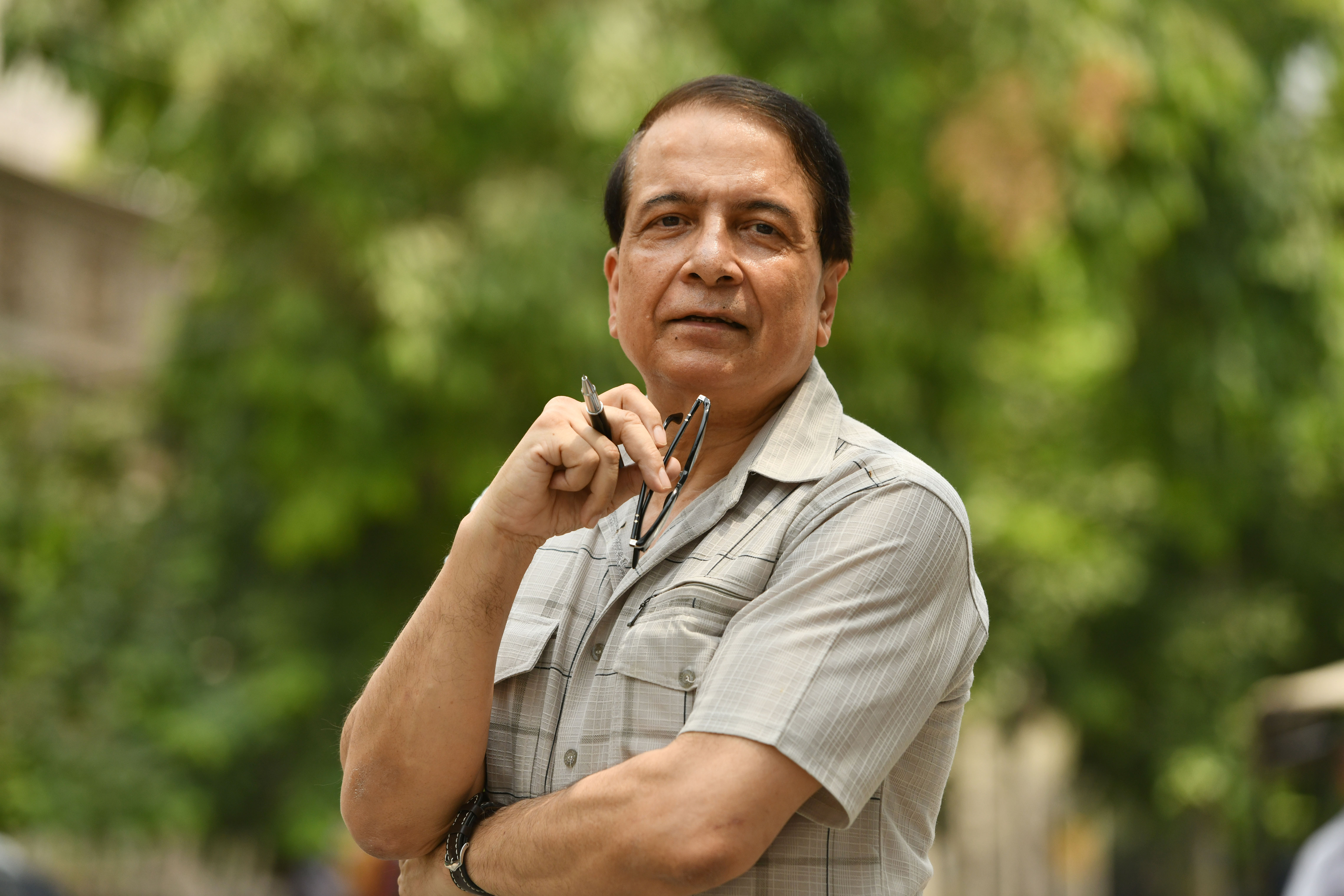
Pravin Sawhney

During my recent visit to Moscow, I had an opportunity to interact with senior Russian foreign policy analysts. These conversations convinced me that India presently is at that sweet spot in history where it could have its cake and eat it too. Since the Ukraine war, today, an option exists for India to play an important role in shaping the new world order without being rushed into normalizing ties with China. Moreover, the possibility of an escalation of the border dispute with China would diminish, and perhaps with Pakistan too since Pakistan consults China on India. What is more, instead of India being the vassal state of the US, the latter would likely pursue Delhi for a partnership.

Unfortunately, India does not want to consider this option. It wants to continue wooing the US, never mind the innumerable public insults that President Trump has heaped on the Indian leadership in his second term in office. Trump’s foreign policy has been so unpredictable that some of US’ closet allies like Canada and UK, harassed by US’ unreasonable demands and high tariffs, have decided to trade with China.

Let’s understand this. It is ironic that under the present Trump administration, India lost the strategic role given to it by the first Trump administration in May 2018 when the US renamed its US Pacific Command as US-Indo Pacific Command to give centrality to India in its Indo-Pacific strategy against China. This had formally anointed India as the US military bulwark against China by becoming the net security provider (including for combat) in the Indian Ocean Region (IOR) through which some USD three trillion worth of Chinese trade passes annually.

By supporting the US’ global role in the Indo Pacific, India projected itself as China’s regional competitor to safeguard its traditional role bequeathed by British India as the hegemon in South Asia and IOR. China, through its Belt and Road which except for Bhutan has been adopted by all South Asian nations and with its military base in Djibouti (Horn of Africa) has threatened India’s regional stature. It is commonsense that if India has to project itself as competing with China, it cannot normalise ties with it. This, and not the border dispute, is the real reason why the Modi government will not normalise ties with China even as (a) Beijing has emerged as India’s primary trading partner ahead of the US, and (b) the risk of war with China remains. To lessen the latter, India is keen that President Trump visit India this year for the QUAD summit since India believes closeness with the US would deter China’s aggressive activities on the Line of Actual Control where the two militaries remain in proximity since April 2020.


UNCERTAIN TIES Prime Minister Modi with Russian President Vladimir Putin during latter’s state visit to India in December 2025


In its unflinching quest to be close to global north nations, India signed the Free Trade Agreement (FTA) with the EU after years of negotiations on January 27. President of the European Council, António Costa and president European Commission Ursula von der Leyen were guests at the Republic Day parade, following which the FTA agreement was signed. However, the problem with this agreement is two-fold: One, the signed FTA would take more than a year to come into force. The draft of the agreement would be circulated to the 27 EU nations, which would study it and offer their own suggestions. Once this long process is done, it would come up for voting in the EU parliament. This brings us to the second point, which is, given the global geopolitical uncertainties, especially the fact that UK is hugely depended on the US for its security and technology amongst other things, the future of EU, which is closely associated with the future of 32-nation NATO, is uncertain. Thus, at present, it is fair to say that this FTA is more of a wish than reality.

Next, after a year of name-calling, President Trump wrote on his social media account on February 3 that the trade deal had been agreed with India. Giving details, Trump wrote that India had agreed to end purchase of Russian oil; zero tariff on US goods in return for 18 per cent tariff on Indian exports to the US; and to enhance the earlier agreed annual trade of US 500 billion dollars to include agriculture goods (something India did not agree in the EU FTA keeping Indian farmers interests in mind).

The point to make is this: India is desperate to have President Trump attend the QUAD summit in India this year, when India also holds the BRICS presidency. Anyone with a cursory understanding of the global geopolitics knows that BRICS is the most important institution of the new world order supported by Russia and China which had attracted majority of the global south nations towards it. By agreeing to the trade deal which hugely favours the US, India has demonstrated two things: One, it is not disturbed by the fracture of the global north nations caused by President Trump, which has signalled the sharp decline of the US empire. The important thing for the Modi government and its supports is to cosy up to the US. And two, India does not care much about Russia, whose recent foreign policy orientation has failed to interest the Modi government.

Little known in India, Russia, within months of the Ukraine war which started in February 2022 was mulling over re-orientation of its foreign policy. Russia, being the largest nation in the world, has a two-front foreign policy—one towards west, and another towards east and south. Until the Ukraine war, Russia’s foreign policy was focussed on the west. For example, the bilateral trade between Russia and European Union in 2013 was Euro 413 billion.

The war, and ensuing sanctions drove Russia to look towards east and south. This is the essence of its March 2023 ‘Concept of the Foreign Policy of the Russian Federation’, which is the strategic planning document issued by the Russian foreign ministry. In the 10 foreign policy priorities listed in this, the top four are: Near Abroad (the 14 breakaway republics of the Soviet Union); the Arctic; Eurasian continent; and Asia Pacific with Europe and the US at eighth and ninth places. Importantly, under the Eurasian continent, only China and India are mentioned, implying these are the power centres in Eurasia with whom Russia would engage intensely. Senior Russian experts told me that Moscow considers China as a ‘great power’ while India has been assessed as an ‘emerging great power’. So, under China, the document mentions the need for bilateral, regional and global interactions, while focus with India is on strengthening bilateral relations.


CLUTCHING AT STRAWS Prime Minister Modi with US President Donald Trump during his visit to Washington in February 2025


As far as organisations go, the Russian document distinguishes between RIC (Russia, India, China) framework and BRICS (which grew from the RIC framework). The RIC framework was conceptualised in 1998 by the Russian foreign minister Yevgeny Primakov as a counterweight to the US and Europe. An expert in global geopolitics, Primakov had clubbed two populous nations, China and India, with Russia to cater for the contingency when Russia may have to focus its gaze from west to east and south. By adding Brazil and South Africa to RIC, BRICS came into being in 2010 and is today the most important institution of the new world order supported by majority of the global south nations.

Interestingly, while the Ukraine war has proved Primakov as a visionary, he, like the rest of the world, failed to foresee that China would emerge as the most powerful nation, second only to the US, in the world. Moreover, while few are willing to concede publicly, the reality is that China will be the number one nation in the world within a decade. Thus, instead of balancing the US and Europe, Russia today needs India to balance China within the RIC. This is why Russia is keen to strengthen bilateral relations with India. While no Russian says this truth openly, their arguments betray their anxiety. 

However, the Russian anxiety is unfounded since it is based on the global geopolitics where they believe the world is both multipolar and polycentric. Premised on the concept of balance of power politics, Russia, like the US and India assess multipolarity as having regional power centres (polycentricity). Now, balance of power politics is about seeking spheres of influence. 

Thus, in Eurasia, Russia has identified China and India as two such power centres. Thus, the argument is that while all nations big and small should have sovereign equality to choose their development path, big nations in their own regions may have to take decisions on behalf of smaller nations. This is the concept of minority deciding for the majority. Furthermore, Russia needs to have overall interaction with the chosen power centres to include trade, technology, development and so on. Thus, there should be horizontal connect as well as connect within a region. Commenting on the multipolar, polycentric world order, President Putin in his annual address in 2025 at the Valdai Discussion Club in Moscow conceded that in the long run such a world order may not be stable.

China, however, working on its economic strength has chosen geo-economics rather than geopolitics as its trajectory for global rise, something that the world is not familiar with. In this thinking, all 193 nations, big and small, under the US should not only have sovereign equality to choose their development path, but no nation should seek spheres of influence. Given this, China is seeking not spheres of influence, but influence, which it would get through its Belt and Road Initiative (BRI). With some 149 nations onboard the BRI, China wants to take the development route through physical and digital connectivity with the BRI nations to help in their progress. China calls this helping the community of nations. What China gets in return are two things: One, it gets deference through partnership with the BRI nations, implying that they remain sensitive to China’s foreign policy and core concerns. And two, this helps China in its fundamental goal of ‘national rejuvenation’—make China a prosperous and self-sufficient nation. So, while China is not an expansionist power like the US which seeks global hegemony, it certainly will not forsake what it claims to be its land. Thus, China claims Taiwan and Tibet, and it wants freedom of navigation not only in the South China Sea but across the two oceans: Pacific and Indian. For this, China is building credible military deterrence.

While China claims India’s state of Arunachal Pradesh as south Tibet, it is not in a hurry to get it. For China, India is important both as a huge market and as a member of BRICS. It too, like Russia, wants the RIC to be strengthened. While China does not need balancing of nations within the RIC, its other two reasons are similar to those of Russia.

Russia’s two reasons for strengthening the RIC, something they said publicly before the state visit of President Putin to India in December 2025 are that the RIC would be a powerful voice in the new world order, and this framework might help build mutual trust between India and China. These two reasons were given by the Russian ambassador to India, Denis Alipov. 

Obsessed with close ties with the US, India has failed to see how the RIC would allow India to punch beyond its weight—become an equal partner of one great power (Russia) for normalisation of ties with another great power (China) at its own pace with Moscow being the guarantor of peace between the two. 

After all, Russia has played this role twice for the Modi government. First, after the 2017 Doklam crisis when Prime Minister Modi had back-to-back summits with Xi in Wuhan and Putin in Sochi in 2018. And later, after the Galwan killings, Moscow helped India sign the 10 September 2020 joint statement for peace between India and China. If India were to put its weight behind the RIC, it would automatically elevate its stature in Asia, unnerving the US. Given the announced trade deal between India and the US it is clear that India has no intention of reviewing its foreign policy.


Subscribe To Force

Fuel Fearless Journalism with Your Yearly Subscription

SUBSCRIBE NOW

We don’t tell you how to do your job…
But we put the environment in which you do your job in perspective, so that when you step out you do so with the complete picture.