

The New World
War on Iran has accelerated the end of the US supremacy
 Pravin Sawhney
While phase one of the war in West Asia has gone decisively in favour of Iran, a glimpse of what to expect in phase two, if it happens, is as clear as daylight. Also clear is what the world would be like after the war.
Phase one involved Iran taking control of the Strait of Hormuz. Phase two, on the other hand, is about the ground war. Limited US ground forces (some 5,000 marines and 1,500 airborne troops) have arrived in West Asia with US secretary of state, Marco Rubio, saying that large ground forces would not be needed. Notwithstanding his intentions, once ground war begins and losses accumulate, wars acquire dynamics of their own where escalation control becomes difficult. However, to understand what lies ahead, there is the need to understand Iran’s successful war strategy.
Conscious of Israel’s war strategy which focussed on targeted killings to effect regime collapse in the hope that Iran would disintegrate along religious and ethnic lines, Tehran had decentralised its command. Thus, Iran created numerous ‘lines of effort’ capable of commanding their own effort. For example, Iran’s regional proxies like Houthis in Yemen, Hezbollah in Lebanon, militias in Syria and Iraq and so on should be seen as its different lines of war effort. Similarly, within Iran, it substituted unity of command, which is a regular practice with most professional militaries, with numerous provinces’ commanders, which while responsible for their target lists, coordinated with other regional commanders to help review and update their own target lists. Unity of command implies a single overall commander, a luxury available when a nation fights a ‘war of choice’. Iran’s strategy paid dividends as it was able to respond effectively and swiftly after its senior leadership including the supreme leader were assassinated on 28 February 2026.
For Iran, aware that it was fighting Israel backed by the US or both fighting together as happened starting February 28, it was a ‘war of survival’ where it had to wage an asymmetric warfare against the US with the largest military in the world.
So, Iran correctly chose the two centres of gravity (US vulnerabilities) for the war with the US. The main centre of gravity with global economic implications was the Strait of Hormuz through which 20 per cent of the world oil flows in addition to gas, fertilisers, petrochemicals and so on. This also included the Strait of Bab-el-Mandeb, through which 12 per cent of the oil passes; this could be closed by Houthis. The other centres of gravity are the US bases in the six Gulf Cooperation Council (GCC) nations. Iran made it clear before the war that if US attacked Iran, it would hit its bases in the region with proportionate response.
Another element of Iran’s war strategy was the need to achieve missiles and drone dominance in the war theatre, which it accomplished. Since the distance between Iran and Israel is over 1,000km, and the fact that Iran could not match the fighter technology of the US and Israel, it chose to focus on high-end missiles which travel at high-speed in the higher reaches of the atmosphere close to space which is 100km altitude from earth. In these advanced missiles and drones, Iran had got enormous help from China and Russia, the two nations with superior advanced missiles technology than the US.
Moreover, Iran, over decades, built underground missiles cities and command and control centres where the US’ advanced bunker busting bombs could not reach. The missiles and drones are fired from underground mobile launchers. It also built underground indigenous production facilities for missiles and drone to fight a long war.
Regarding naval warfare, keeping the shallow waters of the Persian Gulf (with depth of 200 metres) in mind, Iran focused on undersea warfare. This involved undersea tunnels with capabilities like different kinds of mines, midget (very small) submarines, fast crafts and anti-ship cruise missiles which can be fired from undersea.
Most importantly, Iran is helped by China’s Baidu-3 satellite constellation which is more advanced than the US’ Global Positioning System (GPS). The Baidu-3 is a hybrid architecture in three orbits (Medium Earth Orbit, Inclined Geosynchronous Orbit, and Geosynchronous Orbit) supplemented by Yaogon augmentation satellite systems in the Low Eart Orbit. This helps in round-the-clock visibility focused on Asia Pacific region and precision strikes with little worry of jamming by US jammers on ground and air.
This is what 21st century warfare is about. It involves capabilities of space, control of electromagnetic spectrum to avoid jamming and cyber security. It also comprises undersea warfare and utilisation of higher altitude of atmosphere (from 20km to 100km altitudes) with advanced missiles and drones, and across-the-board use of Artificial Intelligence and autonomy.
The US military has a plethora of 20th century platforms like aircraft carriers, big ships, sophisticated fighters rather than drones and advanced missiles which can be mass produced at small cost and delivered at long distances with precision. Reports have come that two US aircraft carriers which had been damaged by Iranian missiles have exited the war theatre. Then, Iran has destroyed most US ground radars; it also destroyed an airborne radar and three refueller aircraft parked at Saudi Arabian airbase. Moreover, a few marines who were in Kuwait waiting to be launched for ground operations have been killed by accurate missile strike.
The above shows the help that Iranian missiles and drones are getting from Chinese Baidu satellite constellation for target acquisition and precision strikes. It also gives a glimpse of things to come when the US would launch its ground operations against Iran. The reality is that tough times await the US. To use the euphemism, the US is jumping from the frying pan into the fire.
After the War
The world will not be the same after the war. The once-in-a-century change that Chinese and Russians presidents spoke of since 2013, would not only become a reality, but it would get accelerated. The New World Order, which conceptually had found favour with majority of the global south nations would get a collective voice in the new RIC, the present being Russia-India-China framework. The new Russia-Iran-China framework, which is likely to happen, would include three exceptional nations, two great powers and Iran with the distinction of having beaten the US’ exceptional strengths: its military power and the US dollar as the reserve currency of the world.
In March 2013, the newly appointed Chinese President, Xi Jinping made his first oversees visit to Moscow to meet President Vladimir Putin. The two leaders agreed that the world had become multipolar with three great powers instead of the US as the lone superpower in the unipolar world. They also agreed that with the economic rise of China and numerous nations of the Global South, there was a need to bring them together under a common vision and institutions that supported their rise. The vision was to focus on development through peace, and the institutions like Brazil, Russia, India, China and South Africa (BRICS) and BRICS bank (New Development Bank) were to help them without discrimination and political strings as was the case with Bretton Woods institutions like the International Monetary Fund (IMF) and the World Bank which were created by the US.
Since Russia, given its massive landmass, had a dual-focussed foreign policy towards both the West and South/East, its foreign minister, Yevgeny Primakov, came up with a bright idea. In the Nineties, while Russia was seeking close ties with the US and the West, Primakov was conscious of the deep-seated Russophobia built over the decades of the Cold War. Being a master strategist, he decided to bring two populous nations of the South/East, India and China, with it as a future counterweight to the US and the West. Thus, the RIC framework was formed, which incidentally evolved into BRICS as a robust institution of the New World. Here, the RIC was meant to be the collective voice of the New World Order against the present world order dominated by the US and comprising global north nations.
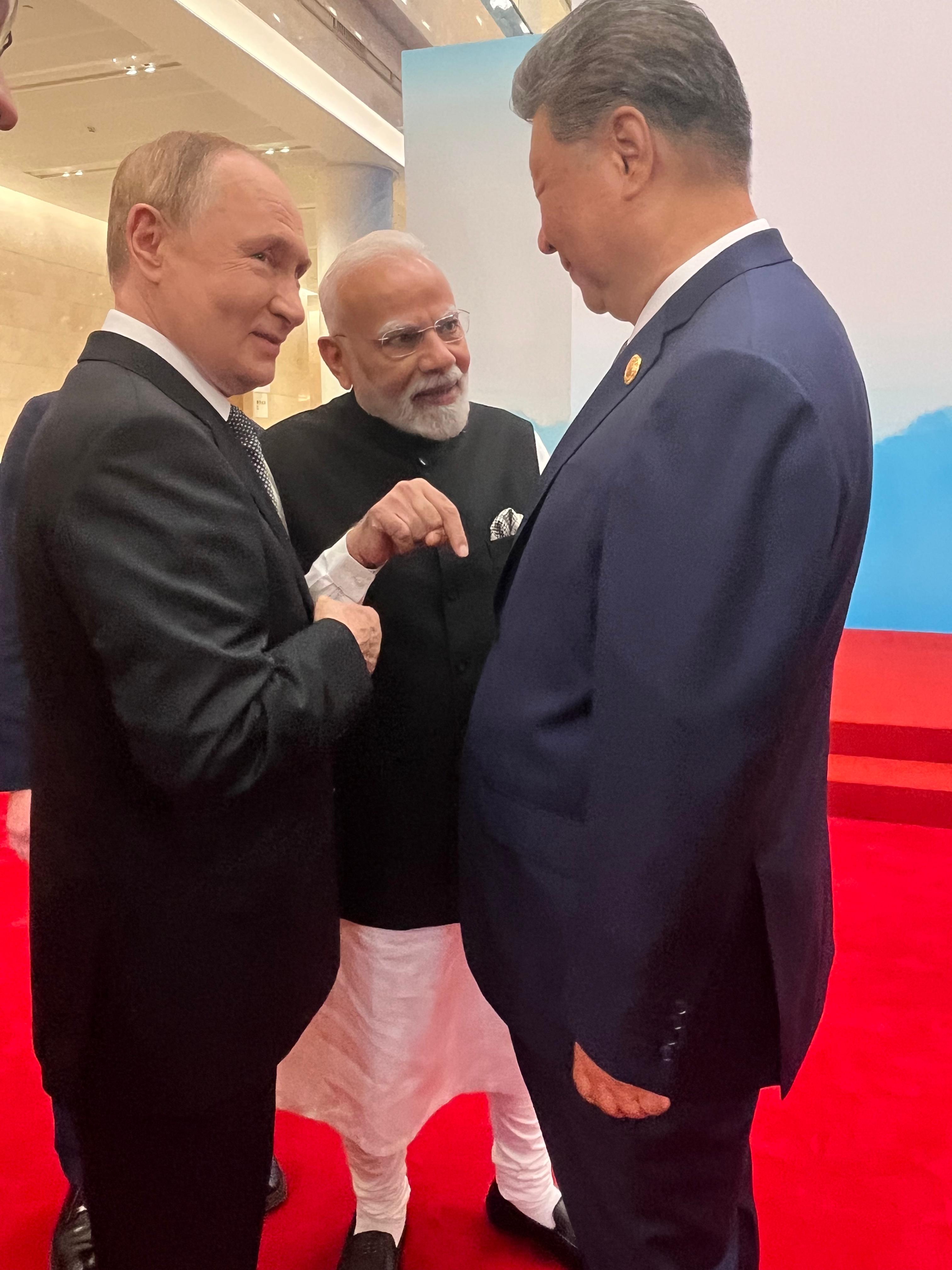
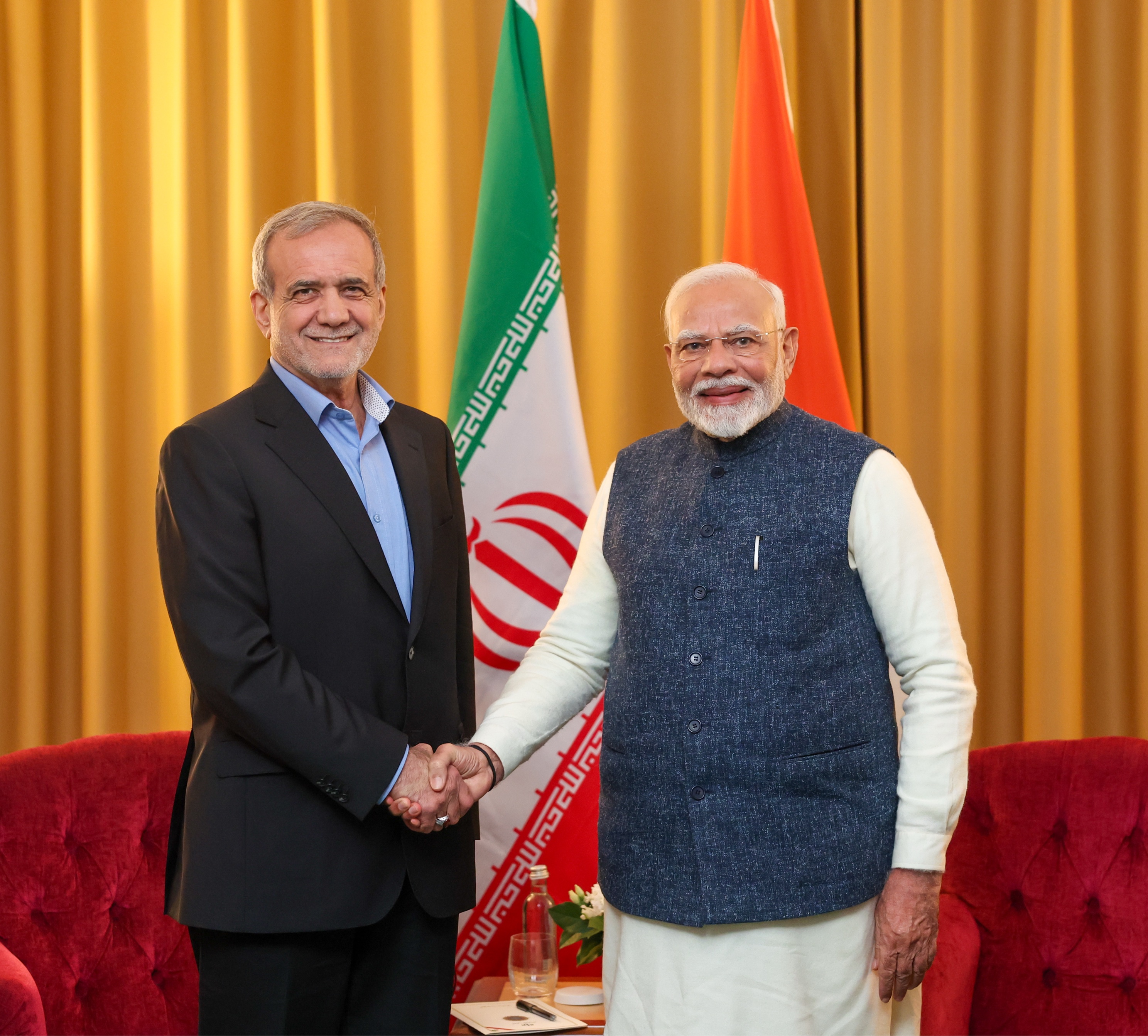
THOSE WERE THE DAYS Prime Minister Narendra Modi with Chinese and Russian President Xi Jinping and Vladimir Putin during
the 2025 SCO’s Summit in Kazan, Russia; Prime Minister Modi with Iranian President Masoud Pezeshkian during BRICS’ 2024 Summit
Now, when the Narendra Modi government came to power in May 2014, it remained unmindful of the evolving New World Order. It believed that since the US would remain the foremost power in the foreseeable future, it needed to invest in it. By aligning with the US, as was the case in the unipolar world, India felt that it could compete regionally with China, whom it refused to accept as a great power in the multipolar world. Competing with China meant (a) to nullify China’s impact of its Belt and Road Initiative (BRI) which, except Bhutan, all nations in South Asia had joined, and (b) maintain India’s hold in the Indian Ocean Region (IOR), which India considered its backyard, by aligning with US’ Indo-Pacific command.
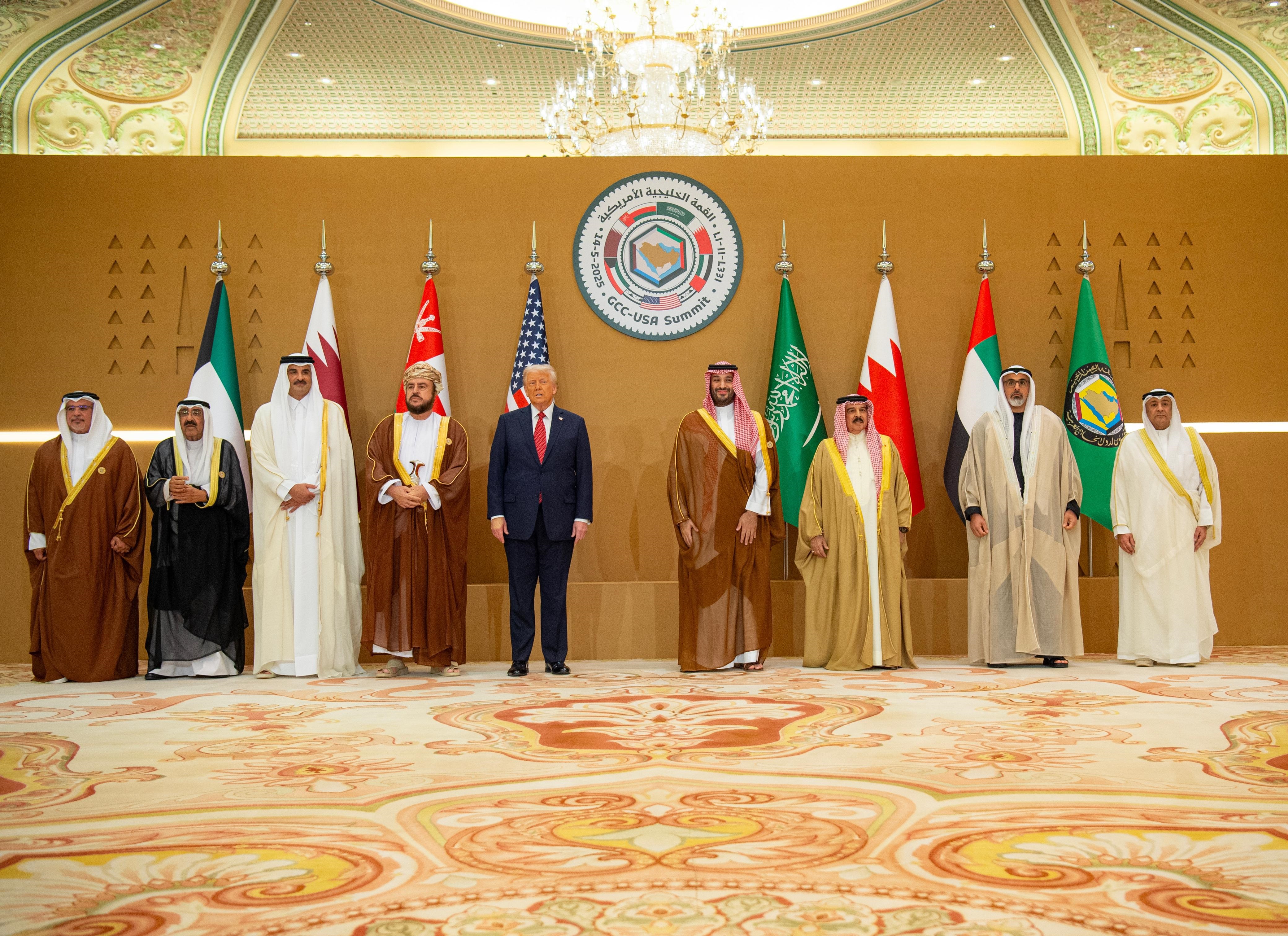
THE COLLABORATORS Saudi Crown Prime Mohammad bin Salman hosted a joint GCC-US in Riyadh in May 2025
Thus, while being a global south nation, India proclaimed that it could be in the BRICS and QUAD (US-led global north institution) at the same time. Thus, India, despite Russia’s public request, did not revive the RIC for two reasons: refusal to normalise ties with China, and its loyalty towards the US and affinity for global north nations. Given this, RIC could not become the collective voice of the global south in the New World Order.
The war in West Asia has altered things dramatically. Today, Iran has the capability to not only wreck the global economy, but it can also bomb the GCC nations to irreparable damage. For example, if Iran was to hit the desalination plants and oil and gas infrastructure of the GCC nations, they would become an unliveable place.
With this threat looming large, Iran has chosen to maintain de facto control of the Strait of Hormuz to which the US has no military solution. The Iranian Parliament is working on the ‘Strait Security Arrangements’ bill which will help Iran control navigation safety, financial arrangements and toll regulations to exercise its sovereignty in cooperation with Oman. Legally, Iran along with the US and Israel have not signed or ratified (in the case of the US) the United Nations Convention on the Laws of the Sea (UNCLOS). Moreover, a recent UN resolution moved by the GCC nations to open the Strait of Hormoz with military force has been vetoed by China, Russia and France.
With Iran being in control of Hormuz, on the one hand, it is likely to instruct the GCC nations to trade in petro Yuan instead of the petro Dollar. This would destabilise the US economy with an already national debt of USD 39 trillion. Moreover, with no nation willing to buy its debt, the US will not be able to afford its massive annual defence allocation. For 2027, the US has sought USD 1.5 trillion defence budget which is more than the combined defence allocations of next 10 nations.
On the other hand, the GCC nations who paid for the US bases on their soil in the hope they would provide it security would have a re-think. They are likely to ask the US to close their bases. Instead, the GCC nations may seek collective security with Iran, something that Iran had offered them in the past.
Moreover, in Europe, Russia has told the European Union (EU) nations that it is willing to sell it oil and gas provide the payments are in Chinese Yuan. This is not all. A key objective of BRICS is to encourage the member nations to bypass the US dollar by trading in local currencies. Thus, the US, by mindlessly starting the war with Iran has ended up with its own downfall, resulting in the rise of the New World Order.
Since Iran has brought about these momentous changes in the world, China and Russia are likely to have Iran in the RIC framework. While the US and India (unless it alters its foreign policy drastically) will be the losers. The other global north nations have already started making deals with Iran and China, to be soon followed by Russia. Only those stuck in the past are unable to see the future.

 VIDEO
VIDEO