In early October 2019, personnel from the Border Security Force (BSF) posted near the India-Pakistan Border at Ferozepur, Punjab, spotted a drone entering the Indian territory. This wasn’t a new thing as the Punjab police have earlier on many occasions spotted a number of such Chinese drones, crossing the border purportedly to drop weapons and ammunition, or drugs to the handlers on the Indian side.
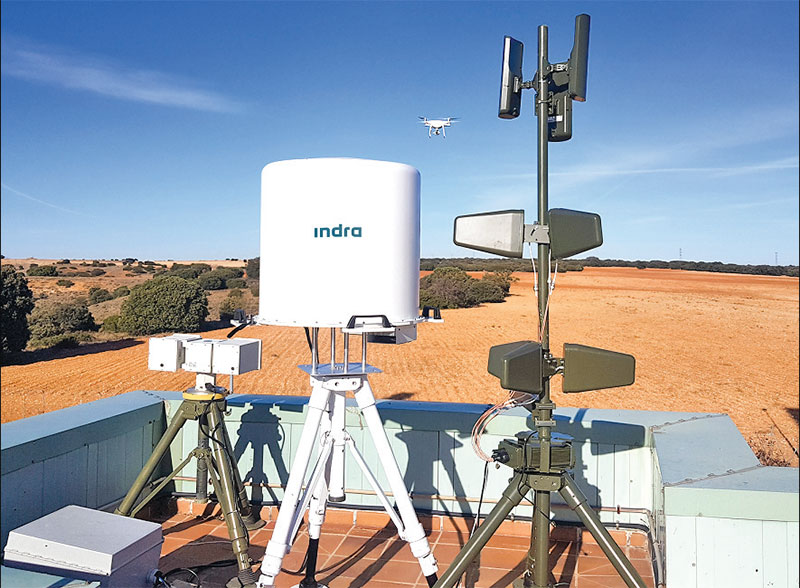
Indra’s new anti-drone system
The security personnel had just a week earlier recovered two drones in Punjab which had come from Pakistan. Drones carrying heavy payloads have been found to drop AK-47s, counterfeit currency and narcotics across the border, an investigation carried out in Tarn Taran by the security forces in Punjab revealed. According to the government, the packages once dropped by the drones on this side of the border are retrieved using GPS coordinates.
Following the developments, security forces were given clear orders to shoot down drones flying at a height of 1,000 feet or below. Indian security agencies seem to have woken up to the new threat that may require a far greater level of surveillance and protection. The International Border in Punjab specifically has seen most of the drones crossing the border, on account of its proximity to Pakistan and the presence of active sleeper cells, such as the Khalistan militant group.
The defence ministry on October 11 directed the BSF to adopt anti-drone mechanism to prevent such activities from across the border. The force, the first line of defence, has been tasked to develop the necessary measures to counter this new mode of weapons transport used by the adversary. The BSF is struggling with lack of anti-drone technologies in its inventory, and even the Indian Air Force (IAF) lacks proper radar surveillance aimed at low-flying and small objects. The force has reportedly told the top brass that it lacked the capacity to monitor any kind of aerial movement. Being GPS-enabled, and moving through Radio Frequency (RF) signals, these objects are highly difficult to detect and be pursued.








 VIDEO
VIDEO