South Asia must develop a regional security plan against US interventionism
Pramudith D Rupasinghe
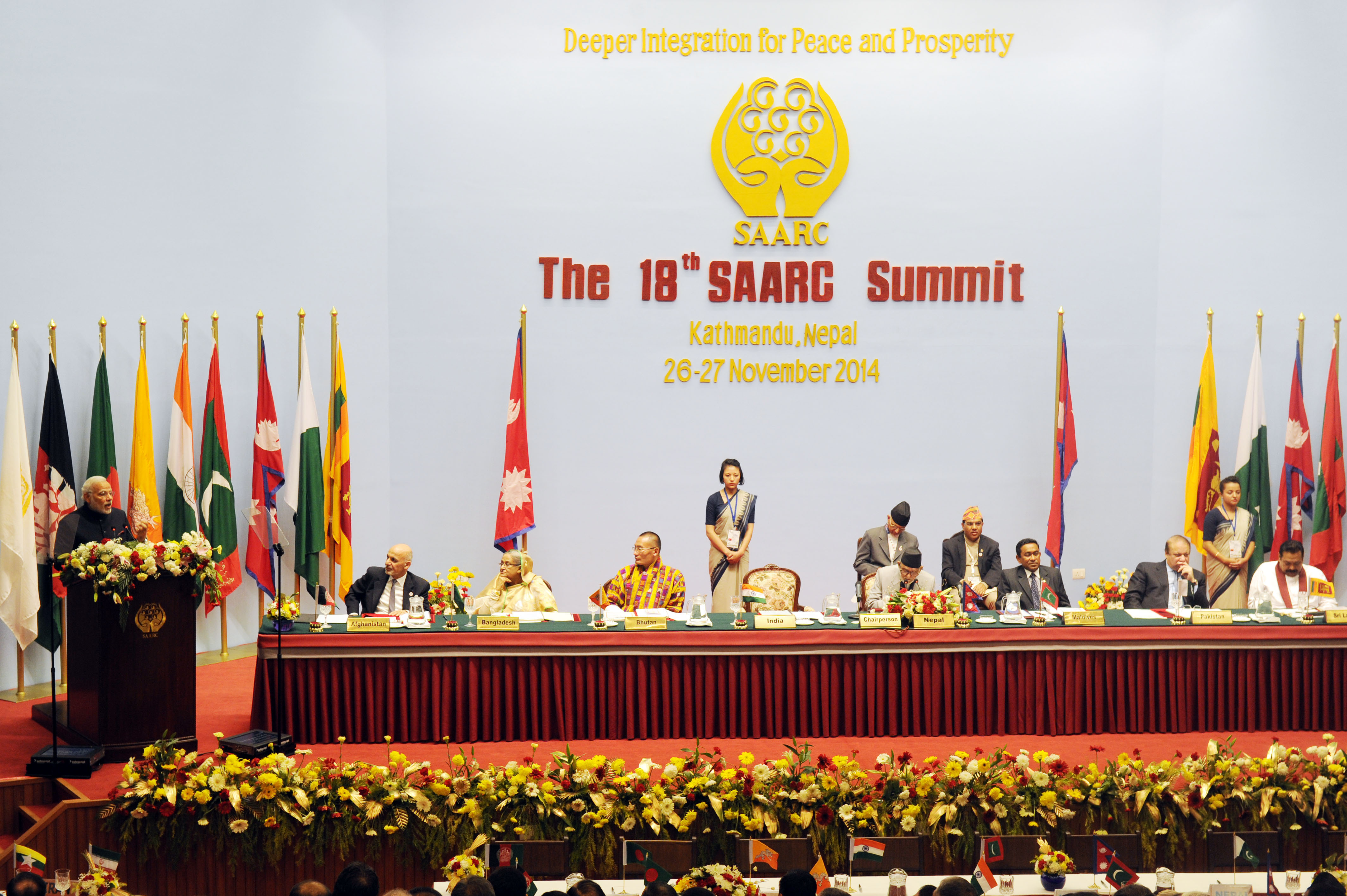
GONE TOO SOON Prime Minister Narendra Modi addressing the inaugural session of the 18th SAARC Summit in Kathmandu,
Nepal on 26 November 2014. The organization unravelled after that
The abduction of Venezuelan President Nicolás Maduro by the US forces marks a watershed moment in 21st-century international relations, signalling a return to unilateral American interventionism that threatens the sovereignty of resource-rich nations across the Global South.
On the surface, the Trump administration’s justification for the rendition of Maduro—citing drug trafficking charges and alleged crimes against humanity—appears to follow established precedents of international law enforcement. However, the operation’s execution, bypassing both the Organisation of American States and the United Nations’ Security Council, reveals a more troubling reality: the consolidation of an America-centric power dynamic that subordinates international law to unilateral action.
This development arrives alongside other assertive Trump administration policies, including the proposed acquisition of Greenland, renewed canal sovereignty claims over Panama, and aggressive posturing towards Mexican territorial waters. This also takes one’s memory back to the intervention in Iraq during the time of George Bush. Collectively, these actions construct a doctrine of strategic resource control that directly threatens smaller nations’ sovereign decision-making, particularly regarding natural resources, strategic positioning, and political alignment.
The Venezuela Precedent: A Security Paradigm Shift


 VIDEO
VIDEO