‘My logisticians are a humourless lot… they know if my campaign fails, they are the first ones I will slay.’ This quote has been attributed to Alexander the Great, and in various similar forms to many others. Another popular quote, ‘Amateurs talk strategy, professionals talk logistics’ has been attributed to a range of military leaders from Napoleon Bonaparte to Gen. Omar N. Bradley of the US Army during the Second World War. Whatever the truth, it only serves to emphasise the importance of administration and logistics in war and even more so in counter-insurgency wars. These could be within the country or in out of area operations.
There was a time not very long ago when administration meant the same as logistics. However, with modern management science being applied to global supply chain management, the two are now considered separately. Put simply, administration is defined as the duties assumed in conducting logistics and the direction of that effort, whereas logistics is defined as the procurement, supply, maintenance and transportation of equipment, provision of facilities and personnel. A more relevant interpretation for our conditions would place procurement as part of administration and thus we could define the two together as the process of planning, implementing and controlling the efficient, effective flow and storage of goods, services and related management, from their point of origin to the point of consumption.
Purists might call this nit-picking, but the fact remains that all campaigns depend upon the smooth flow of men, materiel and means of sustenance to the fighting troops. It becomes even more important in remote areas or during counter-insurgency operations where a large section of the local population may be hostile or at best indifferent and uncooperative. These difficulties get compounded in out of area operations in conditions such as the IPKF in Sri Lanka. Frontline troops have little time to devote to managing logistics and when things go wrong, as they often will, it becomes imperative that they are provided with the wherewithal to continue operations without looking over their shoulders. This is easier said than done because unlike operations where the results are immediate and visible, the ill-effects of poor logistics may often take time to manifest. It then becomes all-important to plan and implement administration and logistics before troops are committed to action.
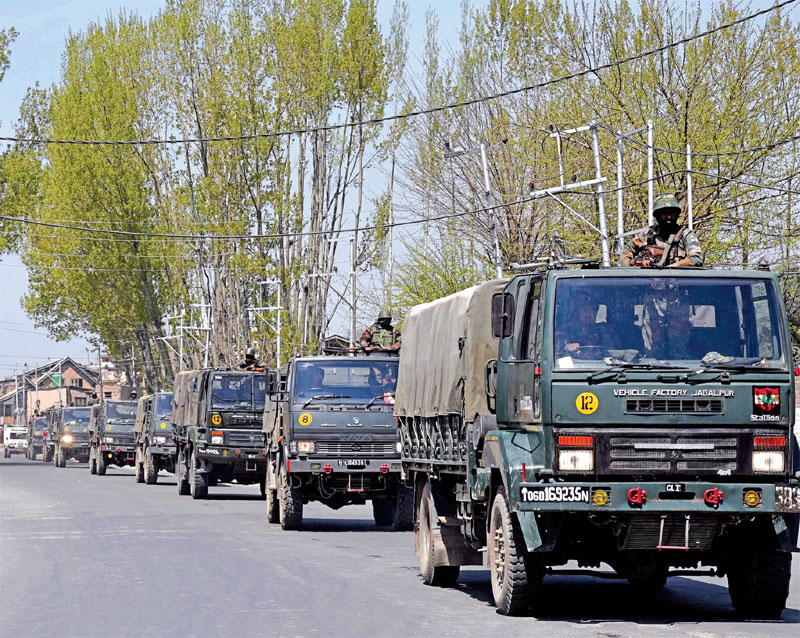
An army convoy
Administration of Troops
Provisioning: Our troops have to operate over different types of terrain along the length of the border. In recent years Indian soldiers have had to conduct counter-insurgency operations, mainly in Kashmir as well as many parts of the northeast. The existing infrastructure, though it is being improved, can range from good to indifferent with various levels of development in between. Add to this the weather, which in the northern and north-eastern reaches of the country, can range from snow, rain and persistent inclement conditions. Often, weather conditions restrict supply operations to six months in a year, as in Kashmir. Watch how winter stocking is done in J&K and Ladakh.





 VIDEO
VIDEO