

The Grey Zone
Lt Samuel Kamalesan’s dismissal from the Indian Army has raised many questions
 Cdr Shrikumar Sangiah (retd)
In November 2025, the Supreme Court of India upheld the 2021 dismissal, by the Indian army, of Lt Samuel Kamalesan, a Christian officer of the 3rd Cavalry regiment (a Sikh-majority regiment). Lt Kamalesan’s services were terminated for repeatedly refusing to enter the regimental gurudwara and lead Ardas (Sikh prayers) along with other officers during the regiment’s official religious parades. The army viewed this as a grave breach of discipline, its secular traditions, and regimental ethos.
Lt Kamalesan defended his actions on grounds of religious freedom under Article 25 of the Indian Constitution (Article 25 guarantees all persons the fundamental right to freedom of conscience and the freedom to freely profess, practice, and propagate religion). Freedom of conscience is the freedom of an individual to shape their relationship with God or inner beliefs in any way they desire.
The questions that arise from Lt Kamalesan’s termination, although outwardly simple, are profound—was his sacking legally, morally, and constitutionally justified? Or were an individual officer’s rights sacrificed on the altar of the army’s regimental traditions?
In situations such as this, when the lines between right and wrong are blurred, moral ambiguity is a natural consequence. When an incident defies clear judgment, our desire for moral clarity causes a nagging discomfort. The discomfort arises from competing values that cause cognitive dissonance. Our brain craves resolution, but reality presents nuance—denying us an easy resolution.
A parallel, to the moral ambiguity that the Kamalesan case evokes, is to be found in the Indian epic Ramayana. In some retellings of the Ramayana (especially in post-Valmiki adaptations), after Ravana’s death, his wife, Mandodari, marries Vibhishana (Ravana’s brother). The retellings of the Ramayana describe Rama advising Vibhishana, the new king of Lanka, to wed Mandodari as an act of ‘statesmanship’. The union is deemed essential to legitimise Vibhishana’s rule through the act of his marriage to the reigning queen to ensure the kingdom’s stability. The Vibhishana-Mandodari marriage exemplifies moral ambiguity arising from our notions of duty and personal conduct in ways that defy clear ethical judgment.
Scholars and commentators have analysed this marriage through the lenses of morality, ethical norms, and kingly duties. The moral ambiguity emerges from two legitimate but incompatible values. On the one hand, Mandodari’s marriage upholds pragmatic ethics meant to stabilise a war-ravaged kingdom. Yet, on the other hand it also creates unease. Did Mandodari agree to the marriage voluntarily or was she coerced by a mixture of grief, Rama’s authority, and political necessity? Mandodari’s marriage to her brother-in-law also challenges our ideals of fidelity and autonomy, especially since Vibhishana was married and had a living wife.
The tension between pragmatism in service of the greater societal good and personal moral integrity, evokes dissonance akin to the Kamalesan case (the army’s imperatives for safeguarding institutional ethos versus Kamalesan’s constitutionally-guaranteed individual freedoms).
The Lt Kamalesan Case
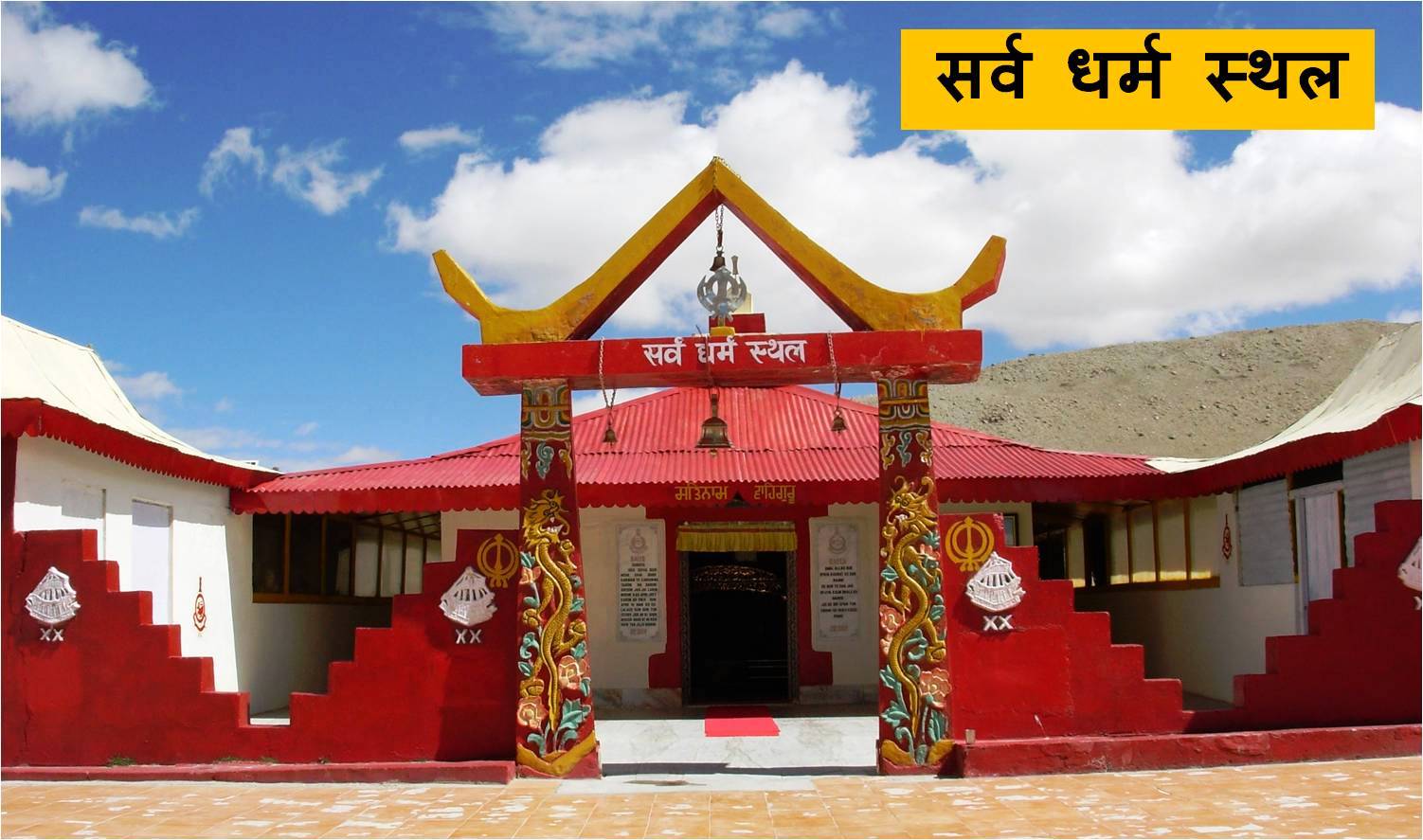
Lt Kamalesan joined the Indian Army in the 3rd Cavalry regiment in 2017. The regiment comprised three squadrons of Sikh, Jat, and Rajput soldiers. He was made the troop leader of squadron B, which comprises Sikh personnel. The 3rd cavalry regiment did not have a dedicated sarva dharma sthal (multi-faith worship site) but had separate mandir and gurudwara facilities. Weekly religious parades were routine, aimed at fostering unit cohesion and morale through shared traditions.
Kamalesan participated fully in the non-ritual aspects of these religious parades. He attended festivals like Diwali, Holi, and Gurupurab, celebrated with his troops, and showed respect by adhering to external customs. His objection was specific and principled—he declined to perform specific acts of worship, such as offering flowers or holding a thali (worship tray) in the gurudwara, believing that these conflicted with his faith’s first commandment—You shall have no other Gods before me.’ Further, he cited his personal Christian conviction that bowing inside a Sikh shrine or leading Ardas amounted to idolatry and apostasy.
Subscribe To Force
Fuel Fearless Journalism with Your Yearly Subscription
SUBSCRIBE NOW
We don’t tell you how to do your job…
But we put the environment in which you do your job in perspective, so that when you step out you do so with the complete picture.






 VIDEO
VIDEO