

The Fires Continues to Burn
Manipur remains caught between apathy and opportunist politics
 Nandita Haksar
Officially lifting the almost year-long spell of President’s rule, the newly elected government in Manipur was sworn into power on 4 February 2026. The composition of the new government was apparently representative of the three ‘main’ warring communities. Chief minister Y Khemchand Singh is a Meitei, and his two deputy chief ministers, Nemcha Kipgen and Losii Dikhoo are Kuki and Mao Naga respectively.
However, members of the Kuki-Zo community which Nemcha Kipgen is supposed to represent, boycotted her. Then, the Nagas started demanding her resignation because they alleged that her husband belongs to a Kuki insurgent group which was involved in the killing of six Naga hostages. Nemcha’s husband had declared on the day of her swearing in that he was a Thadou, not a Kuki.
The deadly identity politics that has engulfed Manipur is the result of the weaponisation of ethnic identities with every community backed by armed group or groups with no democratic space for free and open conversations on problems the people face, the slow destruction of the economy and Manipur’s historical social and cultural diversity.
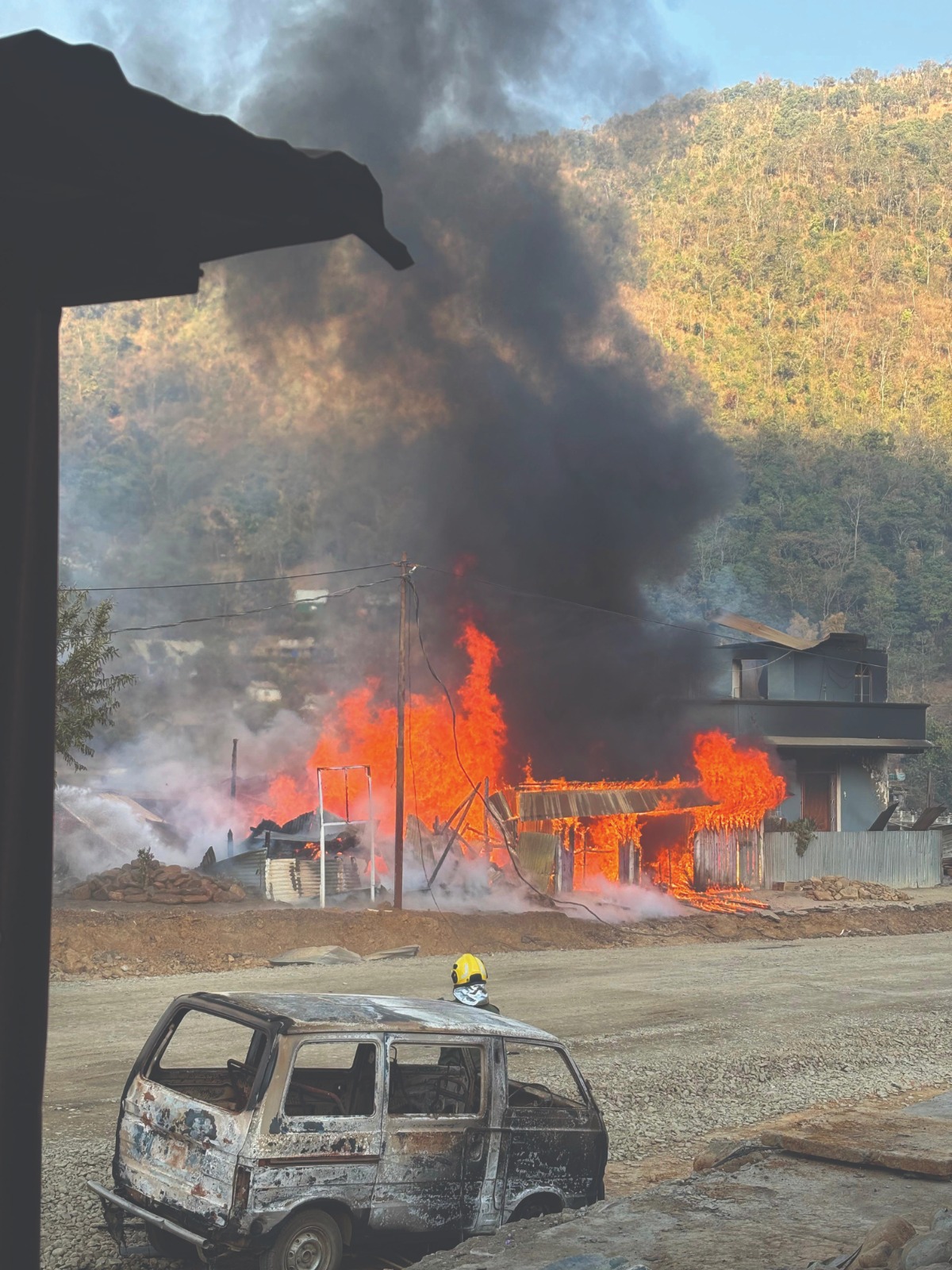
By weaponisation of identity, I mean the deliberate reshaping and mobilising of ethnic, religious or other collective identities so that they function as tools for conflict—sharply dividing ‘us’ from ‘them’, legitimating harm. Manipur is really a cartography of weaponised identities.
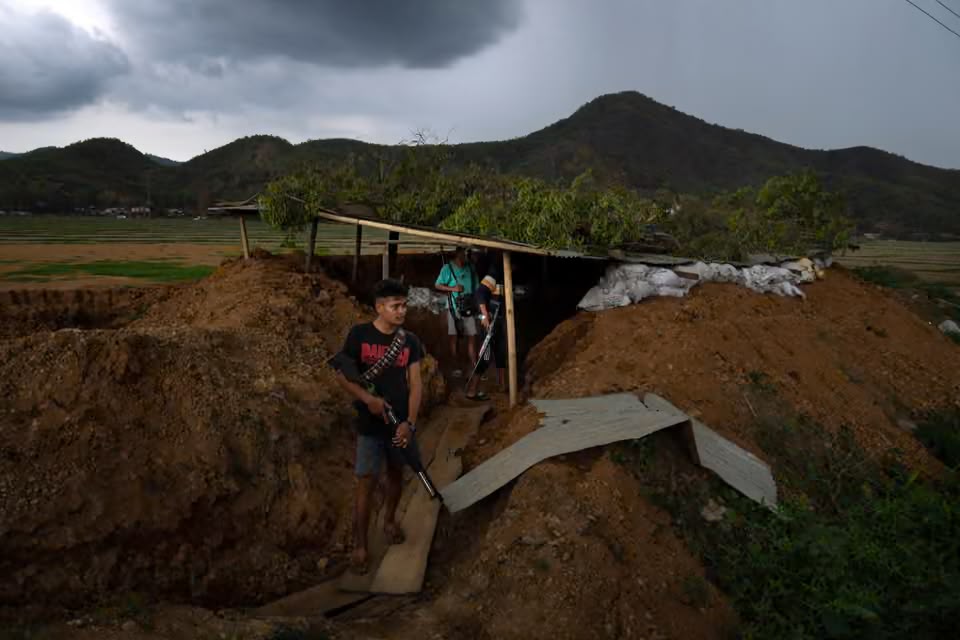
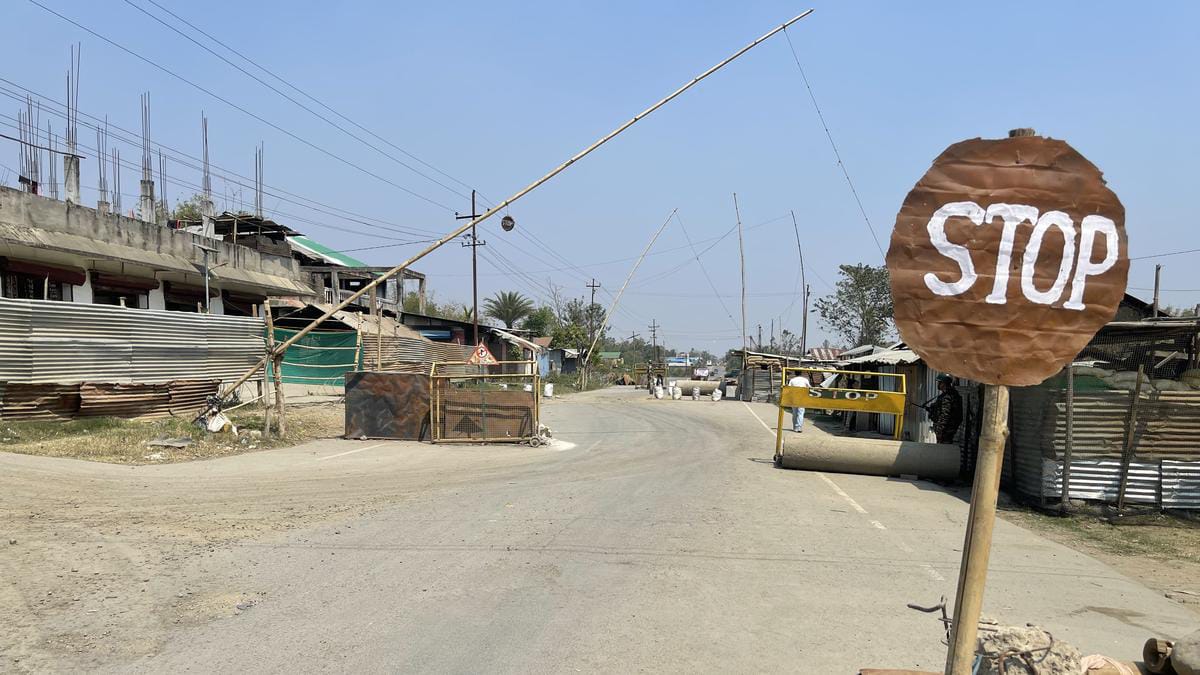
Manipur at present stands divided into buffer zones. These zones began as security cordons established by central forces across foothills, areas between Meitei-dominated valley and Kuki-Zo-dominated hills, following ethnic violence that erupted on 3 May 2023. The buffer zones effectively encircle the central Meitei heartland districts of Imphal East, Imphal West, Bishnupur and Thoubal, cutting off access to all surrounding hill districts.
What began as temporary security measures have evolved into what some analysts describe ‘proto-borders’ that threaten to harden ethnic divisions and reframe the conflict in territorial terms. Directly contradicting central government’s claims about the highway reopening, the Kuki-Zo Council (KZC) stated in September 2025 that, ‘the Buffer Zone is to be respected at all costs.’ It prohibited anyone from either community from crossing ‘under any circumstance.’
It is virtually impossible for people—those living in Manipur and the rest of India—to remember that the tribes and other communities living in Manipur are not ‘naturally’ divided into Meitei, Naga and Kuki. They have been grouped into these broad political-ethnic blocs over time through a mix of colonial ethnography, postcolonial state recognition, church/ association politics, and strategic self-identification by the tribes themselves.
The ‘split’ of Manipur’s hill tribes into Naga and Kuki is a gradual political-ethnographic construction, not a single event. It emerged from colonial classification, migration and settlement patterns, and post-1947 nationalist and insurgent politics that hardened earlier fluid identities into two rival blocs.
A similar process made the Hill/ Valley into rigid divisions. The identity politics rooted in ethno-nationalism that has emerged was not natural to Manipur. This is a good time to remember that the first chief minister of Manipur, after it became a Union Territory in 1972, was a man called Mohammad Alimuddin (1920-1983) from the Pangal community. Pangals are Meitei Muslims.
The Pangals are credited with introducing wet rice agricultural techniques, and use of bullock drawn ploughs, which raised productivity in Imphal Valley. They also contributed to weaving, pottery, carpentry, gun-making and paper production.
Mohammad Alimmudin was a member of the Manipur Peoples Party and even though he was chief minister for a brief time, his contribution to Manipur was such that he is remembered as the architect of modern Manipur. In 1972, he laid the foundation of the Manipur Medical College which was later upgraded to the Regional Institute of Medical Sciences (RIM). He also laid the foundation of the JNU Centre for post graduate studies which eventually evolved into the present Manipur University. Besides the JNU Centre, he instituted the Board of Secondary Education Manipur and Manipur Public Service Commission.
Alimuddin declared August 13 as Patriots’ Day in memory of Manipur’s freedom fighters who were hanged by the British; and also Khongjom Day on April 23 by inviting the then President of India V.V. Giri to Khongjom, the site of the last battle against the British.
He focused on agricultural development and erected dams and irrigation system which allowed for double cropping. He is still remembered and honoured through public lectures.
After the Meitei-Pangal clashes in 1993, the Pangals formed their own armed group and then began the process of assertion of their Muslim identity.
Even as the Hill/ Valley divide has become more rigid, political leaders acknowledge the lack of development in the hills. Take for example, Yangmaso Shaiza (1923-1984), often described as the first CM from the hill regions and hill tribes of Manipur. After statehood in 1972, he founded the Manipur Hills Union (MHU), a party focused on hill peoples’ rights, culture, and economic uplift. MHU formed a coalition government with the Manipur People’s Party in 1974, with Shaiza as CM in his first term.
He belonged to the Tangkhul Naga tribe and contemporary commentators portray him as a ‘man of the masses’ who consciously tried to bridge the valley-hill divide, emphasising on the integrity of Manipur as a whole. Shaiza is credited with reforms in bank loan policy to ease access for poor farmers, promotion of self-employment, revival of cottage industries, and support for handloom/ handicrafts through dedicated departmental structures.
He is credited with the takeover of a large number of private schools and colleges into the government system to expand public education; and also for his involvement in hostel initiatives for tribal students earlier via his family. He also formed the Meitei Mayek expert committee and moved to recognise Meitei script officially.
Ironically, Shaiza was assassinated by the Naga insurgents in January 1984 because his emphasis on bridging the gap between the hills and the valley posed a threat to the Naga insurgent movement for integration of all Naga-inhabited areas. After Shaiza, another politician, Rishang Keishing (1920-2017), from the Tangkhul Naga community was chosen as chief minister. He was the first chief minister of Manipur to complete his full term from 1981-1988.
There was no office of deputy chief minister. People accepted any chief minister who they felt represented their interests which were not defined by ethnicity or ethno-nationalism.
Over time, the number of armed insurgent groups have grown. The original six valley-based groups have split, and all are banned. Only one has entered into talks. In addition, there are two Meitei vigilante groups, Meitei Leepun and Arambai Tenggol, who emerged in the mid-2020s, and there are serious allegations that they were backed by the government and were responsible for much of the violence in 2023.
The Kuki-Zo community has many armed groups which can be broadly divided into two categories. At least 17 of the Kuki militant groups under the Kuki National Organisation fighting for a Kukiland are led by Thadou leadership, and eight under the United People’s Front (UPF), act as the main negotiating blocs for Kuki–Zo insurgents.
To understand the political situation in Manipur it is important to understand that the conflict is deeply rooted in the concept of territory rather than land, although the two may overlap. This battle over their imagined homelands translates into battles over territory. None of these groups have any programme for the improvement of land or the condition of the cultivators. The agriculture department has estimated a loss of 1,543.23 metric tonnes of rice because around 5,127 hectares of vulnerable agricultural land remained uncultivated till June 2023, translating to roughly Rs 39 crore in crop-value loss.
Analyses of India-wide internet shutdowns estimate an economic cost of about USD 585.4 million in 2023. Manipur accounted for 47 of 116 shutdowns, implying that a disproportionate share of this loss fell on the state, though there is no exact break down of Manipur-specific figure. The Governor stated that the state could lose around Rs 800 crore in revenue in 2023-24 because violence since May 2023 has depressed tax collection.
The Manipuri business community has been working and succeeding against all odds. The frequent bandhs and strikes disrupt transport, and Manipur is totally dependent on supplies from Dimapur in Nagaland or Silchar in Assam. The combined loss from these forms of disruption through 2016 till March 2017 was estimated at Rs 2,616.23 crore, capturing not only direct output loss but also the impact on daily wage earners (calculated at around Rs 13.18 crore per day of bandh).
It is not only the insurgency within India that has affected Manipur’s economy but the cross border illegal trade on the Indo-Myanmar border. This is especially so after the 2021 military coup in Myanmar. There have been violent conflicts between different insurgent groups over the control over drugs and other illegal businesses. In 2023, it was largely over the town of Moreh, this time it has shifted to Kamjong district.
Home minister Amit Shah has promised to end insurgency by 2029, but he has not revealed any roadmap. Peace cannot be forced upon a people through more repression and state violence. People need justice and not false assurances.
The government set up a Commission of Enquiry to go into the causes of the 2023 violence and to investigate the possibility of state complicity. However, the Commission has not submitted its report till date. Courts are not able to deliver justice, and in at least one case of largescale human rights violations committed by the Indian security forces long time before, the final hearing of the case was over in 1991 but the judgement was delivered in 2019. In the most recent case of six Nagas brutally murdered (for which the Kukis have apologised) the main culprits have not been arrested yet, leading to Nagas calling for a bandh.
Neither the insurgents nor the government has expressed concern over proposals to have rubber and palm oil plantations. These have already proved to be ecologically disastrous in much of South East Asia. These would be destructive to the local ecology and would generate future conflicts. The dangers of corporate greed overtaking state repression are very real.
Besides, Japan has shown keen interest in investing in the Northeast including Manipur. If the government is encouraging Japanese investment by way of containing Chinese influence, it would only make the region more vulnerable to political manipulations in an already volatile situation. The Siliguri Corridor or the Chicken’s Neck which links Northeast’s seven states, including Manipur, with the rest of India is already the most militarised border after the 2017 Doklam crisis with China. According to a report in Eurasian Review, this strip of land has heavy military deployments of ‘Rafale fighter jets, BrahMos missile systems, S-400 and Akash air defence platforms. ….(this) suggests doctrinal evolution from “deterrence,” preventing hostile action through threatened retaliation, toward “dominance”…’
The only viable roadmap to peace is if the people of Manipur are involved in the process of conflict resolution. So far successive governments have tried to impose President’s rule, declare the state disturbed under the Armed Forces (Special Powers) Act, banned insurgent groups under various laws, even as there is a history of state repression. Even if the government tries to drop bombs through drones, in an effort to silence the people, the situation will become even more volatile.
The people of Manipur are beginning to realise the need to come together and find a common solution to their common problems. They must pursue this urgently because that is where hope lies. After all, the people of Manipur were not always divided against each other. There is a song which captures the true spirit of Manipur. It is called ‘Hingminashi Eikhoi’ (We are brothers/ sisters living together). It is a unity-in-diversity anthem for Manipur similar in spirit to ‘Mile Sur Mera Tumhara’.
Hingminashi Eikhoi is written in seven languages and spoken by various communities, including Naga and Kuki tribes, and Meiteis. It is a song which celebrates Manipur’s ethnic and linguistic plurality. And that is what needs to be brought back.






 VIDEO
VIDEO