Coincidences can be cruel.
In early November, the Indian Navy celebrated the 10th anniversary of the Indian Ocean Naval Symposium (IONS), an event that in February 2008 marked the navy’s fulsome embrace of a bigger role in the Indian Ocean Region (IOR) as the net security provider to the littoral nations.
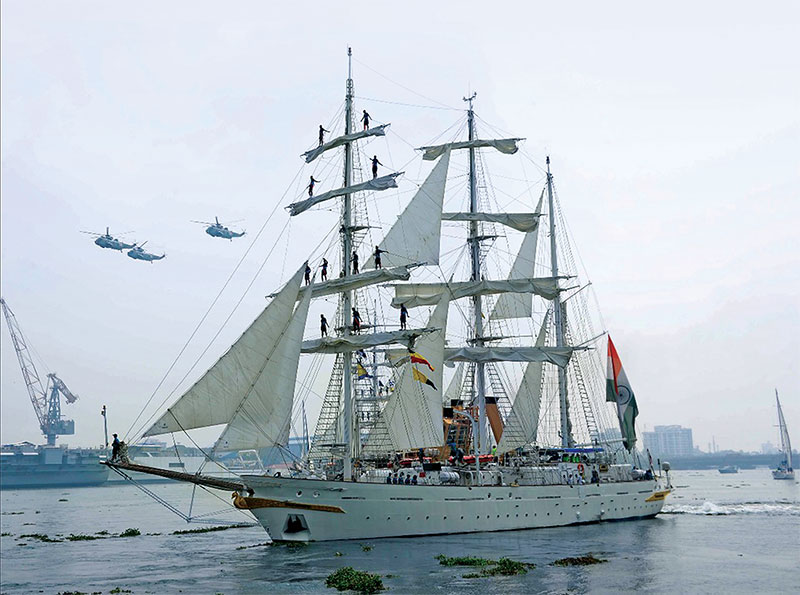
INS Tarangini during the IONS tall ship race;
Two weeks later, the nation observed the 10th anniversary of the most shocking terrorist attack on India, when 10 heavily-armed terrorists sailed into Mumbai on November 26 and held the city to ransom for nearly three days. By the time Indian security forces, led by the National Security Guard (NSG), managed to kill nine of them (one was captured alive) and rescue the city (and nation’s honour), nearly 166 people had died and about 300 were injured. 26/11, as the day of the attack came to be known (after the US 9/11 attacks), marked the clipping of the naval aspirations, as the fearful nation wanted its navy to stay close to the Indian coastline to prevent the repeat of that nightmare.
The Indian Navy had to look inwards, work with domestic agencies to make the coastline as impregnable as possible. The IONS-inspired expansive vision had to be put on the back-burner. Over the next decade, the leadership of IONS meandered through the Indian Ocean nations, some enthusiastic and some with conflicting interests, both inside and outside the IOR. This year, the navy reclaimed some of the ownership of its initiative by organising a two-day anniversary party in Kochi.
“IONS has been a success in a short period of time,” declared the chief of naval staff Admiral Sunil Lanba in an informal conversation a few weeks before the Navy Day. “In fact, it has been a bigger success than the cooperative framework it was inspired by, the Western Pacific Naval Symposium,” he said. With Malaysia joining in as a full member, its strength now stands at 24 with nine observers. “There are three groups in IONS: human assistance and disaster relief; maritime security; and information sharing and interoperability,” he said, adding that IONS has been able to meet the expectations. With modest targets, it has been easier to deliver on the promises. Whether IONS could have been the springboard for more intense cooperation is quibbling especially during anniversary celebrations. After all, a service can only do this much, more than that requires not just support but some hand-holding by the government.






 VIDEO
VIDEO