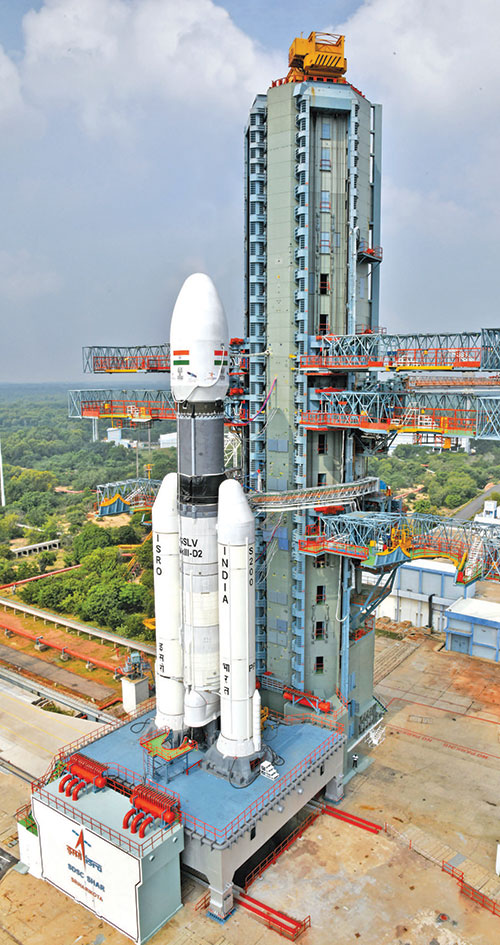
Prime Minister Narendra Modi on 15 August 2018 announced the ambitious goal of sending Indian astronauts into space by 2021-2022 to mark the 75th anniversary of India’s Independence. The Indian Space Research Agency (ISRO) has got down to the job and started the process of putting the necessary technologies and infrastructure in place for India’s most ambitious space mission so far.
The Cabinet in December 2018 approved the Gaganyaan mission, which plans to take a three-member crew into an orbit around the earth for seven days. Costing a whopping Rs 10,000 crores, the mission will be assisted by foreign space companies in astronaut training and other critical technologies. This will be India’s first manned mission to space. The mission envisages putting Indian astronauts into space by the end of 2021. The GSLV MK-III, which is India’s most powerful rocket so far, will be tasked with carrying the astronauts. The engine of the rocket has already been tested.
ISRO set up the Human Space Flight Centre (HSFC), to be headed by senior scientist UnniKrishnan Nair, which will oversee the Gaganyaan mission. The new centre will oversee the training of the astronauts, their selection and will develop the necessary technologies for this first-of-its-kind mission for India. The ISRO signed a memorandum of understanding (MoU) with the Indian Air Force (IAF) for crew selection and training for the project. The space agency indicated it will be picking up experienced pilots from the IAF and training them as astronauts. The ministry of defence (MoD), through its various organisations such as the Defence Research and Development Organisation (DRDO) will have a significant role in contributing to the different aspects of the programme.







 VIDEO
VIDEO