On the night of 14 September 2019, 12-15 drones took off from an unknown location, perhaps from Yemen or Iran. It could have been from anywhere - a road, a grassy meadow - or even hurled by hand. They crossed the Saudi border undetected and then circled around the gigantic oil processing plants of Abqaiq and Khurais, which produced much of Saudi Arabia’s sweet light crude. Their low altitude flight path and small silhouette enabled them to evade detection by radar or other early warning systems and they reached their target undetected. The designator drone hovered overhead, and focused its cameras on the targets relaying images to its handlers hundreds of kilometers away.
One by one, the massive oil storage tanks, the oil processing plants, the control room and the oil trains, were painted by laser beams and designated. Then at exactly 4 a.m., the attack drones packed with high explosives, swooped down from the skies like hawks and unerringly hit their targets. The designator drone continued circling overhead firing laser beams on the targets – beams on which cruise missiles homed on to their targets. In less than 20 minutes, just 12-15 drones and five cruise missiles, each costing approximately USD1 million, had crippled the world’s largest oil plant and had incurred over USD6 billion worth of damage.
The drone attack in the Yemen-Saudi war is an example of its immense potential and increasing use in warfare. With just a dint of imagination, these small, potent weapons can cause disproportional damage and that too with limited cost and no danger to human life.
The Drone’s Flight
Drones have come a long way since they were first used in modern combat by the Israeli Defense Forces in Lebanon in 1982. A low flying drone was used to lure Lebanese missiles and radars deployed in the Bekaa Valley, into opening up and disclosing their locations, which enabled their destruction by following Israeli fighter jets.
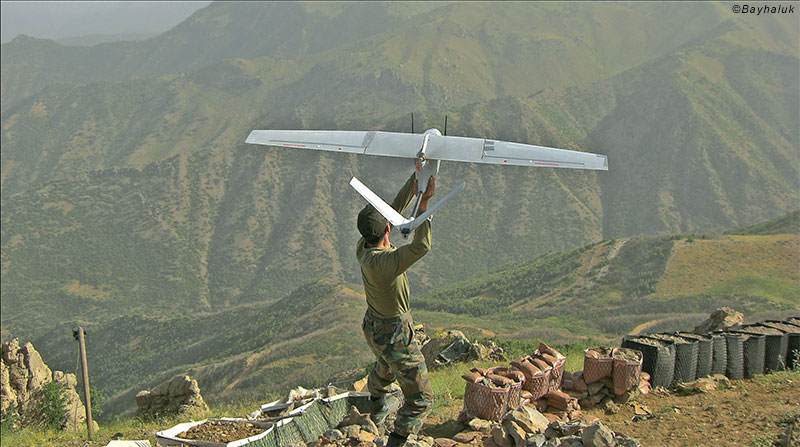
A trooper launches a Bayraktar Mini UAV
Drones, though, have been used in different roles earlier. The first use of unmanned flying vehicles (to use its correct nomenclature) was by the Austrians who used unmanned balloons to drop bombs on Venice way back in the 1800s. During the World Wars they were used to practice anti-aircraft gunners, but little more. It is strange that a weapon of such potential remained unutilised till around the Vietnam War.
Then, concerned with the loss of aircraft and pilots, the USAF began a top secret programme called ‘Red Wagon’ to deploy UAVs over enemy-held territory. Over 3,435 UAV missions were flown over Vietnam, largely in surveillance and reconnaissance roles. And although 554 UAVs were lost, they did what they were supposed to do. They saved lives.
Their use was amplified in the First Gulf War when besides the traditional surveillance roles, they were used to carry laser designators and guide missiles on to their targets. A low flying drone also earned the distinction of having an Iraqi company surrender to it. The war also saw the first air combat involving drones when an Iraqi fighter shot down a US drone. They emerged as the weapon of choice in the war against terror as silent assassins. Armed with Hellfire and Paveway missiles they loitered for hours unseen, observing their targets, relaying images to their handlers back in the US and then released their lethal missiles when the target emerged. An estimated 3,400 militants have been eliminated by drone assassination — plus a few hundred civilians which pass off as the ubiquitous ‘collateral damage’ — in locations as far flung as Afghanistan, Pakistan, Syria and Libya,





 VIDEO
VIDEO