

Sense the Opportunity
India must practise strategic autonomy not as silence, but as principled state policy
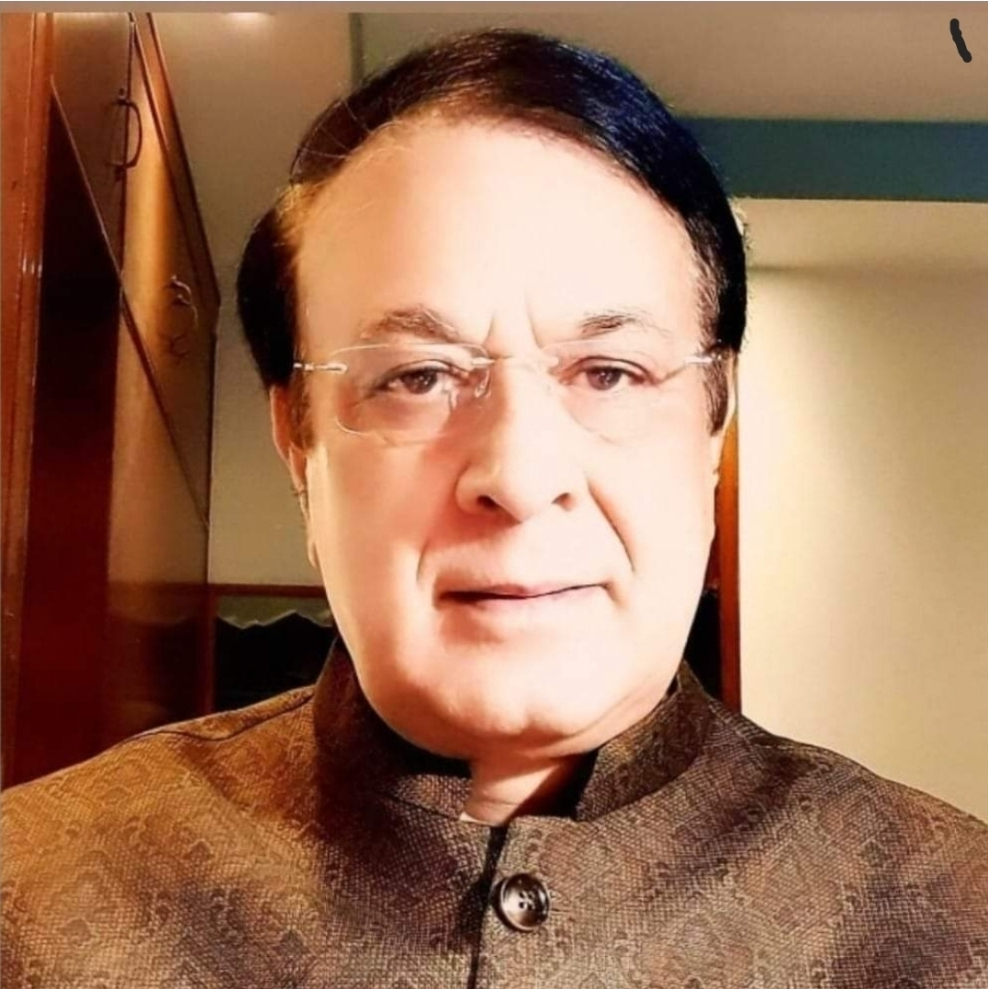 Major General B.K. Sharma (retd)
West Asia has once again reminded the world that geography still matters. Historical animosities, sectarian rivalries, energy resources, maritime chokepoints, pipelines, ports, diasporas, bases, financial channels, and security alliances have fused into a single turbulent strategic landscape. For India, the US-Israel-Iran war that began on 28 February 2026, the uneasy ceasefire announced in April, and the subsequent diplomatic breakdown are not distant events unfolding in a troubled neighbourhood. They are a direct stress test of India’s energy security, maritime posture, diaspora protection, diplomatic agility and the credibility of its proclaimed strategic autonomy.
The ceasefire should not be mistaken for peace. It is an intermission in a conflict whose deeper drivers remain alive. Iran’s nuclear question is unresolved. Israel’s threat perception has hardened. The US has demonstrated coercive primacy, but not strategic closure. The Gulf states have obtained short-term relief, yet they remain anxious about American reliability. Russia and China may have extracted some tactical dividends, but their long-term equities remain uncertain. Pakistan has achieved a moment of diplomatic visibility; its durability is doubtful. Europe has been reminded of its dependence on imported energy and external security guarantees. India, meanwhile, has managed the immediate crisis with restraint, but restraint has also invited questions about strategic passivity.
India has kept supplies moving, maintained channels with all sides, protected nationals where feasible and avoided rhetorical excess. This is not insignificant. Yet competent crisis management is not the same as strategic sagacity. The larger lesson of this crisis is that India can no longer treat West Asia merely as an external affairs matter. It is an extended arc of Indian national security. The Strait of Hormuz, the Red Sea, the Gulf monarchies, Iran, Israel, Chabahar, IMEC and the eastern Mediterranean together form a single contested theatre in which Indian interests are immediate, material and exposed. The gap between India’s structural weight and its diplomatic footprint in this region must now close.
Review of the Crisis
The conflict that erupted on 28 February 2026 was unprecedented in its political ambition, military scale and multi-domain character. The US and Israel launched coordinated strikes against Iran’s nuclear, missile, drone, naval and defence-industrial infrastructure. The campaign also targeted the regime’s leadership architecture. The killing of Supreme Leader Ali Khamenei and several senior Revolutionary Guard commanders transformed the operation from coercive punishment into a decapitation strike with regime-shaping implications.
Iran’s response was swift, calibrated and consequential. It launched missile and drone barrages against Israel, US military bases and US-aligned Gulf targets. Yet its most powerful instrument was not a missile; it was geography. By nearly shutting the Strait of Hormuz, mining approaches, boarding or seizing vessels and imposing coercive conditions on transit, Iran demonstrated that it could not defeat the US conventionally, but could impose costs on global energy, shipping and insurance networks. Roughly one-fifth of global oil flows and a substantial share of LNG trade are tied to this narrow maritime artery. When Hormuz is threatened, markets tremble and import-dependent economies feel the pressure almost instantly.
This was, in many ways, a David and Goliath contest recast for the 21st century. The military balance was never symmetrical. The US and Israel possessed overwhelming advantages in air power, intelligence fusion, cyber capability, precision strike and long-range naval reach. Iran possessed a different kind of leverage: national resilience, missiles, drones, proxy networks and the ability to weaponise geography. The result was not a war of decisive battlefield victory. It was a war of coercion, disruption and exhaustion.
Subscribe To Force
Fuel Fearless Journalism with Your Yearly Subscription
SUBSCRIBE NOW
We don’t tell you how to do your job…
But we put the environment in which you do your job in perspective, so that when you step out you do so with the complete picture.

 VIDEO
VIDEO