The Chinese Navy has rapidly transformed itself into a global maritime power, and is now pushing more aggressively to expand its naval warfare capabilities, primarily its submarine force that presently has over 70 vessels. And now, these Chinese submarines are actively advancing their position in the Indian Ocean Region (IOR). To counter Chinese aggression and maintain its superiority in the region, the Indian Navy has now been actively watching and tracking Beijing’s activities in the IOR.
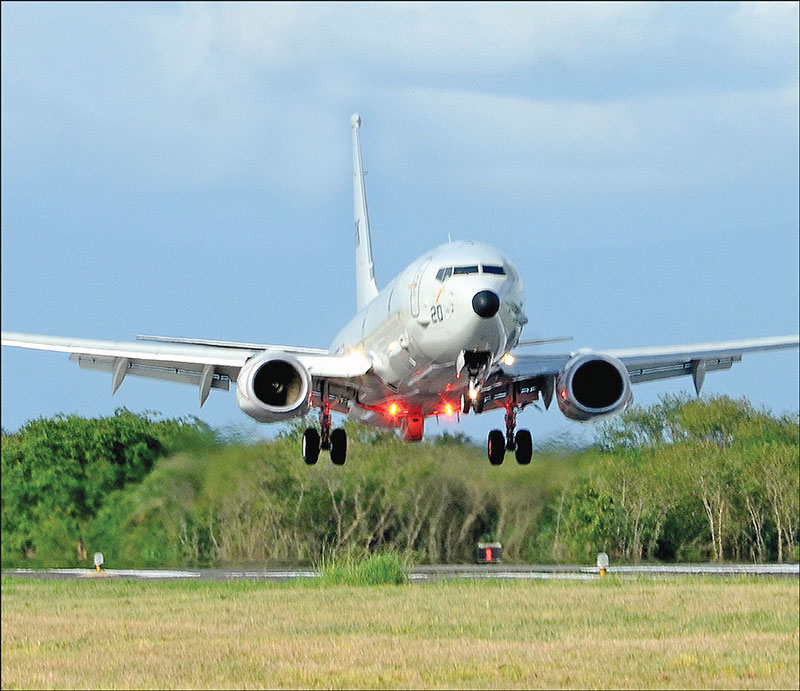
Indian Navy’s P8I aircraft
The Indian Navy is equipped with numerous submarine-hunting arms and industriously looking to expand its anti-submarine warfare (ASW) squad comprising air, surface as well as underwater assets. ASW is the key task that is performed largely by modern global navies for securing strategic assets and forming active deterrence against hostile submarines.
Aircraft
The aviation branch of the Indian Navy currently operates Russian Ka-28, Sea King Mk.42, Ilyushin Il-38SD and the newly inducted Boeing P-8I Neptune to remove underwater menaces such as enemy submarines and Unmanned Underwater Vehicles (UUVs). Indigenous ALH Dhruva, equipped with depth charge and sensors suite, is also being used for ASW missions.
Initially, the Indian Navy imported Sea King Mk 42s especially for ASW capabilities from British Westland Helicopters. These choppers were inducted into the navy around the 1971 war and used in ASW missions against Pakistani Navy that had superior submarine force at that time. Indian SeaKings, the Harpoons of the Indian Navy, still are the primary anti-submarine helicopters and the navy employs three variants of Westland Sea King -- Mk.42A, Mk.42B and Mk.42C. Besides, the Indian Navy Air Arm also uses Soviet-era Ka-28 ASW helicopters, currently nearly a dozen Ka-28s are in active service with the Indian Navy. These Russian ASW copters can carry around 2 tonnes of ammunition including two torpedoes, depth bombs and mines, and according to some reports, this Ka-28 also features a DLRL developed KITE electronic support systems to counter upcoming threats. These Sea Kings and Kamov Helicopters fitted with advanced search and attack radar, dipping sonar, sonobuoys and weapons comprising lightweight torpedoes, depth charges and mines, are a serious threat to enemy submarines.
The navy has NST 58 (a variant of Italy’s A-244S) and Russian APR-2 torpedoes as well as Mk.11 bombs in its arsenal. Moreover, advanced light torpedo Shyena developed by Defence Research and Development Organisation’s (DRDO’s) Naval Science and Technology Laboratory (NSTL) has also been inducted by the Indian Navy service to arm light warships and aircraft. The self-homing 220kg Shyena has electrical propulsion that helps it to propel at a speed of 33 knots and can hit targets over 18 km in the shallow and deep waters. State-owned Bharat Dynamics Limited (BDL) is producing Shyena TAL system in collaboration with L&T.







 VIDEO
VIDEO