In an 18 March 2022 article in The Tribune newspaper, home minister Amit Shah is quoted as having said that India’s 15,000km-long land border with seven nations has a different challenge every 50 km, as also numerous opportunities. The challenges make border guarding dynamic and requires intense personnel training. The creation of the department of border management in January 2004 was a positive step, but as Madhav Godbole former home secretary said, this was not followed by ‘action on the pertinent issues”.
Border management and human resource policies must have compatibility to produce motivated border guards. For that human resource policies of border guarding forces need to be sensitive to acute stagnation and high attrition in the forces. High attrition is bi-product of faulty human resources management and affects efficiency and causes stress. Efficient human resource management will make border-guarding more effective.
Both border management and human resource management structures need revolutionary reforms through understanding the stakeholders, their strengths, weaknesses and conflicts, and the present status of cooperation and coordination. Unless stakeholders truly integrate, there cannot be impregnable border guarding. The main stakeholders are the forces themselves, the border population and civil administration.
Border Guarding Forces: Border guards are the main stakeholders of border management. They execute border security on ground, ensure security and territorial integrity of our international borders and providing security to the border population. The main constraints in border guarding are underdevelopment, hostile and inaccessible terrain and presence of large tracts of agricultural land ahead of fencing, in addition to hostility from counterpart. Border guarding is distinct from policing and matters military. Human resource management must be made more result oriented through technology intensive and less stressful methods.
Border Population: Locals inhabiting border areas are important stakeholders of border management. Borders have hostile terrain, harsh, jarring and cruel conditions due to infrastructural deficiencies and lack of basic amenities like medical facilities, education, clean drinking water, uninterrupted power supply, connectivity and employment opportunities. In addition, border population is susceptible to border criminals, indoctrination by terrorists, drug menace, counterpart threat, shelling and firing. Borders need development at par with mainland. It is only when border areas are developed and deficiencies addressed that border population will feel emotionally integrated with border guarding forces. Border security must be made less intrusive for locals through technology integration to monitor their movements.
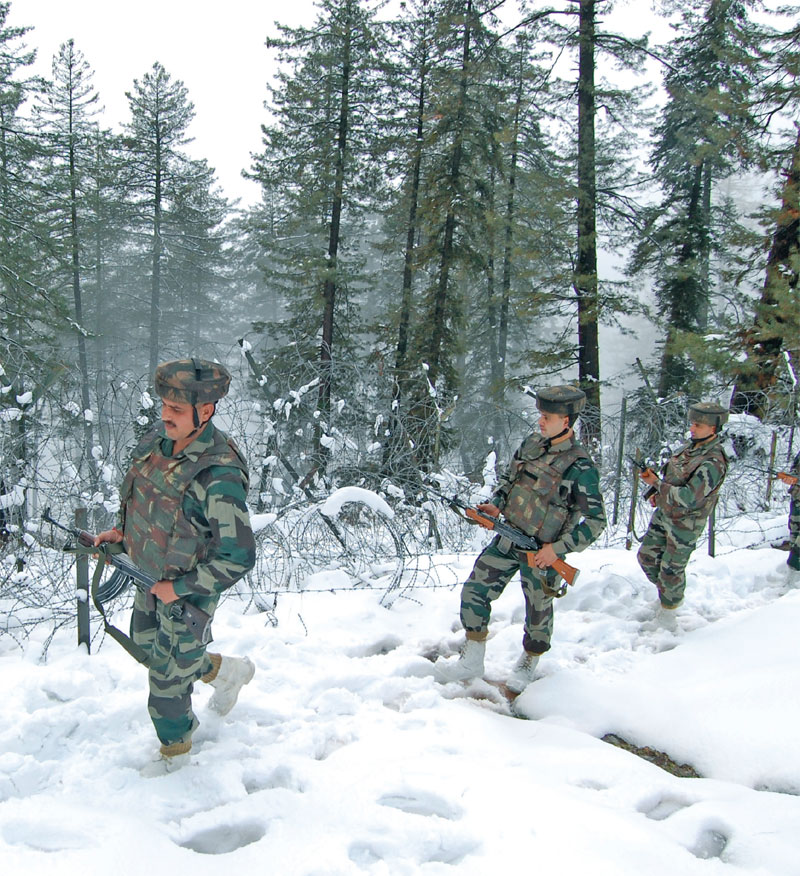
Security personnel patrolling the border
Local Administration: Local administration, especially the police, can play a very vital role in strengthening border security through realistic and real time intelligence sharing and rendering needful cooperation to border guarding forces. Also important is the effectiveness of the administrative apparatus to develop border areas, which will wean away locals from activities.







 VIDEO
VIDEO