According to the data released by International Air Transport Association (IATA), India will attain new heights in aviation sector in 20 years. India will be an aviation hub. Air traffic will grow exponentially, overtaking the US and China in this sector. These estimates may turn out to be true in the coming years as the need for regional connectivity is felt. India has already launched a scheme that aims to connect different parts of India. UDAN, a Regional Connectivity Scheme (RCS), is still in the nascent stage.
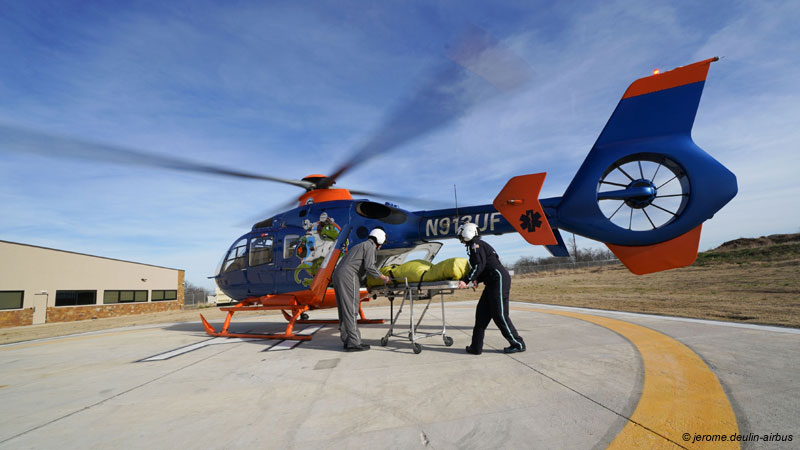
While we talk of RCS and its importance for citizens, another important service that has still not gained the limelight it deserves is the Helicopter Emergency Medical Services (HEMS). These medical services are carried out by deploying helicopters. These copters are equipped with flight stretcher, specialised medical equipment and medications along with medical personnel. These are different than air ambulances that are fixed wing aircraft. The limitation with fixed-wing airplane is that it can only fly from one airport to another because it depends on runways. Helicopters, on the other hand, can fly to remote destinations.
In India, helicopter services are yet to evolve for the public despite the potential they hold. Although there are some initial positive developments around HEMS in India, there is a glaring lack of clarity and little to no discussion regarding the same. In 2016, the ministry of civil aviation (MoCA) had included HEMS in National Civil Aviation Policy. It stated, “MoCA will coordinate with ministry of finance (MoF), ministry of human resources (MHA), National Highways Authority of India (NHAI), Indian Railways, insurance companies, hospitals, Pawan Hans Limited and other helicopter operators to facilitate Helicopter Emergency Medical Services (HEMS). DGCA will bring out regulations exclusively for HEMS, which will stipulate that helicopters under HEMS operations shall not be used for any other purpose. Such being the case, helicopters under HEMS operations will not require any operational clearance , including landing at accident and emergency sites from any agency except Air Defence Clearance because of the very nature of their operations. No landing charges and RNFC will be levied for HEMS operations.”








 VIDEO
VIDEO