Ideas have consequences, wrote American philosopher Richard Malcolm Weaver. Greater the ideas, better the results. The journey of the national carrier Air India, too, began with an idea - not to carry passengers but to pick up the airmail letters that came from Europe and deliver them to their destinations. This was to cut down on the time taken by the trains in dispensing the mail after international airlines unloaded them in Karachi in the early Thirties.
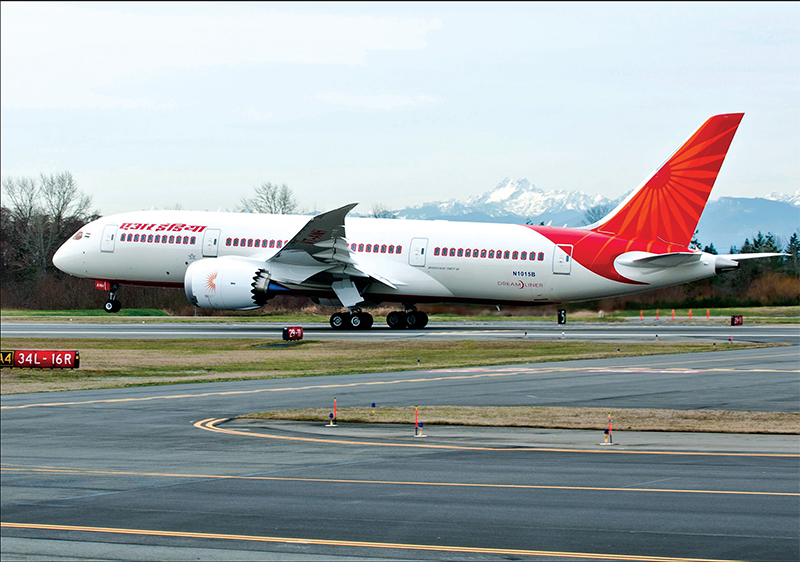
A Boeing aircraft owned by Air India
It was a former Royal Air Force pilot Nevill Vintcent who came up with this idea and took it to Jehangir Ratanji Dadabhoy Tata, better known as JRD Tata, who had been fascinated by airplanes since childhood. As a 15-year-old, JRD had been given his first flight in 1919 by the French aviator, Adolphe Pegoud, who became the world’s first fighter ace during World War I and the first man ever said to accomplish the aerobatic manoeuvre called ‘loop the loop’ in which the aircraft flies a complete circle in the vertical plane. His aviation ambitions came true in 1929 when he became India’s first man to get a commercial pilot’s license.
Together with Nevill Vintcent, JRD started Tata Air Mail in 1932. To begin with, the venture had two second-hand de Havilland Puss Moth aircraft capable of flying at 160kmh and carrying a consignment of mail with two passengers. On 15 October 1932, the inaugural flight, which Tata piloted himself carrying 25 kilograms of mail from Karachi to Bombay, of Tata Air Mail took off. Then, the former Royal Air Force pilot Nevill Vintcent carried the remaining mail from Bombay to Madras.





 VIDEO
VIDEO