In the Indian context, the Line of Control (LC) and the LAC are unsettled borders and have been in a continuous state of conflict. Both Pakistan and China lay claims to large swathes of Indian land under their illegal occupation contiguous to the unsettled borders. The Chinese belligerence in the recent past has assumed new dimensions in destabilisation and hostility, rendering the 1993 and 1996 agreements on peace and tranquillity on the LAC unilaterally inoperable. The Chinese actions thus make the LAC highly sensitive, unstable and conflict-prone.
Lead Role
Amidst the instability and tension along the LAC emerged media reports that claimed that the ministry of home (MHA) was considering a proposal to designate the ITBP as the lead agency on the LAC. The purpose of giving the lead role to the ITBP was apparently to avoid future conflicts between the Indian Army and the People’s Liberation Army (PLA). The move led to debate among military veterans as the proposal was unprecedented considering the Chinese hegemonic intentions and the nature of threat.
Reacting to the reported proposal, former army chief Gen. V.P. Malik (retd) tweeted: “An illogical, dumb idea. When adversary looks to surprise us on LAC, We want to place Army behind ITBP in second tier. First tier controlled by MHA and second by MOD! Have we forgotten how two years ago PLA was diverted from exercise deployment to intrude across LAC?”
The important question is whether the ITBP will be able to avert hostile action from the PLA. Does the ITBP possess professional capabilities to replace the army in the first tier? Will it be possible for the army to react in time to avert hostile action by the PLA from the second tier? If the ITBP is given the lead role on the LAC, pushing the army to a secondary role, the Border Security Force (BSF) may demand that it be designated as the lead agency on the LC. On unsettled borders, the army needs to be kept in the lead role with border guarding central armed police forces (CAPFs) under its operational control. Those who proposed the lead role for the ITBP seem more concerned about cooling tempers than the long-term security implications. China must be watching the move gleefully as it fits its agenda. The move in all likelihood will invite extreme belligerence and hostility from China if the proposal is implemented.
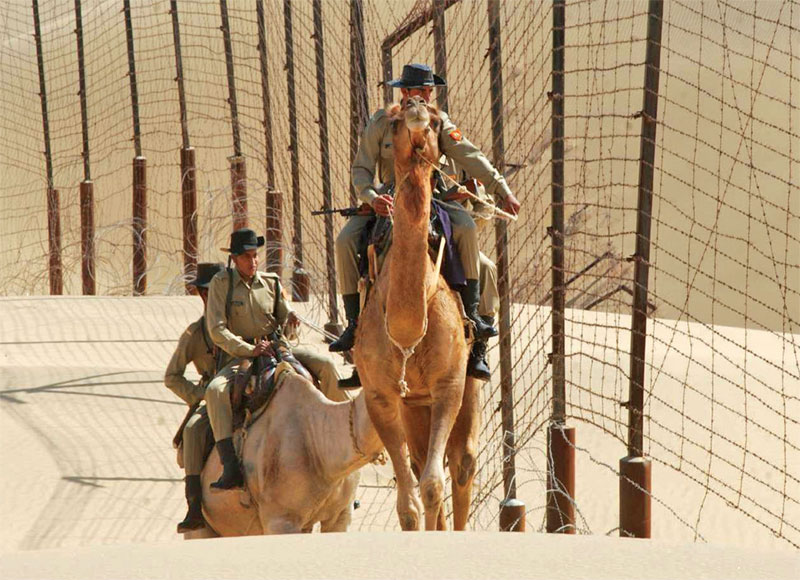
BSF personnel patrolling on a camel
Integrate CAPFs
Veterans expressed concern over the reported government move and called for reforms to integrate the CAPFs in the overall security apparatus. But they were ambivalent as far as giving up the counter-insurgency role was concerned. The army needs to focus on its main role of guarding the border against the country’s enemies, leaving counter-insurgency operations to the CAPFs and the police.
In an article titled ‘Need Theatrisation, not lead agency on China border,’ former western army commander Lt Gen. K.J. Singh (retd) said: “The aim of relieving the army from a secondary role is indeed laudable but it has to begin with the CRPF and the police getting empowered to tackle counter insurgency operations in the valley. It is also logical to enhance the role, responsibility and more importantly accountability of the ITBP on the LAC. They will require to be trained and reorganised. The foremost requirement is that the CAPFs, including the AR, should have integral cadres and cease para-dropping of apex IPS leadership, which has been recommended by multiple parliamentary committees. Finally, the way forward is integration under a single integrated theatre with full operational and functional control.”








 VIDEO
VIDEO