Just when shoulder fired and guided anti-tank weapons looked to gain the upper hand in the ongoing asymmetric conflicts around the world, Active Protection Systems (APS) have breathed fresh life into armoured forces. Ongoing conflicts have demonstrated that tanks face threats 360 degree in the current irregular conflict and conventional assumptions of protection of the frontal 60 arc have been proven inadequate.
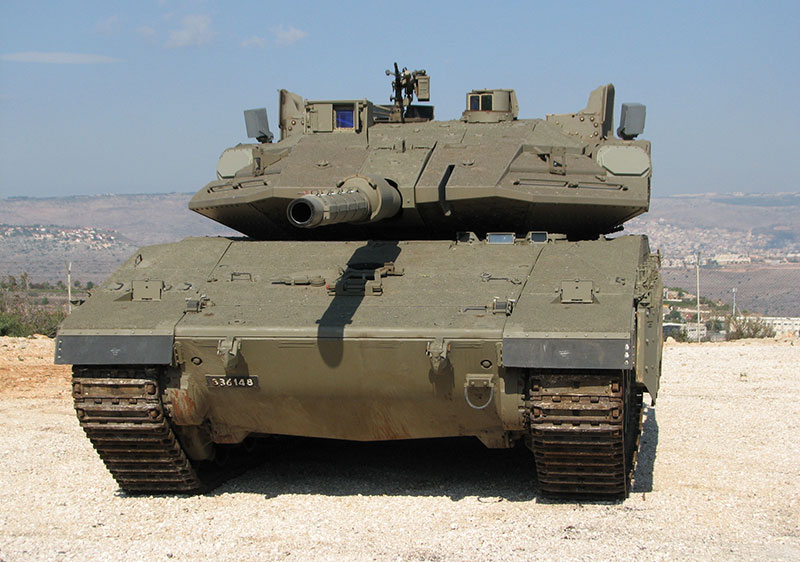
Rafael’s Trophy HV MK4
Incorporating all-round passive protection can be an engineering impossibility considering the tremendous weight increase. The Indian Army has expressed keen interest in equipping its tank units with an APS but procurement hasn’t materialised because of the immaturity of the trialled systems, power constraints and single vendor situation. T-90S which would be the primary candidate for an APS system has space constraints and its Auxiliary Power systems might not be sufficient enough to support the APS, but the new T-90MS being procured has a new APU just behind the left sprocket wheel. However, the variant India would receive will be without Arena APS.
APS can be evaluated primarily on the parameters — sensor threat detection range, reaction time, types of countermeasures, threat interception range, jamming resistance, interception methodology and multi-shot interception capability additionally engineering parameters such as size, weight and power consumption will also be considered. APS has two types of sensors active (Millimeter Wave radar, Light Detection and Ranging) passive (Laser Warning Receiver, Ultra Violet missile warning system) the sensor information is fed to the countermeasures which can be from soft-kill or hard-kill. The soft-kill countermeasures consist of multispectral aerosol smoke grenades which can blind all missiles including fire and forget missiles, Electro-Optical/ Infrared (EO/IR) jammers can jam Semi-Active Command Line of Sight (SACLOS) missiles which constitute 70 per cent of the current missile threat. They are simpler systems which require directional information from sensors.








 VIDEO
VIDEO