The proliferation of anti-armour threats ranging from small arms, cheap but very effective shoulder-fired Rocket Propelled Grenade (RPGs), to sophisticated Anti-Tank Missiles with High Explosive Anti-Tank (HEAT) warheads has meant a stronger threat to men and machines on the battlefield. Add-on armour provides an affordable, modular and effective solution to the most common threats, making sure operational vehicles are still in the game. Add-on armour is not a new concept; during World War II tank crews used readily available material to mitigate the threat from infantry weapons. Material such as scrap metal, wood, concrete, wire meshes and sandbags were used as improvised armour.
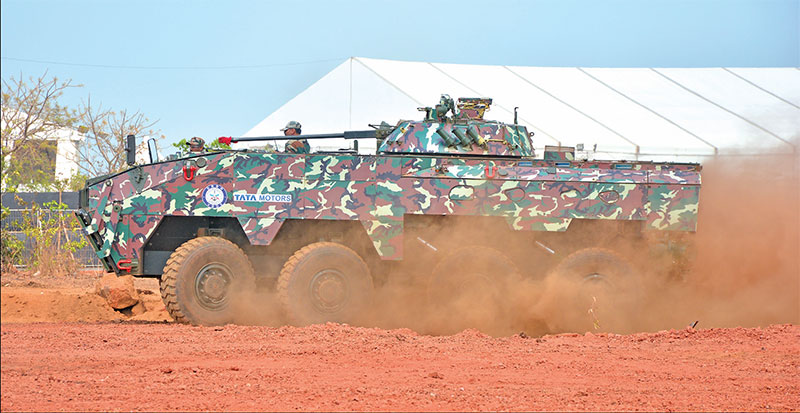
TATA’s armoured fighting vehicle during DefExpo 2016
Metal Applique Armour
These usually consist of thin hard steel plates which can be bolted on to the surface of the vehicle to improve protection, especially against small arms. They are usually brittle and need a backing material which is usually the base armour/body of the vehicle. Tata Steel has been collaborating with the UK ministry of defence (MoD) to provide perforated super bainite steel as add-on armour to vehicles in the British army. Tata Steel has received orders from a number of countries worldwide including Germany, France, the US and India. This revolutionary armour steel, formerly known as Super Bainite, has also undergone a number of design improvements and taken on a new brand name, PAVISE™ SBS 600P. The armour can upgrade the protection to STANAG level 4 offering protection against all small arms including armour piercing 14.5mm HMG rounds.





 VIDEO
VIDEO