India’s accomplishments in space, (surface to air, cruise, intercontinental ballistic) missiles, nuclear submarines, aircraft design, main battle tanks and some other areas are noteworthy but, paradoxically, it is currently the leading arms importer globally. As far as equipment for its own military is concerned, India’s manufacturing capability in the defence industrial arena is largely restricted to modest levels of technology—lagging behind the leading edge of technology in many critical cases; more than 50 per cent of its requirement comes from imports.
Given its long history of importing a full spectrum of military hardware for the last 75 years, one would have expected that practices for a smooth import process would have been refined and enshrined as defence procurement/ acquisition procedures and honed into perfect practices. Regrettably, consummation of acquisition deals continues to be beset by inordinate and mystifying delays and is occasionally thwarted after years of prolonged procrastination. This article looks at the malaise and possible remedies; random illustrative cases are discussed as there is inadequate space for a comprehensive analysis of all delays.
Defence Acquisition Procedure
The handbook guiding Indian military acquisition is the Defence Acquisition Procedure (DAP-2020), issued under the signature of the defence minister on 30 September 2020 and last updated on 13 April 2022. It was earlier known as Defence Procurement Procedure (DPP) and was first promulgated in 2002 by the Defence Acquisition Wing (DAW) under the department of defence.
Since then, it has been revised eight times. Manohar Parrikar, the then defence minister, personally involved himself with the 2016 version which, over four years from its promulgation, garnered 47 amendments, forcing DAW to undertake another massive review exercise. The result was the draft DAP 2020 which replaced ‘procurement’ with ‘acquisition’, possibly because ‘procurement’ relates more to purchasing equipment off the shelf while ‘acquisition’ is the process of identifying and describing needs, capabilities, and requirements, as well as determining the best method for meeting those requirements. Thus, procurement is a subset of acquisition.
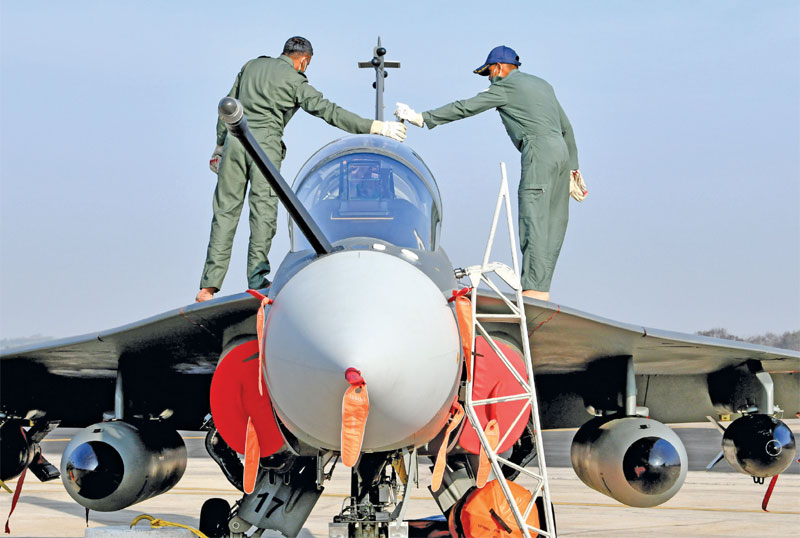
The Rafale fighter
Despite constant calls from industry and user services to simplify the procedure on paper and enhance the ease of doing business, the handbook has become more and more complex and long-winded with each revision, and the current version is close to seven hundred pages. The government’s intent may have been to proffer a comprehensive document but bureaucratic delays in the acquisition process have proved to be directly proportional to the voluminosity of the document.








 VIDEO
VIDEO