Last year in April 2019, Jet Airways, India’s second largest passenger airline landed and never took off. It was functioning in deficit and had dues to the tune of Rs 15,000 crores.
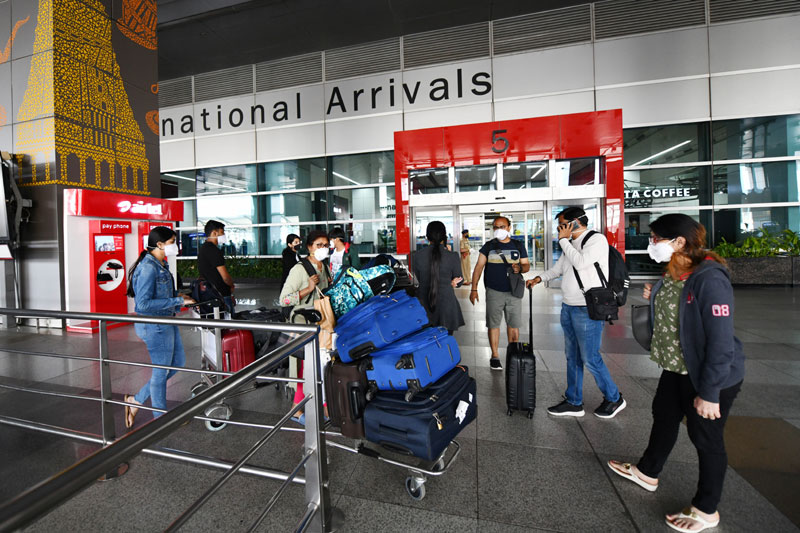
As the numbers of Indians opting for air travel keeps soaring every year, and is said to be the highest growth in the world in terms of airline travel, it is ironic that the airlines fail to earn more than they spend. As reported by the Directorate General of Civil Aviation (DGCA), domestic air traffic in the year 2018 went up by 18.6 per cent which was recorded to be the highest in the world amounting to 13.90 crore passengers. However, passengers carried by domestic airlines grew only marginally at 3.11 per cent between January and October 2019 compared to the growth of 20.11 per cent during the same period in 2018.
A year after the Jet Airways crisis, airline industry continues to struggle. As of December 2019, Indian airlines’ operating losses were at a four-year high amounting to Rs. 6,845 crore which was the highest since 2015.
At a time when India’s economy is at an all-time low, Indian aviation is experiencing a financial blow due to weak demand but rising capacities. This has forced them to slash prices.
What ails the Indian airlines is the depreciating rupee and huge competition in ticket pricing and technical issues. The tax on Aviation Turbine Fuel (ATF), too, is very high in India. As compared to other countries, the fuel used to be 35-40 per cent expensive, although now there is a sharp decline in fuel prices.
Passenger load factor, a measure to capacity utilisation remained moderate for the domestic airlines. In 2019, two major Indian aircrafts, IndiGo and SpiceJet, suffered a significant financial blow. While SpiceJet added 34 aircraft to its fleet and IndiGo added 30, both the major aircraft failed to realise its full passenger load factor incurring huge losses.
The already struggling airline industry now faces the repercussions of COVID-19 which has forced India and other countries to go under lockdown. A case in point is that of Boeing and Airbus, two major manufacturers of aircraft. The production of these companies, which was at its peak until recently, has now slackened. The reason: There are no buyers. Demand has gone down as airlines across the world don’t have travellers due to the pandemic. COVID-19 has cost the American aerospace industry a loss of USD175 billion. Boeing, which was already under pressure after the grounding of its 737 Max, is now facing reduced orders, both due to recession and crash crunch caused by the pandemic. Faced with plummeting stocks, it has sought a short-term assistance from the US government.
Similarly, Airbus has halted its production and other activities in both France and Spain. At the beginning of March, the company’s shares fell by more than 40 per cent. The pandemic has affected not just the major airlines and aircraft manufacturers; it has also brought a halt to firms that produce components and parts of aircraft.






 VIDEO
VIDEO