Diplomacy is the way forward, not prolonged wars
and endless destruction
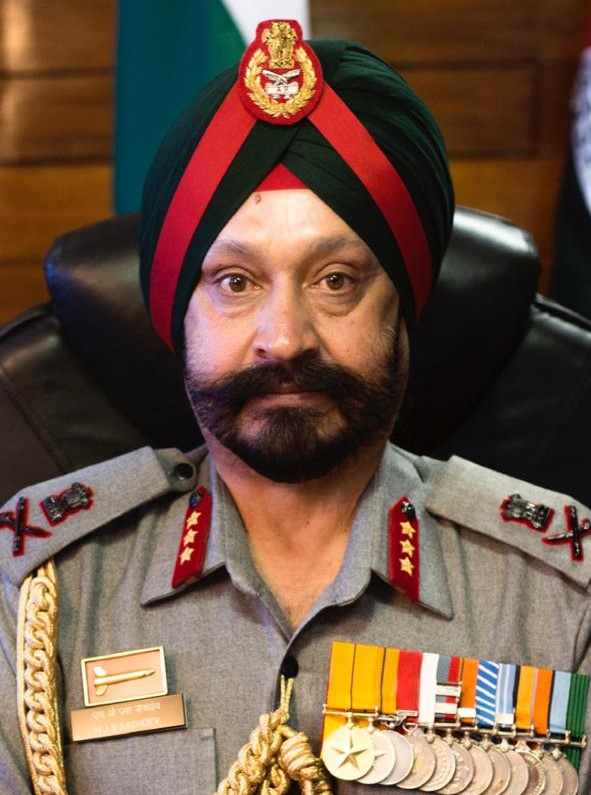 Lt Gen. Harminder Sachdev
“The
first, the supreme, the most far-reaching act of judgment that the statesman
and commander have to make is to establish…the kind of war on which they are
embarking; neither mistaking it for, nor trying to turn it into, something that
is alien to its nature.”
— Carl von Clausewitz, On War
The idea of victory has
always been central to warfare. States go to war in the expectation that
fighting will bring them closer to achieving political objectives they could
not secure through diplomacy. Yet in the 21st century, the very notion of
victory has grown blurred. Based on well-defined ‘national aim’, it once meant
the conquest of territory, the defeat of an enemy’s army, or the imposition of
a favourable treaty. Today, however, the national aims by themselves are often
defined in terms so abstract, ‘destroying terrorism,’ ‘eliminating extremism,’ ‘teaching
a lesson,’ or ‘guaranteeing long-term security’ etc., that it becomes
unattainable through military means alone.
As a result, modern wars have taken on a paradoxical character. They are
technologically more destructive than ever before, particularly through the
aerial domain, where precision-guided weapons can cripple a nation’s
infrastructure within days. Yet despite this destructive capacity, they are
also more prolonged, grinding on for years without resolution. Civilian
populations are left to endure economic collapse, social trauma, and
displacement, while external powers feed the conflict for their own strategic
ends.
The problem lies in the misalignment between aims and means. Victory has
been redefined in cognitive and ideological terms, but war remains a material
instrument. Aims that belong in the domain of diplomacy or politics are instead
pursued through missiles and tanks, producing wars that destroy without
concluding. To understand this dilemma, it is necessary to revisit classical
theories of war, examine contemporary conflicts, and reflect on how alliances
and external actors exacerbate the problem.
Classical
Theories of Victory
For classical strategists,
victory was always a matter of clarity. Chanakya, in his work Arthashastra, writes that war is just a
means to a durable end state! He defines victory is not a battle won but a
purpose fulfilled. Clausewitz emphasised that ‘war was a continuation of politics by other means.’ Its conduct
had to be subordinated to the political aim, and that aim had to be both clear
and proportionate. If the political objective was limited, the war should be
limited (Kargil War); if the objective was existential, total war might be
necessary (World War II). In both cases, however, the aim defined the measure
of victory.
Basil Liddell Hart carried this logic further in the twentieth century. ‘The
object in war is a better peace, even if only from your own point of view,’ he
wrote. In other words, the true test of victory was not the destruction of an
opponent’s forces alone, but also the quality of the peace that followed. Philosophically
speaking, a war that exhausted the victor and destabilised the postwar order is
more a ‘pyrrhic victory’ (a victory so costly that it tantamount to defeat!).



 VIDEO
VIDEO