In the early hours of 26 February 2019, 12 Indian Air Force’s (IAF) Mirage 2000 fighter jets crossed the Line of Control and destroyed the Jaish-e-Mohammad training camp in Balakot killing a ‘large number of terrorists.’ The following day, Pakistan retaliated and in the ensuing air battle, a Pakistani F-16 was shot down while India lost a MiG-21, and its pilot was taken prisoner. Meanwhile, an IAF Mi-17 helicopter was brought down by friendly fire; reportedly the first instance of fratricide involving IAF ground based surface to air missiles (SAM).
A Court of Inquiry instituted by the IAF reported that ‘the “Identification of Friend or Foe” (IFF) system on-board the helicopter was switched off and there were “vital gaps” in communication and coordination between the ground staff and the crew of the chopper’. It also found violations of standard operating procedures.
A year later, on taking over as India’s first Chief of Defence Staff, General Bipin Rawat in his very first meeting directed Headquarters Integrated Defence Staff (IDS) to prepare a proposal by 30 June 2020 for the creation of Air Defence Command (ADC). While the reasons for going in for the same were not immediately known, General Rawat did mention in an interview that one of the reasons for the proposed air defence command was the need to avoid fratricide.
According to one of the news reports, the CDS said that the defence of the airspace is critical, and somebody has to be responsible for that. ‘That responsibility has been given to the IAF. But the resources to defend the air space are with three separate services. Should this not be coordinated? Or should you keep hitting your own aircrafts and UAVs? If you have to ensure there is no fratricide, for every weapon system fired in the right time at the right aircraft, the command and control instructions should come from one entity. As of now it’s not,’ the report quoted him.
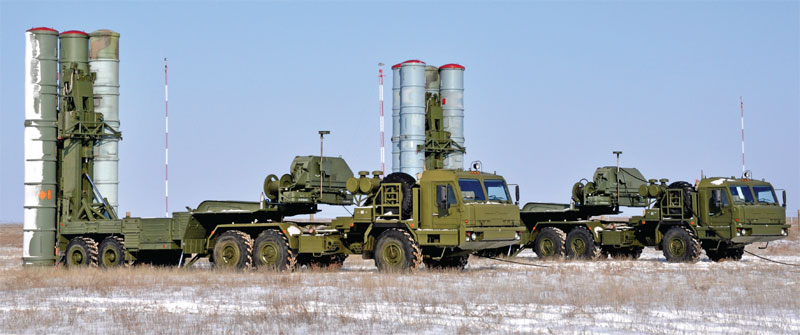
S-400 Air Defence Missile System
The emphasis seemed to be on preventing fratricide and having unified ‘command and control (C2)’. Both are laudable goals but having an ADC to achieve these is to miss the point. The incident mentioned above was of an IAF missile shooting down its helicopter. It was the same service, same command and yet the accident occurred. The reason was communication failure and lack of coordination within the same command. The only way to prevent, or reduce, fratricide is to have fail-safe communications and an effective C2 system. Creating commands is not going to address the issue. The reason for this misconception is that the nuances of air defence (AD) and AD operations are often not understood properly.
The Basics
Firstly, air defence is more than just aircraft and guns and missiles. It encompasses ‘all measures designed to nullify or reduce the effectiveness of hostile air action’. It includes not only the air force and air defence artillery but all weapons that can be fired at an aerial target.
It may be easy to write off use of other weapons against aircraft or aerial platforms but experience over the years have shown that losses to ground fire are a major cause of attrition and not something that is easy to ignore. It is pertinent to note that not all aircraft and helicopters are hi-tech, fifth or fourth generation aerial platforms. The adversary’s air effort will include legacy aircraft and simpler platforms like drones and cruise missiles that are vulnerable to ground fire.






 VIDEO
VIDEO