Although China’s People’s Liberation Army (PLA) boasts of having about 7,600 main battle tanks (MBTs), only about 700 of them — ZTZ-99As and ZTZ-99Bs — can qualify as being fourth-generation vehicles. The remaining 6,900 are all derivatives of the Soviet-era T-55s and T-72M.
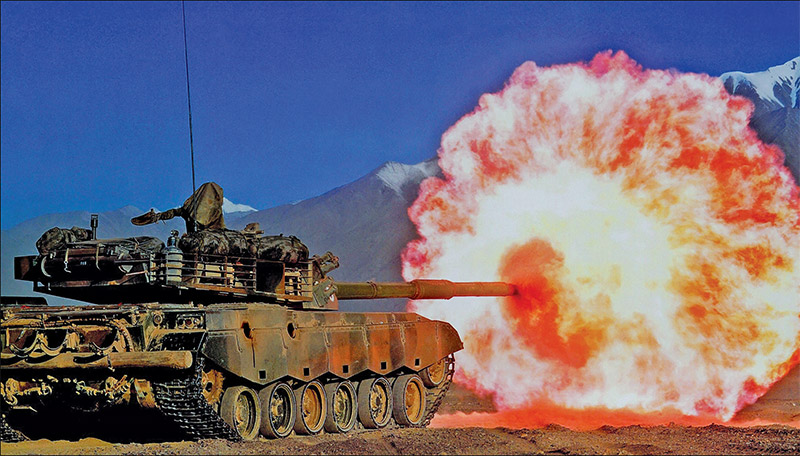
ZTZ-96A MBT of Tibet Military District
Consequently, as of today, the PLA’s operational MBT fleet comprises about 700 fourth-generation, 1,500 third-generation, 400 second-generation, and 5,000 first-generation units. In comparison, back in 1997, the MBT inventory comprised about 6,200 first-generation and 1,600 second-generation MBTs. The first-generation MBTs include the ZTZ-59 (clone of the T-54), 37-tonne ZTZ-59II (clone of the T-55 and exported to Bangladesh, Myanmar and Pakistan) and the ZTZ-59D (whose export version is the 36.7-tonne Type-69MII that was exported to Bangladesh, Myanmar, Pakistan, Sri Lanka and Thailand), all powered by 580hp water-cooled 12150L7 diesel engines. The 400 second-generation MBTs currently in service are the ZTZ-79 and ZTZ-88/ZTZ-88 MBTs (derived from the T-72’s design), while the ZTZ-96A/ZTZ-96B models belong to the third generation.
China secured a lucky break in the late Seventies when Israeli companies like Israel Military Industries, El-OP and Tadiran succeeded in teaming up with the state-owned China North Industries Corp (NORINCO) for upgrading the second-generation ZTZ-79 and ZTZ-88 MBTs through the incorporation of 105mm rifled-bore cannons (capable of firing armour-piercing, fin-stabilised discarding sabot or APFSDS rounds), hunter-killer fire-control systems, combat net radios, intercoms and automatic fire extinguishers.
However, only 700 ZTZ-79 and 200 ZTZ-88 MBTs were produced by NORINCO between 1980 and 1988 and they were all deployed along the then Sino-Soviet border in Xinjiang. These were the PLA’s last MBTs to be operated by a four-man crew. The 39.5 tonne ZTZ-88A (about 80 of which were exported to Myanmar in the early Nineties) used a Type-212 fire-control system and Type-83-I cannon with 48 rounds in storage, while the powerpack used a 730hp 12150L-7BW water-cooled diesel engine.





 VIDEO
VIDEO