The Indian Navy has been trying to invest in sustainable marine propulsion systems that can reduce fuel consumption and environmental impact. As global environmental concerns intensify, the Indian Navy is on a quest to balance operational effectiveness with environmental stewardship.
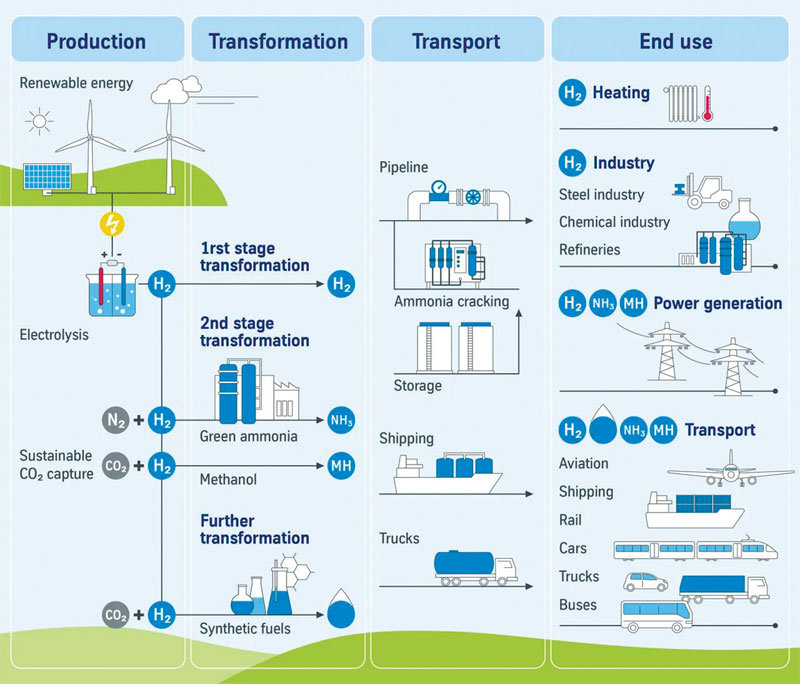
thyssenKrupp’s infographic displaying its efforts at green technologies
The Indian Navy is exploring and incorporating sustainable marine propulsion technologies into its fleet. These technologies offer several advantages over traditional diesel and gas turbine engines, including reduced emissions, quiet operation and improved fuel efficiency. Towards this end, it has signed a series of deals with international partners to develop sustainable marine propulsion technologies.
These deals include a Memorandum of Understanding (MoU) with Rolls-Royce in 2021 to develop the potential of hybrid propulsion systems using Rolls-Royce's MT30 marine gas turbine and electric motors. The MT30 is known for its high performance and low emissions, making it well-suited for hybrid propulsion applications. It is currently used by navies worldwide, including the Royal Navy, the US Navy and the Republic of Korea Navy.
CEO of Rolls Royce India, Kishore Jayaraman in an interview with FORCE earlier this year said, “The MT30 offers excellent power density and reliability that allows the ship to operate anywhere in the world without loss of performance or power, with reduced through-life maintenance.”
“One of the key strengths of the MT30 is that it has the power for today and also tomorrow, so it effectively helps to future-proof a platform against future demands for increased electrical power from system upgrades such as weapons and sensors,” he added.
Companies like Rolls Royce, thyssenKrupp and Atlas Elektronik are collaborating with the Indian Navy to develop sustainable marine engines and other sustainable technologies. ThyssenKrupp Marine Systems is reducing its carbon footprint by focusing on fuel cell propulsion systems, efficiency enhancements in hull design and route planning, energy recovery systems, and the use of lightweight materials in ship construction.
A spokesperson from thyssenKrupp says, “Through collaborations like the Clean Autonomous Public Transport Network (CAPTN) in Kiel, we’re addressing infrastructural challenges linked to new energy carriers, engaging with over 50 alliance partners to promote environmentally friendly maritime traffic.”






 VIDEO
VIDEO