Two years after it was conceptualised, the department of military affairs (DMA) has accepted the ‘Tour of Duty’ (ToD) scheme. This will allow civilians to join the armed forces for a fixed period of three years and serve as officers as well in other ranks.
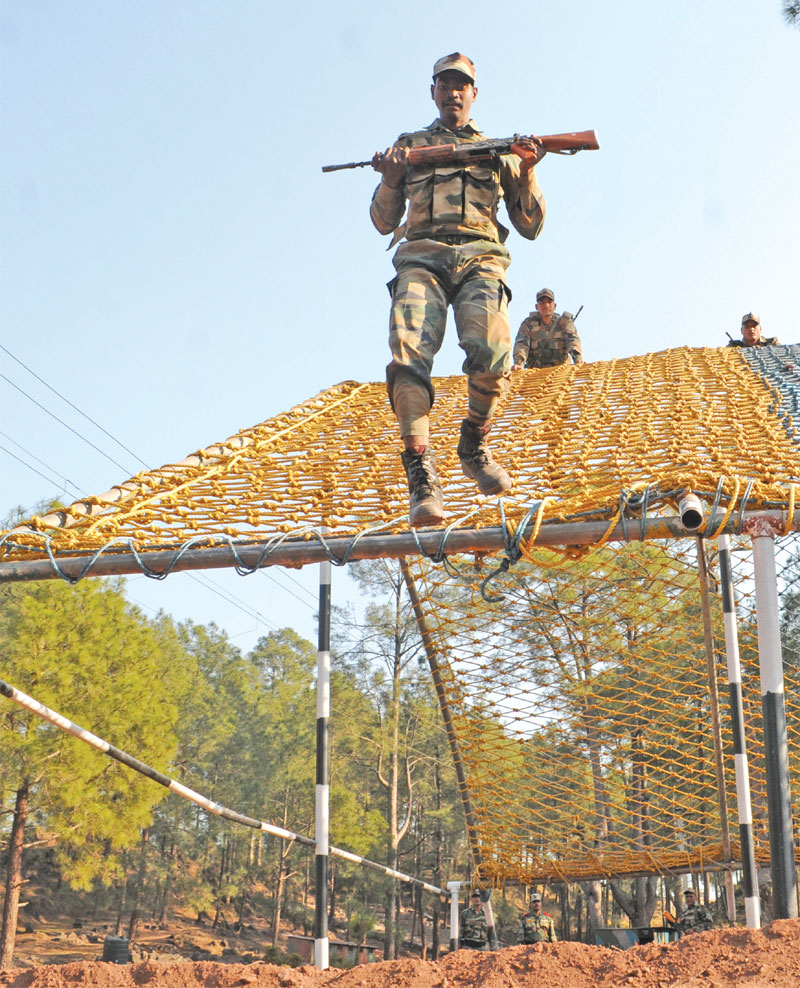
Indian Army personnel during training
Initially, when the idea was first drawn up, it envisaged 100 officers and 1,000 men for induction. However, now the speculation is that the number of officers to be inducted would either be reduced or done away with completely. The focus would be only on recruiting soldiers. On the platter is an offer for those who wish to experience the military life but do not want to make a career out of it.
Ever since it was introduced, the idea has been debated fiercely. Whether or not the civilians should be given a walk-in walk-out in the defence forces is a question many have asked. Those in support of the idea say that this will create valuable assets in the civilian job market since the brief experience in the forces would have exposed the candidates to hard work, teamwork and stress management apart from discipline.
While the concept is already in the public domain and much is being made out of it, the defence establishment is yet to come out with clear details of how it will take shape. There is ambiguity about the future of the men who would choose to join the army for three years. Will they be given lateral entries into the CAPFs? Will they be able to take up government jobs through reservations or will the private sector be their only opening? Will they be retained in the army beyond three years, and for how long?
Another speculation is that since the army already inducts officers through the Short Service Commission (SSC) route, it will only focus on hiring soldiers under the new scheme. There is no formal statement from the military as yet, and the army website does not mention the ToD. Also, there is no clarity on the application dates, pension, gratuity, leave encashment and medical facilities through the Ex-servicemen Cooperative Health Scheme, or even if the Ex-Servicemen (ESM) status will be provided to the ToD personnel.
What is being speculated is that they will, however, get a pay-out package. Though it is not yet known whether they will be given any preference in government jobs, including in the police forces and CAPFs. But with CAPFs already reeling under heavy pressure, extremely slow promotions of the cadre officers (and men as well), and a leadership that is borrowed from the IPS, it is unlikely that the lateral entry of the ToD personnel will be acceptable to these services.
The Beginning
The ToD concept was introduced by the late chief of defence staff, Gen. Bipin Rawat. The basic driver was reducing the pension bill. Currently, a huge amount of annual defence allocations is spent on pensions, which comes in the way of modernisation.
While the army took its time to deliberate on either implementing the ToD to fill the growing vacancies or making the existing short service commission ‘more attractive’, the IAF and the navy were apparently not keen on the scheme from the word go. However, it realised that ‘making the SSC more attractive’ would not resolve the pension bill problem.
Roughly 60 per cent of the SSC inductees are granted permanent commission to serve until 54 years of age. And then they become eligible for pension. For instance, the Centre allocated a sum of Rs 5.25 lakh crore for 2022-2023 in the defence spending, which was a steep increase of 9.8 per cent from the previous year’s Rs 4.78 lakh crore. Out of this Rs 5,25,166 crore, 1,19,696 crore will go in defence pensions. At present, recruits even under the short service commission can serve for up to 10 years, extendable by 14 years. This is the lowest that one can serve in the army.




 VIDEO
VIDEO