

Masters of the Sea
India’s submarine programme is a strategic necessity and should not be further delayed
 RAdm. Sanjay Roye (retd)
Few military modernisation programmes in India evoke as much strategic significance and frustration as the Indian Navy’s submarine programme. What began as a cautious effort at absorbing foreign technology has become an expansive quest to field modern diesel–electric submarines with Air-Independent Propulsion (AIP) and a parallel nuclear submarine programme aimed at securing deterrence, sea-denial and blue-water reach. Yet, the journey from the initial 30-Year Submarine Plan to the current debates around P-75(I), the Arihant-class SSBNs and the indigenously designed SSN (nuclear-powered attack submarine) programme reveals a story shaped as much by delays, cost escalation and industrial bottlenecks as by technological achievement.
The Journey
INS Kalvari, the navy’s first submarine, was commissioned on 8 December 1967 and inaugurated a new domain of naval operations for a service that had been until then, overwhelmingly surface-centric. The Soviet-supplied Foxtrot boats that followed provided the nascent submarine arm, its early crews, doctrine and operating rhythms; they taught India how to train submariners how to sustain on patrols, and how to incorporate the stealthy, three-dimensional logic of undersea warfare into maritime strategy. Those first lessons mattered as India’s planners watched neighbours modernise and as global naval technology evolved, submarines moved from a tactical adjunct to a strategic necessity.
The next major acquisition impulse came in successive waves. The late Seventies and Eighties saw India seek more modern conventional platforms—the Soviet Kilos and the German Type-209 boats, followed by the decision to indigenise construction via licence arrangements at Mazagon Dock Shipbuilders Ltd (MDL) in the case of the latter. Around the same time, the Indian navy leased a Soviet SSN and became a part of a select few navies in the world to operate nuclear platforms.
The 30-Year Submarine Plan approved around 1998 sought to institutionalise undersea force generation by creating two parallel production lines (of six conventionals each). This was intended to be followed by 12 submarines of indigenous design based on the learning curve of the two lines to be constructed over the next 12 years. This amounted to a target inventory roughly in the mid-twenties by about 2030. The intent was deliberate—acquire, absorb, and progressively build sovereign capability—but in practical terms the intervening decades revealed how difficult and expensive that ambition would be.
Project 75 (P-75) marked the most visible attempt to convert strategic intent into industrial output. The 2005 contract with France’s DCNS (now Naval Group) for six Scorpène-class conventional submarines, to be built at MDL, was the single largest submarine manufacturing programme in India’s history. The programme combined foreign design, licence-assistance and an ambitious indigenisation schedule. The first of the new-generation Scorpènes named again INS Kalvari was commissioned in December 2017. The event was a milestone of capability; it was also a reminder of India’s learning curve. Commissioning took place many years after the original target; cost figures and delivery schedules had shifted as components were imported, local certification processes matured slowly, and systems-integration required repeated trial and fix cycles. The Business Standard and ministry of defence statements documented a pattern of schedule slip and iterative correction that would become a recurrent theme for the submarine enterprise.
On a parallel but more secretive track, India pursued nuclear submarines under the Advanced Technology Vessel (ATV) programme. That programme produced INS Arihant, the lead nuclear ballistic missile submarine (SSBN), which was launched and commissioned after protracted, classified development and trials in the 2010s. Arihant’s operationalisation was the strategic outcome India had sought; an undersea leg for a credible second-strike nuclear deterrent. While the endurance and patrol tempo necessary for a continuous at-sea deterrent remain works in progress, the very fact of an indigenous SSBN is a rarity; only a handful of states have managed the integrated scientific, engineering and industrial effort required.
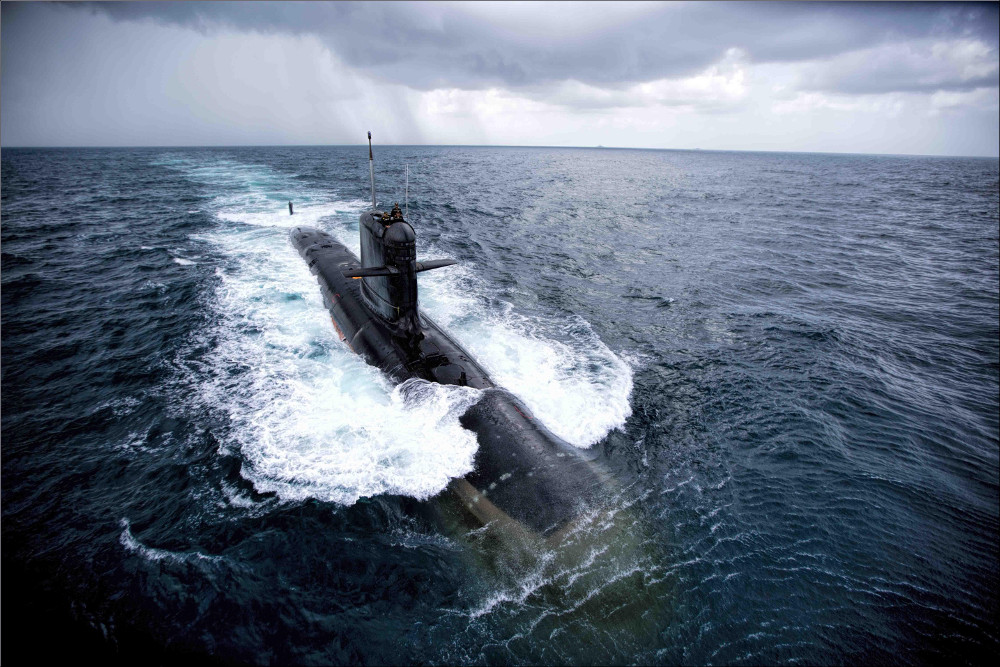
Throughout these decades the programmatic rhythm was variable; periods of intense work and learning were punctuated by procedural delays, contract disputes, technologies in waiting, and interruptions that dissipated workforce continuity. The result by the mid-2020s is paradoxical; with only the P75 having produced six boats. India has moved from acquiring ready-built submarines to building modern conventionals and the means to field strategic nuclear platforms, yet it remains woefully short of the numbers and cadence many strategists consider necessary for assured undersea dominance in the Indian Ocean Region (IOR).
Subscribe To Force
Fuel Fearless Journalism with Your Yearly Subscription
SUBSCRIBE NOW
We don’t tell you how to do your job…
But we put the environment in which you do your job in perspective, so that when you step out you do so with the complete picture.





 VIDEO
VIDEO