Global ammunition manufacturers bidding for supplying all types of tube artillery howitzers for the Indian Army have always been highly perplexed by an anokhaa (unique) specification that is always mentioned in the issued Request for Proposals (RFPs): the howitzer on offer for in-country firepower and mobility trials must be capable of firing 155mm rounds and propellant charge-bags that are made in India.
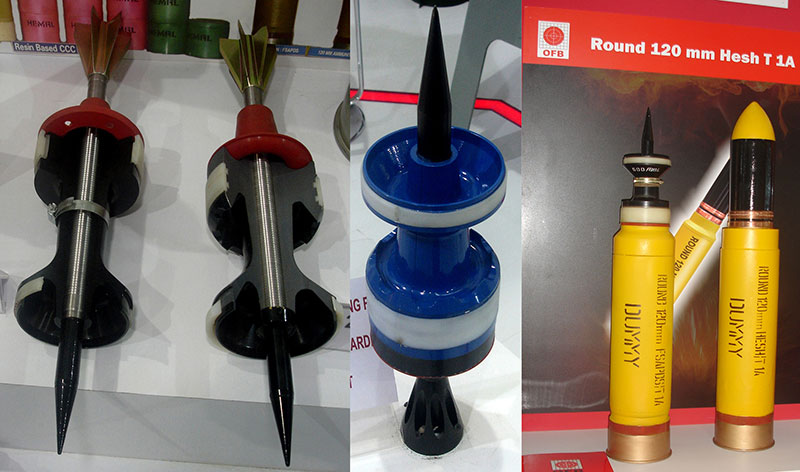
After all, they always ask, in what way are such rounds and charge-bags — produced by the state-owned Ordnance Factory Board (OFB) — different from their global counterparts if the OFB-built products are built to the very same NATO-specified military standards that are the global norm? Isn’t it then the case that by implication the OFB is openly admitting that it does not produce artillery rounds to the same manufacturing standards that the rest of the world adheres to? Or is the Indian Army insisting that those original equipment manufacturers (OEM) of field artillery howitzers bidding for orders from India are required to develop only those howitzers that can be used by the Indian Army alone — a ridiculously outrageous pre-condition that has no takers?
Presently, the OFB manages 41 manufacturing units and 32 other establishments, of which the former is divided into five operating divisions, based on the main products/ technologies employed: ammunition and explosives — 11 factories; weapons, vehicles and equipment — 11 factories; armoured vehicles – six factories; ordnance equipment — five factories; and materials and components – eight factories.
To date, the OFB has series-produced 122 types of armament and ammunition items so far, of which 61 items have been designed and developed in-house. Approximately 21 per cent of the output value of OFB is from items developed by OFBs in-house R&D. All such items, as well as those that are licence-built, are required to undergo stringent tests, trials and evaluation by the Directorate General of Quality Assurance (DGQA), which is under the ministry of defence’s (MoD) Department of Defence Production. The trials include both field evaluation trials (FET) and maintainability evaluation trials (MET) and subject to successful results being achieved, the Indian Army HQ’s Master-General Ordnance (MGO) Branch places bulk orders for series-production.
When it comes to making tube/ rocket artillery rounds, it is the OFB’s metallurgical factories that make the shells. Then those shells are shifted to the engineering factories where the machining operations take place. After the forging is done, the rounds/ rockets are brought to the engineering factories, where they are given proper shape. Then they will go to the filling factories, of which there are three chemical factories that are manufacturing explosives and chemicals — in Aruvankadu, Itarsi, Bhandara and Pune. And it is only there that the ammunition round gets its final shape and form.
In the early Forties, mass-production ammunition manufacturing systems were complex assembly lines of crank presses, leather-belt driven lathes, batch processing, and loose tolerances. Quality was literally ‘inspected into the product’ by humans sorting through all the finished cartridges, gauging and measuring to determine if a given part was ‘within spec’ and then discarding the ones that fell outside of the established ranges. Today’s brass case factories of the OFB all operate on the principles of traditional mass production techniques that were developed in the early 1900s. In an effort to maximise efficiencies, machines are grouped in common departments, turned up to run as fast as possible and large inventories are used to buffer inconsistencies.








 VIDEO
VIDEO