The edge provided in night fighting by Night Vision Devices (NVD) equipped forces over non NVD or equipped forces was battle defining as evident in the Gulf War, Iraq War and Afghanistan. The Indian Army has been using NVDs for a long time for surveillance, navigation, target acquisition and engagement but has always been behind in the technology curve. Since adversaries and terrorists are increasingly getting sophisticated, night fighting capabilities are critical for the Indian Army to equip its infantry and armoured units with night vision. The Indian Army has set in motion a huge acquisition plan for infantry and armoured vehicles.
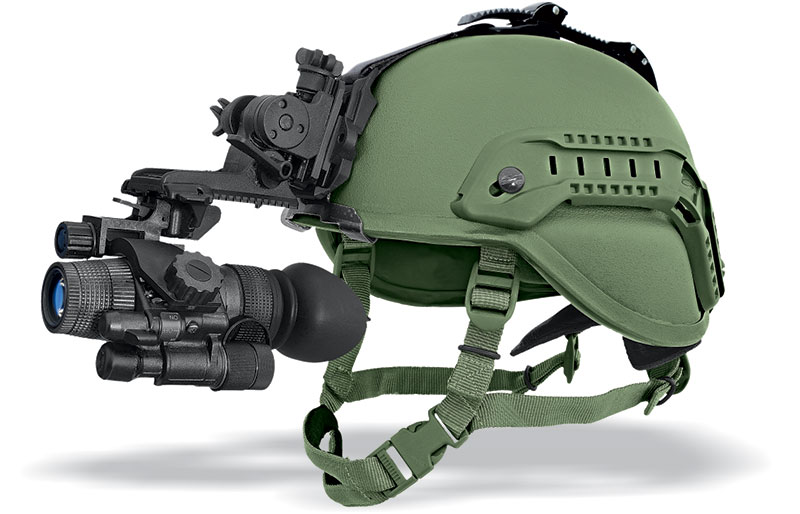
Image Intensification vs Thermal Imaging Devices
The Indian Army has been using a variety of active NVDs with IR flashlights which are now obsolete, especially in wartime, Image Intensification (II) devices and some thermal imager-based devices in Long Range Reconnaissance and Observation System (LORROS) and tanks.
Now there is a clear shift towards thermal imagers from traditional II devices in most of the Request for Information (RFIs) issued by the army suggest that today’s Thermal Imaging (TI) technology offers more advantages while minimising traditional disadvantages. However, the army is not neglecting traditional II devices all together as they have advantages of lightweight, compactness, low power, more target detail in conditions where there is some ambient light.
Low light devices such as Image Intensifiers need some ambient light for intensification but thermal imaging sensors can operate without ambient light at all, making do without additional illumination. These sensors are sensitive to the infrared emissions emitted by objects as a function of their temperatures. Since they do not rely on reflected ambient light, thermal imagers are entirely ambient light-level independent. In addition, traditional II tube-based devices can be destroyed if operated during the day while TI devices don’t have such issues, they can also penetrate obscurants such as smoke, fog and haze, rendering them extremely useful in poor visibility battlefield conditions.
These systems have seen rapid advances from single element detectors to an array of detectors referred to as Focal Plane Array elements which offers superior performances while being compact, light and mechanically less complex, eliminating traditional disadvantages of TI devices. Another very critical aspect is the control over technology, Image Intensification devices especially Gen III tubes are controlled by very few manufacturers like Exelis and Photonis and are subject to tight export controls but TI systems and their subsystems are more available commercially and widely used in industrial applications.








 VIDEO
VIDEO