

Letter from the Editor | October 2026
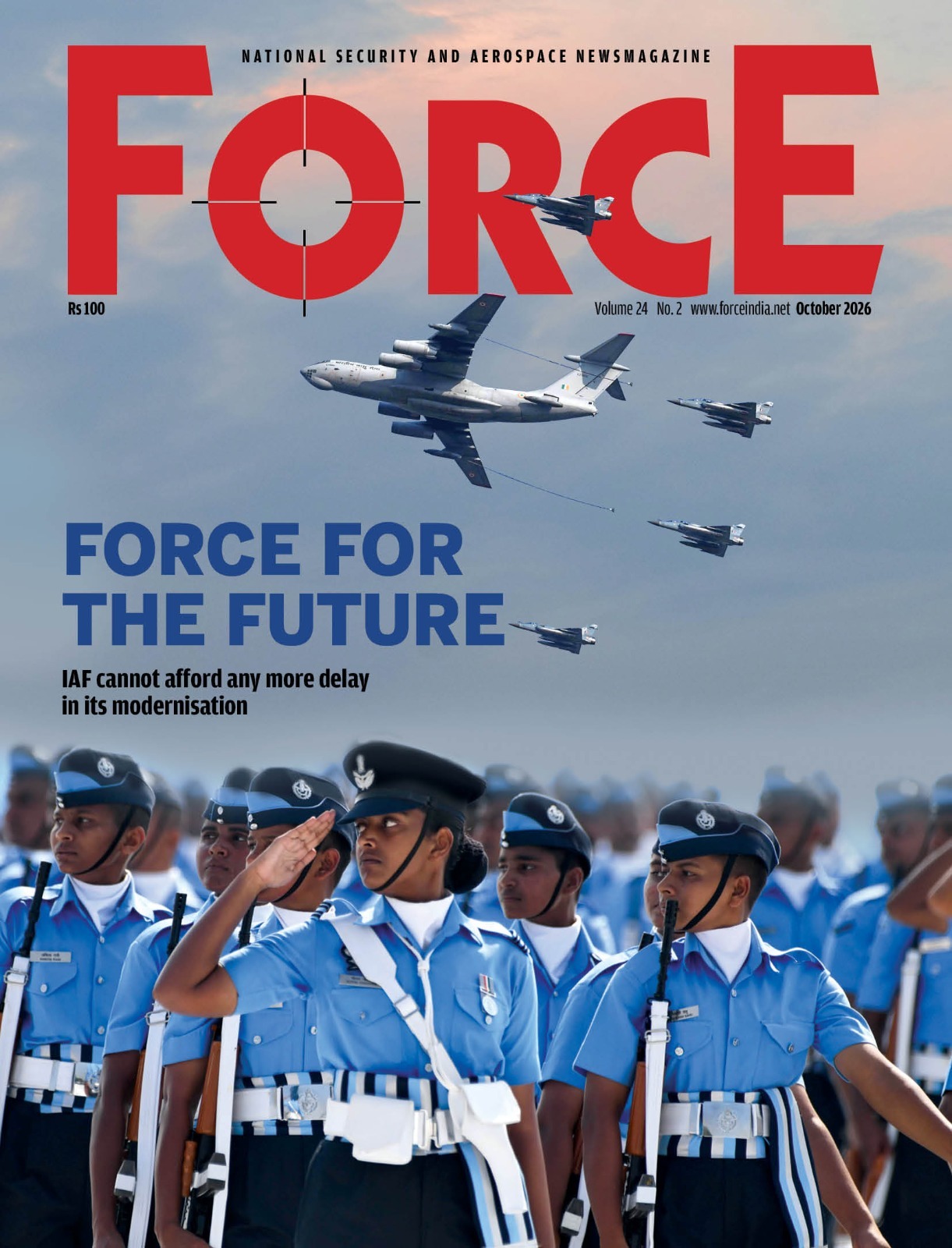
The Indian Air Force special issue is here. And as the cover suggests the focus is on the future. The rapid pace of technological evolution is creating a complexity in which a system or a platform becomes obsolete by the time it is inducted after conception. This has created a unique challenge for military planners, especially in India, where the defence industrial ecosystem, from research and development to production is still heavily reliant on not only technology transfers, but even components in some cases, from abroad. This makes planning for future force levels very difficult.
Adding a layer to this complication is another challenge unique to India. It shares its borders with several countries, two of which are its direct adversaries—Pakistan and China. Until last year, Indian defence planners based their projections on decades old presumption that in case of a war with Pakistan, China will not join the conflict. But in case of a war with China, Pakistan will certainly join, making it a two-front challenge.
Presumptuous as this statement may have been, it was comforting, because to avoid the two-front nightmare, all India had to do was prevent a war against China at all costs. This meant preparing different capabilities, often in silos, for the two adversaries—one for warfighting and another for deterrence. The proposed theatre commands also reinforce this silo-like thinking.
However, Operation Sindoor last year shattered this comfortable illusion. It demonstrated that technology has blurred the neatness and linearity of the so-called fronts. In the brief war, ostensibly between India and Pakistan, China was present as an enabler of real time capabilities. It provided battlefield transparency to Pakistan, helped with target acquisitions, secure networks and the vectors for taking out those targets.
Hence, today, Indian military planners have to factor in the new reality—that the war may not follow the logic of fronts and that the adversaries may be operating together across domains, including non-physical; and physical assets may become a vulnerability.
This October issue ties all these loose ends to suggest a future capability which takes into account the technologies which are both challenges and assets.
In other stories, we have a disturbing report from India’s largest central armed police force, the CRPF, which has recorded the highest numbers of suicides, a total of 59, last year, a five-year-high. Official explanations blame family and financial stress for these suicides. However, senior cadre officers from the service attribute this distress to professional insecurity and lack of pride in the job, which is caused by severe stagnation and absence of appreciation.
Then there are the FORCE regulars, such news, views and books. Read on. Happy IAF Day to all of us.
The other countries, though not adversarial, are not entirely friendly



 VIDEO
VIDEO