

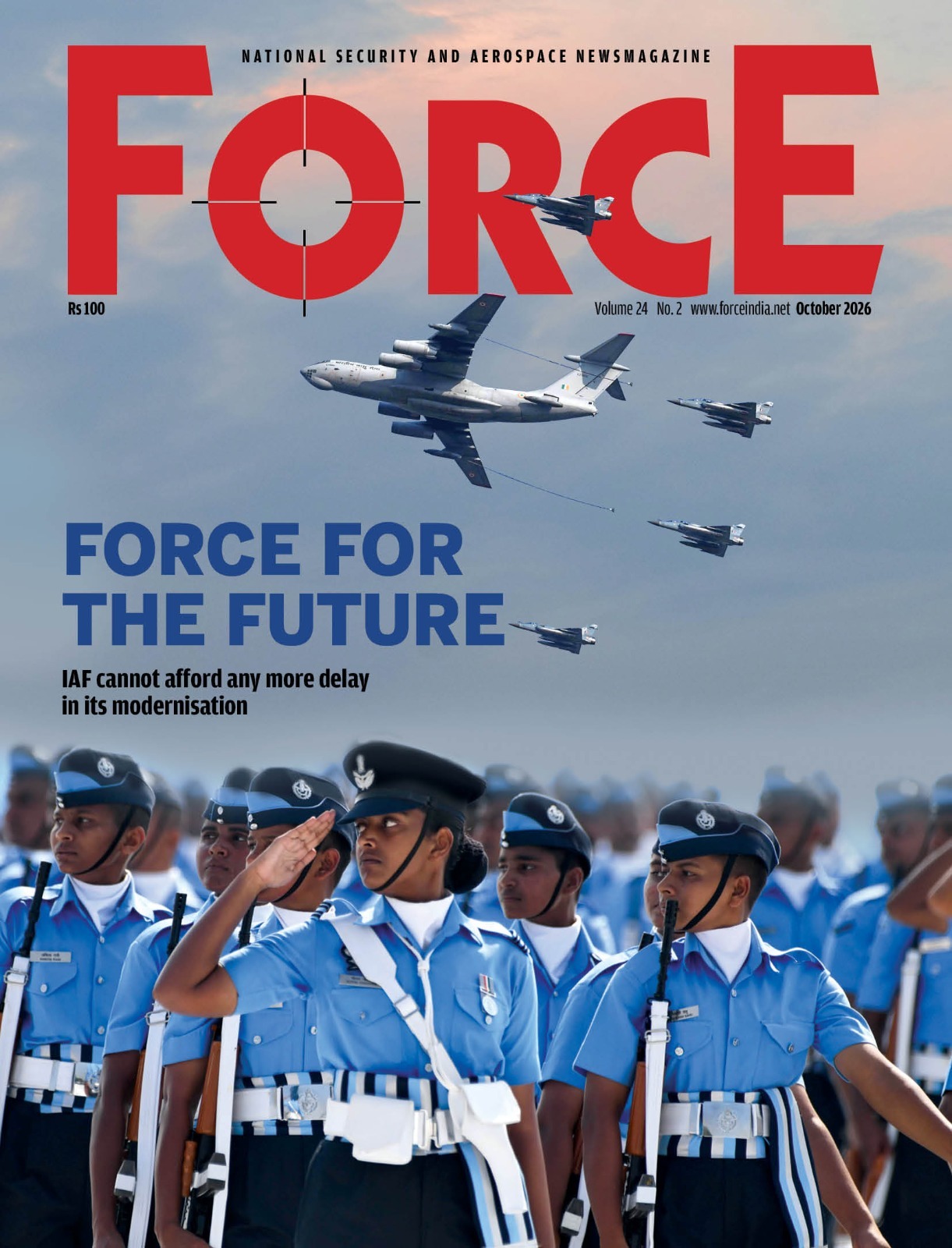
Letter from the Editor | February 2026
After a bleak beginning to the year, the sun shone again towards the end of January. Following the ‘mother of all deals’ with the European Union, whose president was the chief guest during the Republic Day parade, Prime Minister Narendra Modi received the long-awaited call from ‘daddy’ himself—the US President Donald Trump.
And in true Trump style, he quickly posted on his social media whatever according to him, transpired during the call. Once again, the government of India went into a silent huddle, struggling to figure out the implications of the call for India’s various bilateral and multilateral relationships, particularly with Russia. Clearly, Trump’s unpredictability makes his friendly outreach as perilous as his angry outbursts.
In this flux, there is only one certainty—the captivity of Indian foreign policy to US’ whimsy. It is because of this that Indian policymakers refuse to see the transformative changes that the world is going through. Hostage to the old western hierarchical order, which over the decades had created classes of beneficiaries across the world, especially among former colonies, India continues to invest in its sustainment, instead of breaking out.
The February cover story looks at the geopolitical instability caused by Trump administration’s blow hot blow cold foreign policy in which frequent presidential threats on the social media are followed by infrequent physical interventions. Given that the world’s attention has been on the US, the new Russian foreign policy document escaped attention. It is particularly galling that even Indian policymakers did not pay attention to how Russia has shifted its focus from west to east and south, seeking a cooperative model of strategic and economic balance. The cover story points out that of all the three super-powers (US, China and Russia), only Russia views India as a major power, and this offers India a possibility of playing a consequential regional role independently, without being a subordinate nation. This possibility can also gradually ease the stress in its bilateral relations with both China and Pakistan—if only India could shed it historical and ideological baggage.
In other stories, there are comprehensive articles on emerging counter-UAS technologies and the developments in India. Another article looks at the vulnerabilities of cyber networks, especially in their potential of shaping battlefields without even the physical movement of troops. Given the proliferation of internet-based platforms for social media, e-commerce, access control etc., one of the articles emphasizes upon the need for a mindful regulatory system, which looks at both the vulnerabilities as well as opportunities.
Then, of course, are the FORCE regular features, news and books. Enjoy the issue.
 VIDEO
VIDEO