The Indian Air Force (IAF) has been on their toes throughout 2019. The February 2019 Pulwama suicide attack gave rise to a bitter rivalry between India and Pakistan, beginning with the Balakot strikes in the wee hours of February 16. The IAF conducted some high-powered exercises to keep its personnel and aircraft war-ready in an increasingly hostile environment.
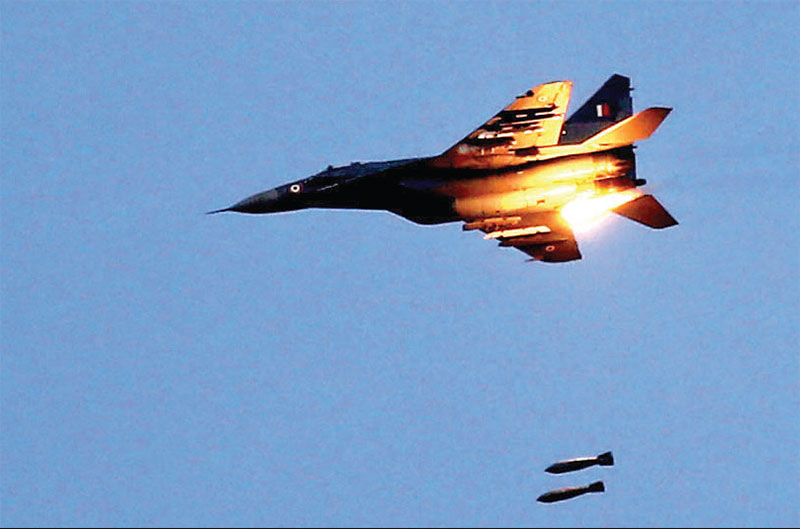
Indian aircraft during Exercise Vayu Shakti
The first exercise was conducted this year by the IAF, Vayu Shakti, at the Pokhran Firing Range, which is India’s international border with Pakistan. Conducted once in three years, Vayu Shakti was a major exercise and involved the participation of 138 aircraft, including 81 fighter jets, to attack simulated enemy air and ground targets. The mega exercise included almost all of the IAF’s aircraft inventory which included Su-30, Mig-27, Mig-29 upgrade, LCA-Tejas, Mirage-2000, Mig-21 Bison and Hawk.
Just about a month later, on 14 March 2019, the IAF conducted an operational exercise along the border areas in Jammu and Kashmir and Punjab to test its combat readiness. The exercise saw about 50 fighter planes, from four combat squadrons, take part in the backdrop of the rising tensions between the two neighbouring nations. The fighter planes involved in the exercise included Sukhoi-30s, Mirage 2000s and upgraded MiG-29 fighters. Though such exercises are conducted regularly to test operational preparedness, the prevailing circumstances drew unprecedented attention to the exercise.
Another major exercise by the IAF in 2019 was the Exercise Garuda, a bilateral Indo-French large force employment warfare exercise held from 1-12 July 2019 at Mont-de-Marsan France. Garuda-VI was the largest international air training exercise for the year 2019. The IAF contingent consisted of 134 air-warriors. The participating aircraft included four Su-30 MKI fighters besides one IL-78 and two C-17 aircraft that provided logistic support during induction and de-induction.





 VIDEO
VIDEO