

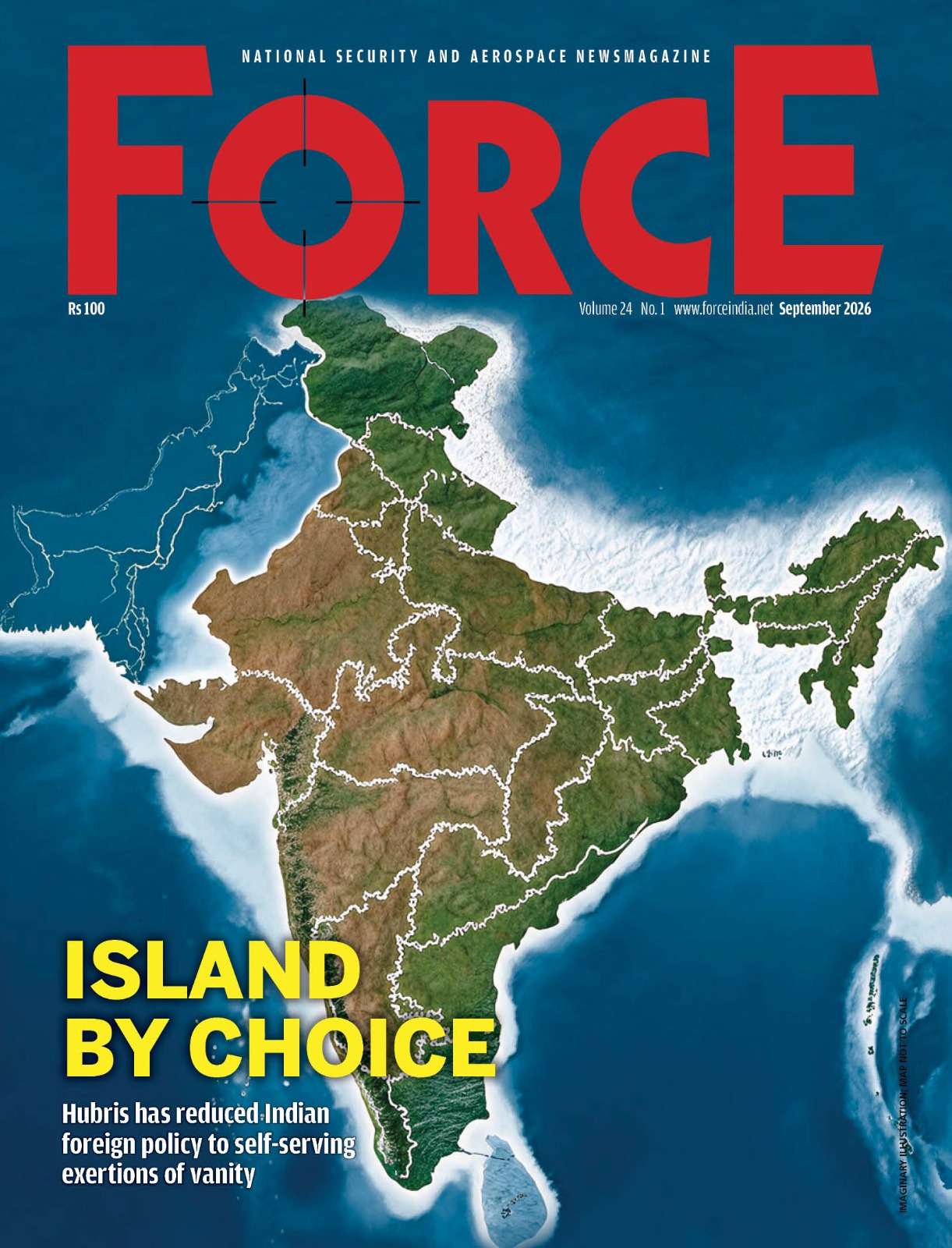
Island by Choice
Hubris has reduced Indian foreign policy to self-serving exertions of vanity
.jpg) Pravin Sawhney
Pravin Sawhney
India is strategically isolated in its own geography. Reason being that India has refused to accept the geopolitical realities which are reshaping the world order; from unipolar world with one superpower -- the United States (US) -- to the present multipolar world with three great powers -- the US, China and Russia. The unipolar world got over in 2013 around the time that the Modi government came to power in May 2014.
Such a big global change has been spurred by the exceptional rise of China in hard power comprising economic, technology and military power. Moreover, with the rise of China, two other extraordinary geopolitical realities have occurred. One, the global geopolitics or the centre of global power and wealth shifted from Trans-Atlantic to Eurasia-Africa region. This is where majority of developing and less developed nations, called the Third World nations during the Cold War, and now Global South, reside. Free from colonialism and exploitation of the West, most of these nations have had self-awakening leading to their own respective rise.
And two, the Global South nations were provided with a vision of the New World Order by China and Russia -- a vision which is the antithesis of the US-led unipolar world order. The vision came into existence in March 2013 when Chinese President Xi Jinping met Russian President Vladimir Putin in Moscow. After the two leaders agreed on the vision, Xi, on 23 March 2013 gave an exceptional speech at the Moscow State Institute of International Relation. The speech was on ‘New Type of International Relations’ with five key characteristics.
One, each nation big or small should have sovereign equality to determine its own development path. For this to happen, each nation should follow the concept of collective, relative or common security, which was the second characteristic. Thus, unlike the concept of absolute security which is a zero-sum game followed by the US-led order, in the new type of international relations, security of one nation should not be at the expense of another nation. Hence the need to talk and negotiate to devise common security where both sides compromise to have peace in the region.
The third characteristic was to keep the UN at the centre of all global activities. It should be UN-based order and UN-based international law. Thus, reform of the UN, which represented the victors of the World War II, became urgent with greater decisive representation of the Global South.
Fourth, there should be no interference in internal affairs of another nation. All nations should make an effort to understand various civilisations, cultures and traditions.
And finally, there should be no export of ideology. The overall message of the vision was that mutual respect and peace was necessary for development of nations. In short, partnership between nations with none being a hegemon.
Yet despite being a developing nation and hence a natural member of the Global South, India wants to be identified close to the Global North or West which follows the US-led rules. There are two main reasons for this. The first is Indian elite’s colonial mindset. They want to be close to the Anglo Saxons and Israel with which the Modi government has ideological affinity.
The second reason is that India (Modi government and leading Indian analysts which toe the government line) refuses to acknowledge China’s great power status. They say that since India too has risen, it should be in a regional competition with China. It is very important for the Modi government that India should be recognised as a risen power, because that is regarded as the personal achievement of the prime minister. This is the reason foreign policy has become a part of domestic politics, especially electoral politics, where prime minister’s photographs and videos with world leaders are circulated as evidence of his and India’s global stature.
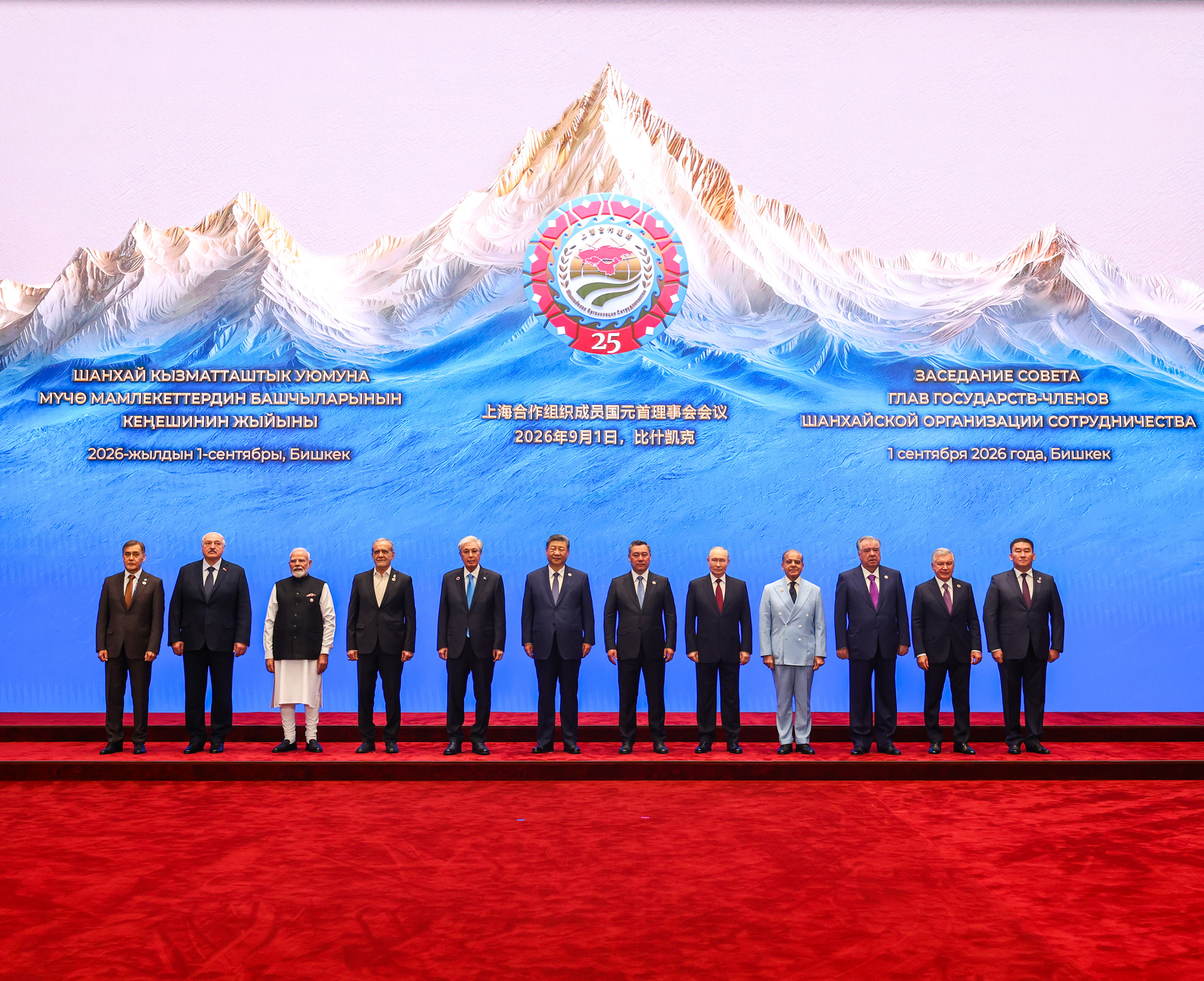
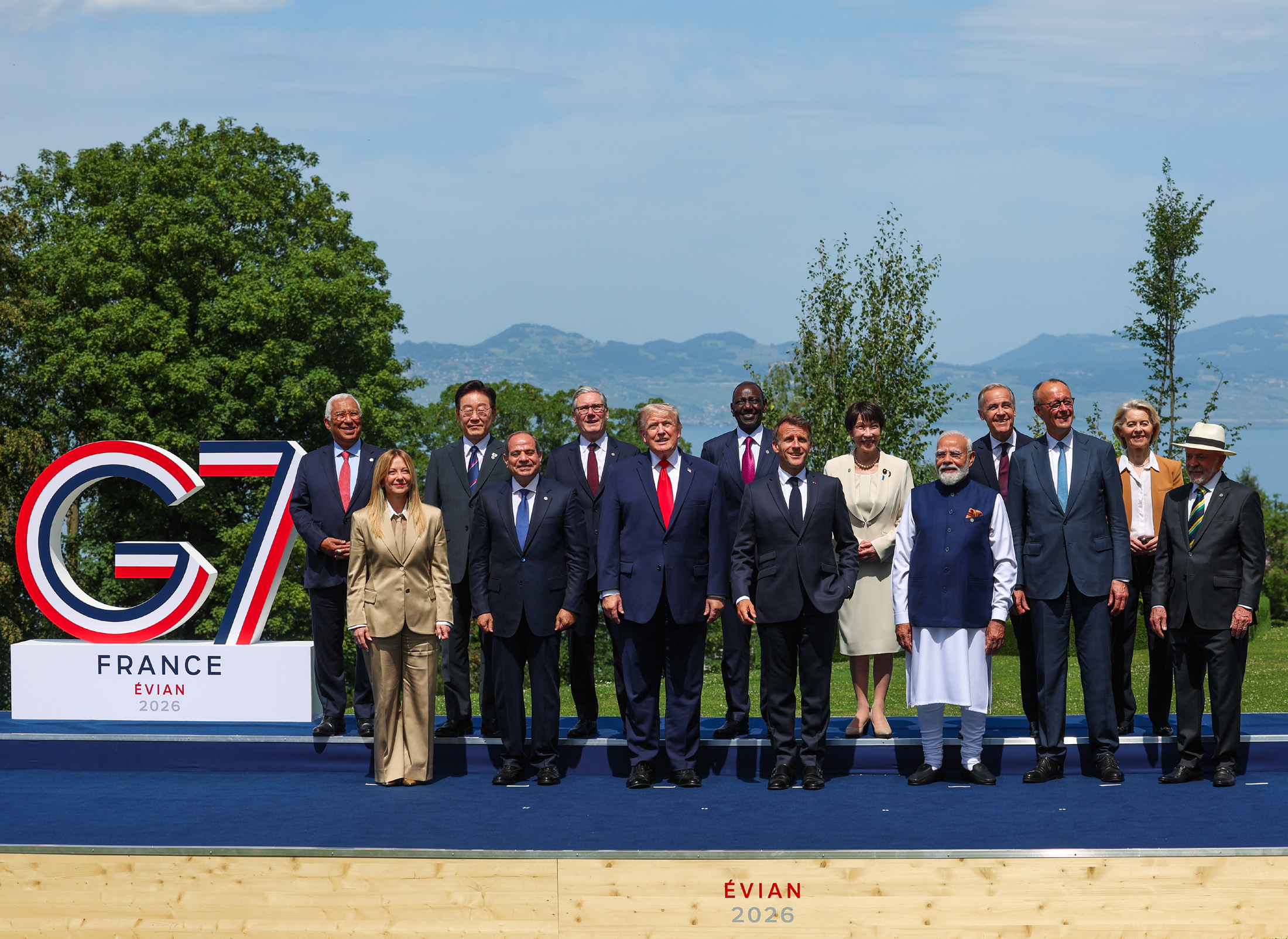
First meeting of the Strategic Political and Defence Committee, established under the Makkah Joint Defence Agreement in Istanbul;
Prime Minister Narendra Modi during at SCO Summit 2026 in Bishkek; Prime Minister Modi as a special
invitee to the G-7 Summit in France on 16 June 2026
Thus, while China might be in a global competition with America, India, in its region which is South Asia, should be accepted by China as the leading power. For this reason, external affairs minister, S. Jaishankar, repeatedly says that multipolar Asia is necessary for a multipolar world.
Ironically, India’s assertion, for structural reasons, works with Russia but it does not work with China. Russia, which believes in global geopolitics which is about balance of power and creating spheres of influence, believes in a multipolar polycentric world. Polycentric means that while all nations in the New World Order are equal, the biggest nation in a region should act as a nucleus interacting with the rest to form consensus on regional matters. Given this, Russia accepts India as the biggest nation in South Asian region. Interestingly, President Putin has publicly acknowledged that a multipolar polycentric world order could be unstable in the long run.
China, on the other hand, believes in geoeconomics which is the basis of its rise. Thus, all 193 nations in the world as listed under the UN should be free to decide with whom they trade or do not trade. Hence, for China, the world is simply multipolar with all 193 nations as poles. For this reason, China is unwilling to accept what Jaishankar wants it to do. It simply does not believe in multipolar Asia or multipolar Africa and so on.
India’s problems multiplied when all nations in South Asia, except for Bhutan, joined China’s Belt and Road Initiative (BRI). To offset this, India decided to re-do its foreign policy by leaving South Asian Association for Regional Cooperation (SAARC) and aligning India’s Act East policy with American Indo-Pacific strategy meant to contain China’s rise. The idea was that by strategically and militarily aligning with America in the region, it would deter China to expand its sphere of influence in South Asia. What was not understood by India is that China’s BRI was not about increasing its sphere of influence, but ‘influence’, which was unstoppable. By helping nations onboard the BRI, China was assisting in their development and prosperity, in turn expecting that these nations be sensitive to China’s core interests and foreign policy, which is not a big ask.
Unfortunately for India, the second Trump administration did two things: One, it reverted the name of its US Indo-Pacific Command to what it was before May 2018: US Pacific Command. This ended India’s formal association with US’ containment of China policy, thus depriving India of its supposed US strategic support against China. And two, the Trump administration in its 2025 National Security Strategy said that it was only in an economic competition with China. With this, the US told its regional allies, namely, Japan, South Korea and Australia to take responsibility of its own security.
India’s neighbourhood foreign policy ran into more trouble in two phases. In the choice between India and China -- proximity and historical ties with the former, and BRI with the latter --, they stopped accepting India’s hegemonic diktats and gradually gravitated towards China which treated them with more respect. Moreover, China, with deep pockets and technology superiority gave smaller nations better options for growth, which they liked.
 summit.jpg)
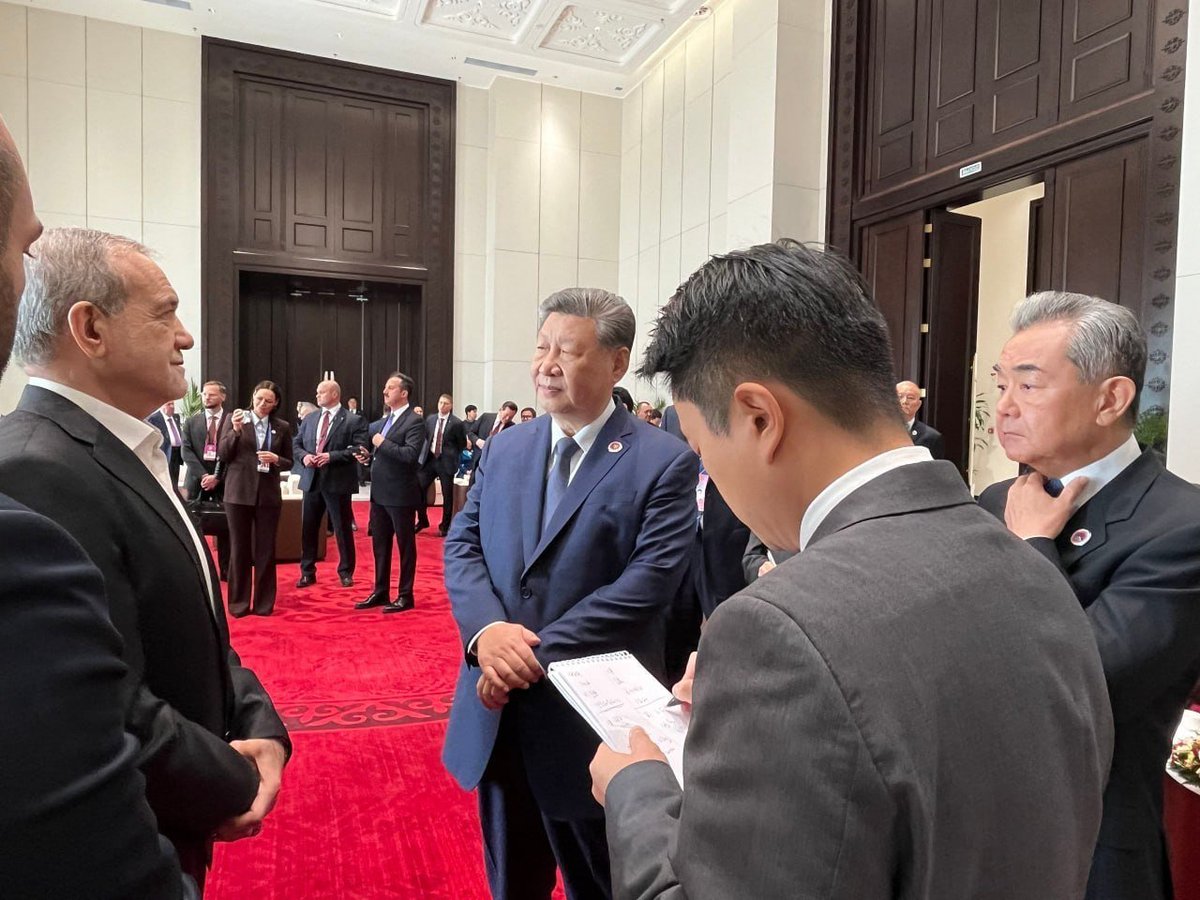
The US war against Iran was one of the main talking points at the recent
SCO Summit in Bishkek, Kyrgyzstan.
Both Russian President Vladimir Putin (top) and
Chinese President Xi Jinping (above) spoke with Iran’s President Masoud Pezeshkian on
the sidelines
Then, Operation Sindoor, the four-day military conflict, happened in May 2025. In this, the US and Muslim nations in West Asia assessed that the Pakistan military performed better than the India military. Moreover, with the war in West Asia between Iran and the US-Israel starting on 28 February 2026, Pakistan’s geopolitical profile rose sharply -- from West Asia to other Muslim nations in Eurasia.
Being the only nation with good ties with all three great powers and close relations with Iran, today, Pakistan is at the forefront of building the Makkah Defence Agreement (MDA), which was announced on August 31. Presently, comprising Pakistan, Turkey and Saudi Arabia, many more Muslim nations in West Asia are likely to join it. The MDA furthers Iran’s calls to build a regional security framework to replace the US framework once the American forces leave the region. The regional framework would made the vision of the New World Order spelt out by China and Russia in 2013 a reality. Interestingly, Bangladesh is also mulling on joining the MDA.
Thus, the combination of two events -- China’s BRI and Pakistan’s risen profile -- set the stage for the re-working of the order in South Asia and West Asia (which India calls extended neighbourhood). In South Asia, Bangladesh’s new government, after the downfall of the Shiekh Hasina government, started furtively building ties with Pakistan. The two nations with large quantity of Chinese military hardware are getting closely aligned strategically, militarily and in intelligence sharing. Nepal and Maldives are getting closer to China with their prime ministers abandoning the practice of visiting India first on assuming office; instead, they went to China first.
Then, Bangladesh has publicly called for the revival of SAARC which has been in limbo since 2016 when India did not attend the SAARC summit in Islamabad on pretext of Pakistan’s proxy war into Jammu and Kashmir. While advocating an equidistant foreign policy, Sri Lanka is conscious of China’s risen clout in the region. ,
Meanwhile, Bhutan’s future is uncertain. While it gets India’s biggest aid to a foreign nation, it is on the verge of resolving its border dispute with China. Once relations are normalised between China and Bhutan, it would be the end of India’s influence in Thimphu.
Given that much of Jaishankar’s foreign policy depends on projecting India’s clout in South Asia as a foremost power to the world to demand equality of stature with China, isolation in the neighbourhood will unravel the carefully built castle of cards. Instead of egotistic projections, accepting the reality of the new world order, and embracing it, will serve India’s national interests more.





 VIDEO
VIDEO