

Interview | Mani Charenamei
‘Temporary alliances on common issues cannot substitute for sustained political dialogue, mutual respect, and institutional mechanisms for resolving differences peacefully’
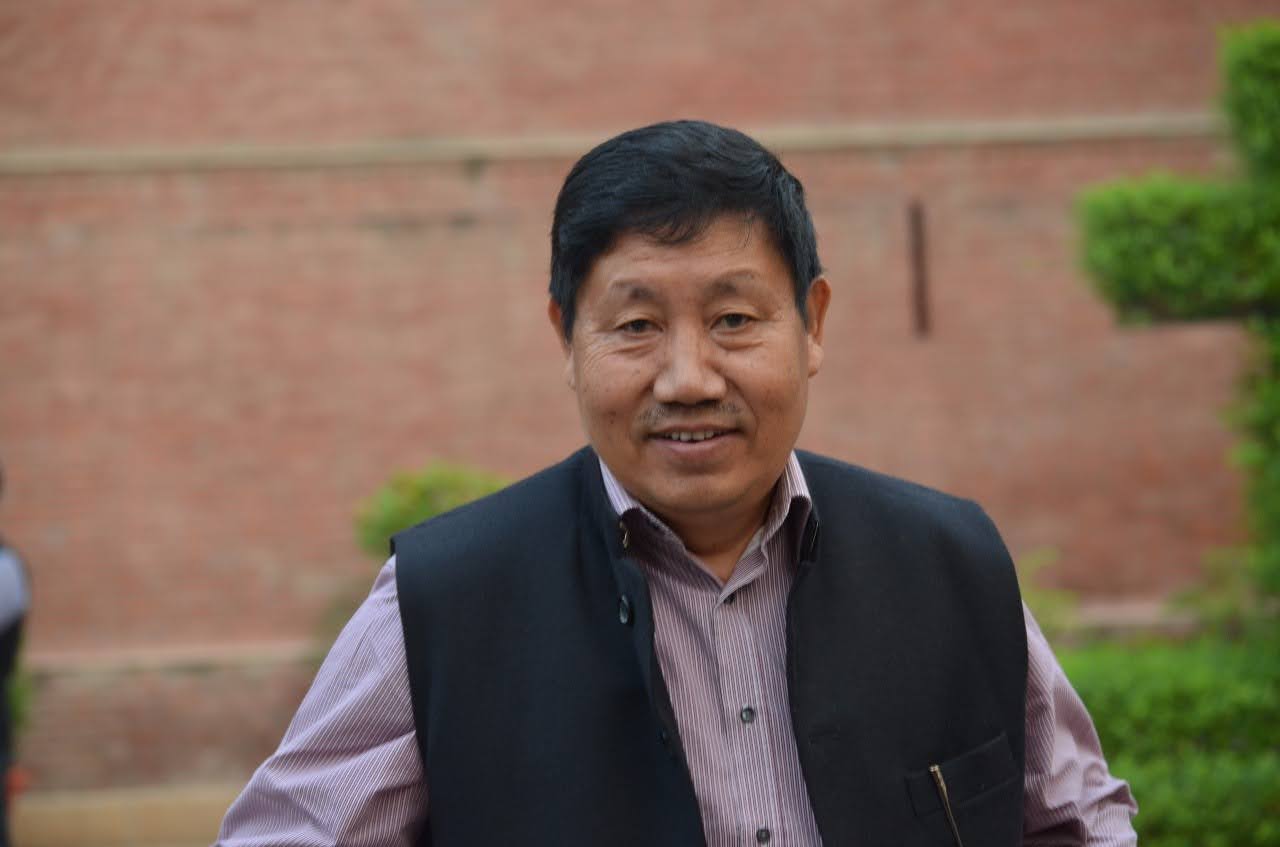
Mani Charenamei, who belongs to the Liangmei Naga community from Senapati district of Manipur, has been politically active from his student days. Having worked in Manipur Forest Department for about 17 years, rising to the position of divisional forest officer, in 2004 Charenamei took voluntary retirement to enter politics. He contested as an independent candidate and was elected from the Outer Manipur Parliamentary constituency in the 14th Lok Sabha elections and served as a member of Parliament from 2004 to 2009. During his time as MP, he contributed to the Indo-Naga peace process by lobbying for the cause of the Nagas fighting for the integration of Naga-inhabited areas
The entire Manipur has been divided into buffer zones and people cannot move around even for routine work. What is the life like in these times?
The people of Manipur have been living through an extraordinary crisis. The Meitei-Kuki conflict, which began on 3 May 2023, divided the state physically and psychologically. More recently, since 7 February 2026, the Kuki-Naga conflict has brought fresh insecurity to areas that had remained relatively peaceful.
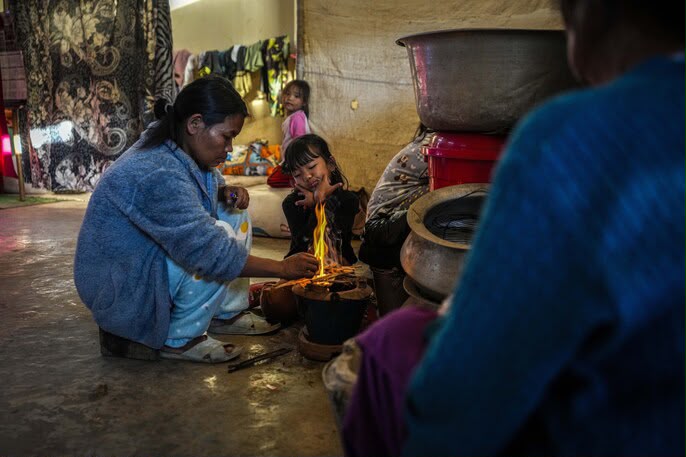
Although some people deny the existence or significance of buffer zones, they are a reality for the people of Manipur. The Imphal valley is effectively separated from the surrounding hill areas by security-controlled buffer zones, many of which adjoin Kuki-inhabited areas. As a result, the free movement of people has been severely restricted. The impact on daily life has been immense. Patients struggle to access medical care, students face disruptions to their education, traders and farmers find it difficult to transport goods, government employees cannot travel freely, and families who once visited one another regularly have been separated. Economic activity has slowed down, transport costs have increased, and fear and uncertainty have become part of everyday life.
In Senapati district and other Naga-inhabited areas, the more recent conflict has created additional security concerns, affecting livelihoods, mobility, and social interactions. The greatest tragedy is that the trust between communities has been deeply damaged. The valley people are not able to travel beyond Kanglatonbi in the north, not beyond Keithelmanbi in the west, beyond Moirang in the south and Yaingangpokpi in the east since the 3 May 2023. The Kukis and Zo communities have not been able to come to the state capital Imphal.
The prolonged ethnic tensions in Manipur have inflicted profound human, social, and economic costs on all communities, underscoring the urgent need for a durable and inclusive peace. Lasting peace must be grounded in truth, justice, and a comprehensive understanding of the historical and contemporary drivers of the conflict. It requires an honest acknowledgment of the underlying grievances of all affected communities and the adoption of credible measures to address the root causes.
One of the main grievances of the Hill people living in Manipur is the conversion of the forests into reserved forests without consulting the people. Given your experience in the forest service, how has this declaration of forests as reserved or protected impacted the hill people in Manipur?
This is a very important question because forests are not just ecological assets in Manipur — they are also the source of livelihood, identity, and cultural heritage for many indigenous communities living in the hills. It is true that many hill areas have lagged behind in infrastructure such as roads, healthcare, education, and other public services. At the same time, forest conservation is essential. The challenge has always been to strike a balance between environmental protection and the customary rights of indigenous communities.
One of the major concerns has been the notification of Reserved and Protected Forests without adequate consultation with the local communities who have traditionally owned, managed, and depended on these forests under their customary laws. From my experience in the forest department, I believe conservation cannot succeed through legal notification alone. The long-term protection of forests depends on the trust, cooperation, and active participation of local communities. Protecting forests and protecting the rights and livelihoods of indigenous people should not be seen as competing objectives; they should go hand in hand.
In what way can this imbalance between the hills and the valley be put right?
The development imbalance between the hills and the valley can only be addressed through a combination of policy reforms, equitable resource allocation, and institutional strengthening.
Firstly, for major infrastructure projects, establishment of important centrally sponsored institutions in remote hill areas is required. Secondly, there is a need to strengthen grassroots governance in the hill areas. At present, two distinct systems of local self-government exist in Manipur. In the valley, where the Manipur Land Revenue and Land Reforms Act 1960 is operational, the Panchayati Raj institutions function with full constitutional backing under Part IX of the Constitution. In contrast, the hill areas are administered through the Autonomous District Councils (ADCs), which do not enjoy the constitutional safeguards. Article 371-C should be amended to provide constitutional mandate to the existing ADCs to empower them, perhaps under the provisions of the Sixth Schedule, which would enable them to plan and implement development programmes more effectively, while also protecting the customary rights and interests of the indigenous communities.
Ultimately, the objective should be to reduce the development gap between the hills and the valley through inclusive governance, equitable investment, improved connectivity, better healthcare and education, and stronger local institutions.
You were a member of the Committee on rural development and also involved in the debates on the amendments to the Land Acquisition Act. What are your concerns about land acquisition in Manipur?
My primary concern regarding land acquisition in Manipur is the disparity in the valuation of land between the hills and the valley. Land in the hill areas has often been assigned a much lower monetary value than land in the valley. For many tribal communities, land is not merely a marketable asset; it is closely linked to their identity, customary institutions, livelihoods, and way of life. Therefore, compensation based solely on prevailing market value may not adequately reflect the true value of the land.
Coming to the recent events, in 2023, Nagas and Kukis were jointly fighting against this lack of development in the Hills under the ATSUM and now three years later there is so much bitterness and violence between them. What has changed between 2023 and 2026?
The developments between 2023 and 2026 are indeed tragic and deeply unfortunate. In 2023, many tribal organisations, including representatives of both the Naga and Kuki communities, found common ground on issues relating to the development of the hill areas, protection of tribal rights, and concerns over governance. Those were shared concerns that affected many communities living in the hills.
However, shared interests on one set of issues do not necessarily eliminate long-standing historical, political, territorial, and security-related differences. Over time, these underlying differences appear to have resurfaced and intensified, resulting in mistrust and, ultimately, violence. Once violence begins, it creates a cycle of fear, retaliation, displacement, and further mistrust, making reconciliation increasingly difficult.
In my view, this is a reminder that temporary alliances on common issues cannot substitute for sustained political dialogue, mutual respect, and institutional mechanisms for resolving differences peacefully. Lasting peace requires continuous engagement even when communities disagree on important matters. The greatest tragedy is that ordinary people on all sides have suffered the most.
Can we look at the larger question of why there is this growing violence and political instability in Manipur?
The violence and political instability in Manipur cannot be explained by any single factor. It is the result of a complex interplay of historical, political, social, economic, and security-related issues that have accumulated over many decades
When communities believe that they are being left behind or treated unequally, grievances tend to deepen over time. I also believe that governments must be proactive in identifying and addressing emerging tensions before they escalate into conflict.
The people of Manipur are living within limited land and natural resources. As population grows and competing demands increase, these pressures can intensify if they are not managed through transparent laws, equitable development, and mutual understanding. Ultimately, the solution lies not in viewing the challenges through the lens of one community alone, but in building trust among all communities.
Every community in Manipur has legitimate aspirations and genuine concerns. Only by addressing both the underlying grievances and the immediate security challenges can Manipur move towards lasting peace and stability.
How has the civil war in Myanmar affected the political situation in Manipur? Can building a wall help solve the problem?
The political instability and civil conflict in Myanmar have undoubtedly had significant implications for Manipur because the state shares a long and porous international border with Myanmar. Whenever there is prolonged unrest across the border, it can lead to multiple challenges, including illegal migration, cross-border movement of armed groups, trafficking of narcotics and weapons, and disruption of border trade and the livelihoods of people living in the frontier areas.
At the same time, it is important to recognise that many people crossing the border may be fleeing violence and humanitarian crises, while others may be involved in unlawful activities. Therefore, it is essential for the government to distinguish between genuine humanitarian concerns and threats to national security, and to respond in accordance with India’s laws and international humanitarian principles.
As regards the proposal to build a border wall or fence, I believe it can be one component of a broader border management strategy, but it is not, by itself, a complete solution. The India-Myanmar border passes through extremely rugged terrain, dense forests, and areas where communities on both sides have long-standing historical, cultural, and familial ties. Physical barriers alone cannot effectively address all the challenges.
Ultimately, peace and stability in Myanmar are in the long-term interest of both Myanmar and India. While India must remain vigilant in protecting its borders and national security, it should also continue to play a constructive role in promoting regional stability and humanitarian cooperation. A secure border, combined with sound diplomacy, effective governance, and strong law enforcement, will be far more effective.






 VIDEO
VIDEO