

Interview | John Shelhan Shilsh
‘What Manipur needs is a leader who enjoys the confidence of every community, someone who is prepared to place the state interest ahead of self’
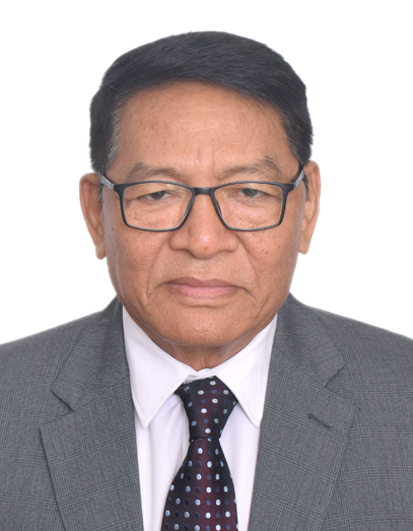
John Shelhan Shilsh, a Naga from Chandel District of Manipur, retired as an officer of the Indian Police Service. Trained in counter-insurgency, he led the elite police commando unit from 1992 to 2000, when the state was experiencing the most violent ethnic clashes. Thereafter, Shilshi served in the ministry of home affairs (MHA) from December 2000 to February 2016 and in the National Security Council Secretariat (NSCS) from 2016 to 2018. He is a recipient of three gallantry medals, a medal for meritorious service, and a medal for distinguished service from the President of India. He is also the author of several books, including Vale of Tears: Untold Stories of Violence in Manipur (2020); From Heemal to Hilton: The Kashmir Story (2022); Manipur’s Experience with AFSPA: Stories of Violence, Impunity, And Insensitivity (2025). In 2008, he edited Bonds Beyond Border, a project of BP Koirala India-Nepal Foundation. He is also the editor of www.necarf.org, an opinion website managed by North East Catholic Research Forum
Manipur has from the time of its merger with the Indian Union not been politically stable. Why has this been so and what are the legitimate grievances of the people?
Historically, the merger of Manipur with the Indian Union in 1949 has to be the basis of this angst against the central government. Though it took time for the Meitei intelligentsia to understand the merits and demerits of joining the Indian Union, what hurt the Meitei sentiment deeply was the manner in which the Maharaja was treated. Patriotic Meiteis felt that Maharaj Bodhachandra Singh was forced into agreeing; therefore, the deal lacked a democratic process.
The fact that the agreement was signed in Shillong, rather than in his palace or any other government office in Manipur, reinforces this perception and has been passed down to the younger generation, making the issue a bone of contention. Valley insurgent groups effectively leveraged this widespread sentiment to gain the support of the people.
But issues like these could have been ignored if there were transparent and people-friendly governments. Although the leaders at that time were generally more honest and serious about the welfare of the people, heavy reliance on businessmen from outside Manipur to govern the state — both during its period as a C category state and after it became a full-fledged state of the Indian Union — was again considered a continuation of the Indian State’s hegemony over Manipur.
The tribal angst is largely against alleged exploitation and discrimination by the Meitei majoritarian government. They see every government as taking advantage of the tribal disunity and manipulating their entitlements even when tribals were the chief ministers. This perception may not be entirely correct, because technically, the tribals also have people as their representatives in the governments who are supposed to safeguard tribal interests. But the exploitation is real, and tribal representatives have not always acted in the best interest of their communities.
The response of the State has been to use military force to quell even legitimate protests by the people. President’s rule, extra-judicial arrests, detentions and even killings have been common. Do you think this inability to deliver justice had an impact on the security situation in Manipur?
Our counter-insurgency policy is flawed. When the Armed Forces (Assam and Manipur) Special Powers Bill was debated in the Parliament in 1958, the then Union home minister, G.B. Pant, gave the impression that the bill, even if it becomes a law, will not affect the functioning of the state administration. But once the AFSPA 1958 became a law, that assurance didn’t hold. The Indian Army and other central forces not only exploited the draconian sections of the act in respect of search, arrest, or even killing, they took full advantage of the immunity provided under Section 6 of the Act to escape the law from criminal liabilities.
In other words, they understood the law as a sweeping power given to forces and never went beyond provisions in Sections 4 and 6. In fact, Section 5 of AFSPA itself says, ‘Any person arrested and taken into custody under this Act shall be made over to the officer in charge of the nearest police station with the least possible delay, together with a report of the circumstances occasioning the arrest.’ But this provision is rarely followed in the field. The magistrate and the police, whose authority the then home minister said, shall not be undermined, are often sidelined by the army.
The blanket immunity that the forces enjoy under Section 6 of the Act encourages killing with impunity. We saw this pattern in the case of Daniel and Paul, the massacre in a volleyball field in Heirangoithong, murders committed during Operation Bluebird, the RMC gate carnage, the deliberate shooting down of helpless civilians in Tonsen Lamkhai, the Malom massacre, and the staged killing of Manorama Devi.
But should the blame only go to the men on the ground? Doesn’t the system also encourage such extra-judicial killings through enactment of such a draconian law? In a state like Manipur, where discontentment level is so high among the public, these thoughtless actions of the security forces fuel further alienation.
You mentioned the reluctance of the judiciary to deliver justice. In my opinion this is one of the key reasons why people are losing faith in the system. Apart from the Oinam incident victims, take the case of 14 March 1984 Heirangoithong killings, in which 13 innocent civilians were gunned down by the Central Reserve Police Force (CRPF). Until last year, the court had not even compensated the victim’s families or punished the culprits.
.jpeg)
Also, the blanket protection given to members of the forces under Section 6 of AFSPA reduces the spirit of investigation. My experience has been that even when a member of the force grossly violated human rights, including killing, the police officers showed no interest in the investigation of the cases because they knew no sanction would be accorded to prosecute the accused.
Is the violence of 2023 and 2026 substantially different from previous incidents of violence in terms of causes and challenges before the State in dealing with it? You dealt with the Naga-Kuki clashes in the Nineties. Are the Meitei versus Kuki-Zo clashes in 2023 and the Kuki-Naga clashes in 2026 different?
The state has failed the people in the way it handled the law and order situation in May 2023. The inaction of the state, or should we say the reluctance of the state to handle the situation firmly from the very beginning, has cost many human lives and prolonged the agony and hardships of every community in Manipur, including the Nagas, who were neutral at that point.
Manipur is a land of many aspirations with conflicting compulsions and interests. Therefore, we have had instances of ethnic confrontations in the past as well. But we have never witnessed a failure of this magnitude, particularly in Imphal West, Imphal East, Thoubal, and Bishenpur districts where mobilising forces to tackle serious law and order situations are much easier in comparison to the hill districts. We must not forget, whenever the administration showed sincerity, the indomitable human spirit served as force multiplier.
For example, in May 1993, the Meitei-Pangal conflict sparked off due to some unforeseen incident in Lilong, a Muslim-majority locality in Manipur valley. In Meitei-dominated areas, rumours spread like wildfire about the brutal murder of Meitei boys by the Pangals. Street urchins promptly took advantage of the sensation and began to attack any Muslim on sight. By the time the police organised themselves, over 100 people were killed. The police had to patrol the areas where the Meitei and Pangal communities live next to each other round the clock. It was a nightmare for the police, because we have never handled a situation of that nature in the past.
While priorities were given to areas with bigger population, smaller Muslim villages were left with a skeleton deployment of policemen. Some were even left to fend for themselves. Hiyangthang, a Muslim village, was one of them. With the intention of confirming the status, we drove towards the village, and upon reaching the approach point, I saw a group of young boys holding iron rods and sticks. But I was surprised to see them stay still even when the police vehicles were approaching them. When I asked what they were doing, they told me they were guarding the Muslim village from being attacked by outsiders. In disbelief, I walked towards the Muslim village and found panic-stricken men, women, and children in a small masjid. A maulvi came forward to talk to me, and when I inquired about their position, he told me that the youngsters of the neighbouring Meitei village had chased away 10-15 miscreants who came to attack their village, and since then, these boys have been guarding their village. I felt insignificant in front of these boys. In the midst of the conflict, there was a Muslim family who hid a Meitei boy in a Muslim-dominated village, Kyamgei, for three days in one corner of their house. The family didn’t bring him out for fear of some miscreants possibly harming him. When one police commando team passed the village, the family quietly handed him over to the sub-inspector leading the team. There was another case of a Muslim elderly man who was dragged out from a Thoubal-bound passenger bus in Singjamei Nameirakpam Leikai by some unknown miscreants. But the local youth swiftly intervened and took custody of him. He was later safely handed over to the police.
In the 2023 incident, there were several stories of lives being saved; for example, I know of a Meitei family that hid a Paite boy in an empty Sintex water tank on their roof for three days. On the fourth day, they walked him past Kangvai village and helped him reach Churachandpur, risking their own lives, as their community could have attacked them for protecting a man from a rival group. Likewise, when Meiteis fled Churachandpur town, one middle-aged man, who was in a drunken condition, was left behind in one of the localities of Churachandpur. His Zomi neighbour hid him inside an unused granary for over a week. His family members concluded he was gone for ever, but he showed up at his relative’s house after eight days. These stories emerged not because who bravely saved others boasted about their actions, but because they were quietly shared by the individuals who were rescued. I feel that the intention to end the conflict was lacking.
As far as the conflict spreading to the Nagas is concerned, I would say it is the consequence of the state delegating community security to the general public. It is incomprehensible how a country with such a large military force could fail to provide security to the general public for such an extended period. All that they did in these three years was maintain the fragile buffer zones. The new government claims that it is trying it best to solve the problem. But how will it do it when its own deputy chief minister cannot function from an office in Imphal.
In your book Vale of Tears, you write that in the end the Kuki-Impi and the United Naga Council came together and formed the Committee for the Restoration of Normalcy which did ultimately stop the violence. You also wrote that the general public ‘from both sides had no grudge against each other’, it was only the armed groups fighting against each other. Even today I have seen Naga, Kuki and Meiteis outside of Manipur share accommodation, enjoy meals together but this time the wounds are deeper. Do you agree?
As I mentioned earlier, Manipur is a land of many aspirations while opportunities and resources are few. So, it would be unrealistic to expect a completely conflict-free state at any given time. Despite this, our people have the ability to agree to disagree. I am of the firm belief that had our government been a little more pro-active in providing security to the vulnerable pockets as in the case of the Meitei-Pangal confrontation, the ethnic conflict would have ended much faster and wouldn’t have resulted in so many killings.
One major difference between then and now is that in the present, the state not only failed to provide security to both communities, but it also gave the impression that it was encouraging the carnage. So, instead of talking peace, people from both the communities were spewing venom.
In August 2023, even the security forces were split along communal lines and in one case the police filed a FIR against the Ninth Battalion Assam Rifles. And even now the people are alleging that the security forces are not acting as neutral forces.
Union home minister Amit Shah has assured the nation that he will end the insurgency in Manipur by 2029. Is that at all possible without massive repressive measures including drone bombing?
The government of India has been grappling to solve insurgency problem in Manipur since the Seventies, but the result is there for everyone to see. We can only extend our best wishes to such assurances. But the home minister needs to be sounded a word of caution that any repressive policy will further complicate the already complex situation in the state.
Would you agree that there is a need for a political vision for Manipur rather than ever increasing role being given to intelligence agencies and armed forces?
Apart from political vision, what Manipur needs is a leader who enjoys the confidence of every community, someone who is prepared to place the state interest ahead of self. On the question of intelligence agencies and armed forces’ role, professional advice based on hard intelligence is always useful. However, every intelligence collated and assessed must also incorporate local sentiments. For example, the FMR issue is likely to invite a lot of resistance and may well turn out to be a daunting task to implement unless the government intends to use force and bulldoze through. This situation could have been avoided had intelligence inputs factored peoples’ sentiment and encouraged wider consultation.
Or has sound advice been ignored by the government? We don’t know. Similarly, in respect of armed forces presence, I must say that ensuring security is paramount. And considering the shortcomings in terms of manpower and resources in the state, the presence of central forces to supplement the state security strength is imperative. But past experience shows that the culture of othering by central forces did much harm than good. Unless there is a change of heart in this respect, excessive deployment will still prove to be a disaster.
The small silver lining that I see is, rampant violations of human rights by the security forces have considerably reduced since the Justice Jeevan Reddy-led AFSPA Review Committee recommended repeal of the Act, while the misuse in some form or the other may have continued. A serious rethinking on continuance of AFSPA as a law to counter insurgency is urgently needed.
How are the events in Manipur impacting the rest of the Northeast, as well as the country?
The way Manipur was handled by the state and centre governments in the last three years is a bad precedence. Thousands of weapons said to have been looted from the police still remains unaccounted for. Stolen weapons are bound to proliferate in a region which share international borders with different countries.
While civilians were killing each other, the state police and the Assam Rifles had faced off on several occasion, at times on the verge of pulling triggers at each other. Individuals secretly transported in security vehicles were snatched and killed, while members belonging to outlawed organisations arrested by the security forces were intercepted by the women and freed. Partisan police force even allowed mass raping of helpless girls instead of giving them protection. These are just a few among several failures of the police and security forces — clear signs of system complicity, with leaning towards one side or the other. There were whispers that many of the looted weapons landed in the hands of Pangals (Muslim) gun runners who sold them to the Kuki militants at exorbitant rates. If this is not a national security concern, then what will be? In the region, the Manipur template is showing signs of catching up in Arunachal Pradesh, Karbi Along of Assam, and in Tripura. National security managers need to take note of all these signs.






 VIDEO
VIDEO