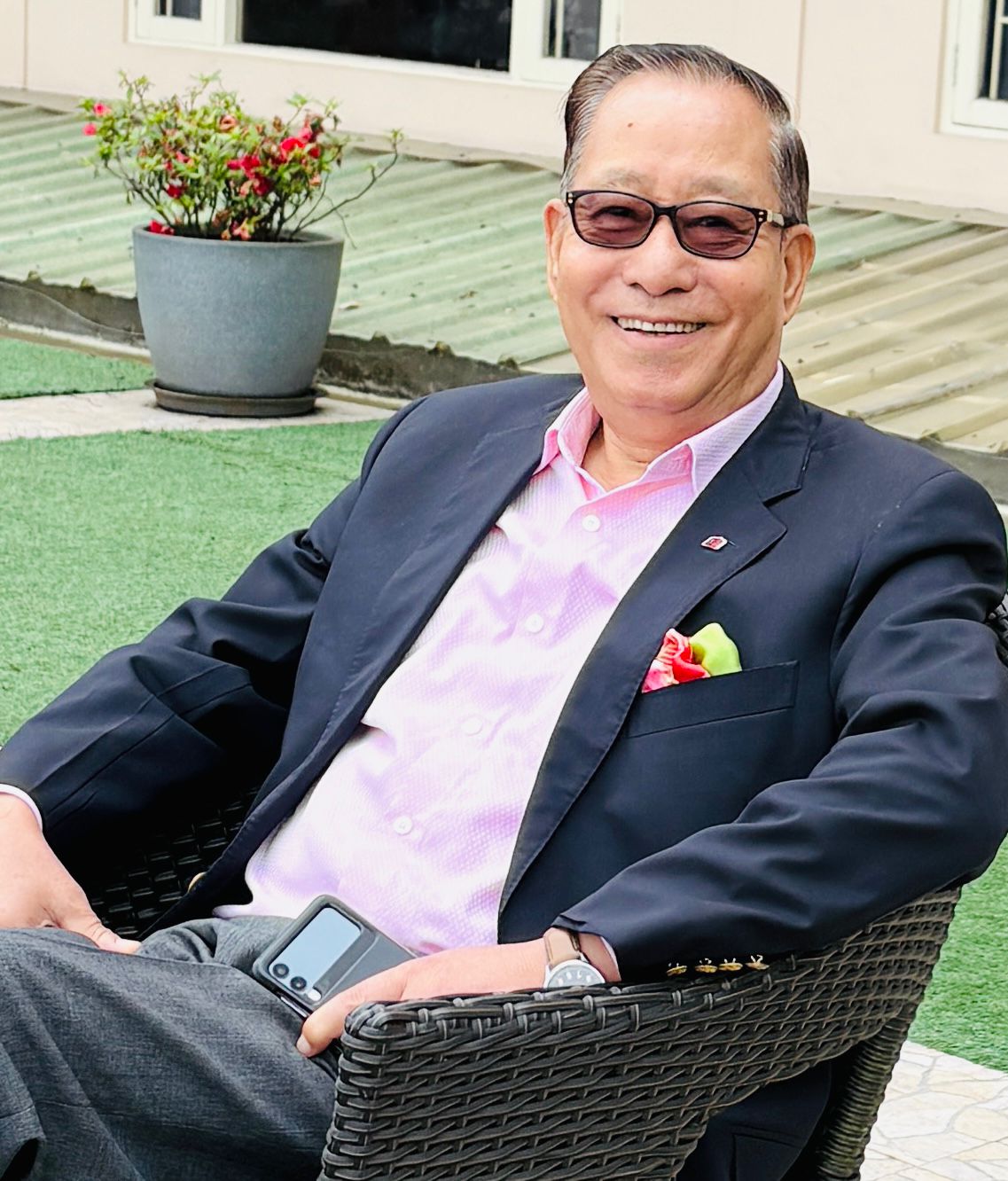
Ramnganing Muivah, member of the Manipur Legislative Assembly (Ukhrul constituency), has served in the Indian Administrative Service (IAS) for over 35 years, with expertise in finance and infrastructure development in both State and Central government. He has served in the ministry of finance, ministry of urban development apart from holding the posts of additional chief secretary, principal secretary and special secretary in the government of Manipur. He retired as secretary North East Council in 2019. In 2022 he was elected as Member of the Legislative Assembly on Naga People’s Front ticket. He belongs to Tangkhul Naga tribe.
Ukhrul district has a long history of insurgency, but in the 2023 violence the Nagas had remained neutral when the clash was between Meiteis and Kuki-Zo. Now, the Ukhrul and Kamjong districts are the centre of much of the violence that erupted at the beginning of 2026.
Ukhrul district is in the north of the Manipur state and is a hill district of the state. It is the home of Tangkhul Nagas with some other communities such as the Kuki and Nepalis also living there. Two further districts have been created out of Ukhrul, which the Nagas say has been done to break Naga solidarity. Tengnoupal district, now called Chandel district, was carved out from Ukhrul district in July 1983, and in December 2016, Kamjong district was carved out from Ukhrul district. Ukhrul district is bounded by Myanmar in the East, Kamjong district in the South, Kangpokpi and Senapati districts in the West and Nagaland State in the North.
He spoke with Nandita Haksar.
Thank you for agreeing to give this interview. I know this is a very stressful time for all of you in Manipur as a whole and especially in the Hill districts of Ukhrul and Kamjong. Before going into the present situation, I would like to have your views on the complaints made by both tribal communities, Nagas and Kuki-Zo people, that Hill districts have been discriminated against by the successive governments in Manipur and at the centre. Would you agree, and can you please give some figures to back the claim of discrimination?
It is a fact that among the hill people in Northeast India, the position of the Manipur hill tribals is the most unfortunate. To put it in perspective, all the hill tribals in Northeast India enjoyed the highest status under the Constitution of India, that is, statehood, starting with Nagaland in 1963, Meghalaya in 1972, Sikkim in 1975, and Arunachal Pradesh and Mizoram in 1987, respectively. Other tribals, including tribals living in the plains of Assam, Bodos, Karbis and Dimasa and hill tribes in Tripura, enjoyed the Territorial Councils under the Sixth Schedule of the Constitution of India. Sadly, the hill tribes in Manipur are denied even local autonomy. The so-called Autonomous District Council in Manipur is a local Act and toothless.
Recently, one retired chief commissioner of income tax submitted his findings to the chief minister of Manipur regarding huge disparity in the budgetary allocation and investment of funds between the valley districts and hill districts; inter alia, the capital expenditure for the valley area in 2024-25 was Rs 5,215 crores, while in the hills it was Rs 378 crores, which constitute 93 per cent and 7 per cent, respectively. And the revenue expenditure in the same period was Rs 22,632 crores in the valley and Rs 4,041 crores in the hills, constituting 85 per cent and 15 per cent, respectively. As a sitting MLA, I have raised these burning issues both inside and outside the Assembly. With malice to none and to be brutally honest, the root cause of the violence in Manipur, apart from demographic imbalance and drug trafficking, is the absence of power sharing and spirit of accommodation in Manipur.


 VIDEO
VIDEO