The gradual increase in presence of extra-regional maritime forces in the IOR is being monitored very closely. As a professional Force, the Indian Navy constantly evaluates the maritime security environment in our areas of interest and caters for any changes by implementing changes in our operational philosophy or capability development plans.
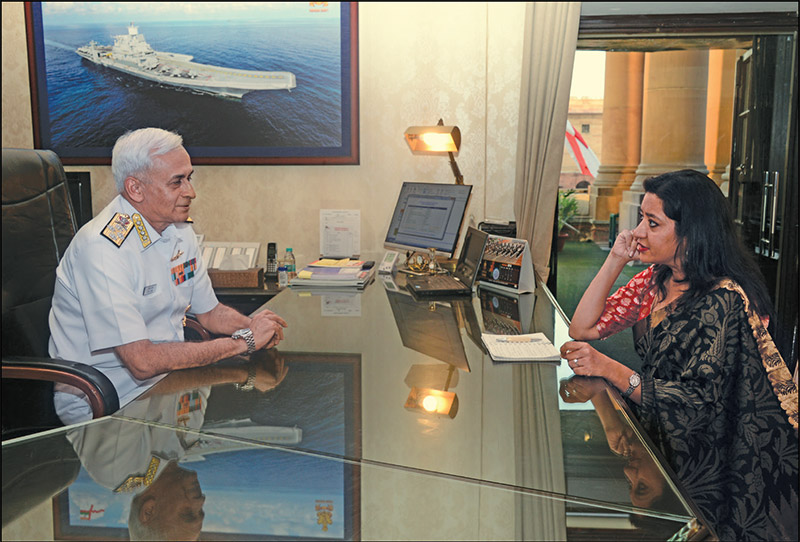
Chief of Naval Staff, Admiral Sunil Lanba speaks to executive editor, FORCE, Ghazala Wahab
Threats and challenges to India’s maritime interests emanate from traditional and non-traditional sources. While addressing the traditional threats, pertaining to state-owned organised military capability will remain the raison d’etre of the navy, non-traditional security threats viz maritime terrorism, piracy, robbery, illegal, unreported and unregulated fishing (IUU), human, arms, drug trafficking etc have necessitated development of a fresh paradigm for maritime security in recent years.
The Indian Navy has consequently embraced a multi-pronged strategy to ensure that our areas of maritime interest remain safe and secure at all times. A potent, balanced and flexible naval force, which maintains persistent presence in vital areas, forms the bedrock of this effort. This force allows the navy to maintain credible deterrence against traditional threats, while enabling prompt and effective response to any non-traditional threat.
India’s rising stature on the global and regional stage is mirrored by the willingness of the government to work collectively with our friends in identifying mutually beneficial solutions to shared problems. In the same vein, the Indian Navy has developed healthy, multi-layered and mutually beneficial maritime cooperation structures with most of our maritime neighbours. We have a shared vision of maritime security and all attempts are made to address these concerns together. We are also actively pursuing maritime security cooperation with friendly nations. These efforts have significantly enhanced our ability to mitigate threats in the maritime neighbourhood.








 VIDEO
VIDEO