Back in the previous decade, the world got its first-ever demonstration of joint forces network-centric warfare (NCW) operations. This was the first time that new-generation common data-links were put to use during Op Iraqi Freedom (OIF) to ensure inter-operability, create common operational battlespace pictures, and increase situational awareness to hitherto unprecedented levels.
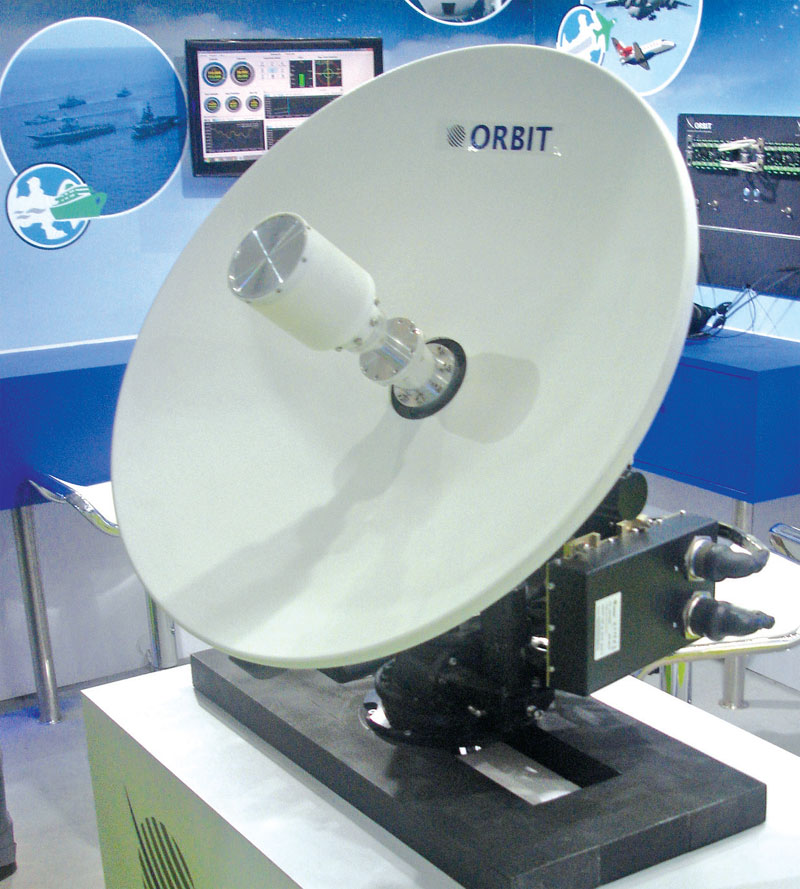
ORBIT-supplied RUKMANI VSATs for Data-Linking
Closing the sensor-to-shooter loops with precision and rapidity differentiated OIF from the German ‘Blitzkrieg’ aerospace-air-land coordination. The various OIF campaigns were precise because all objects were digitised and de-conflicted before an engagement. This was a result of real-time blue and red force tracking through a myriad of sensors integrated using near real-time ODLs. The sensor-to-shooter loops were shorter because the sensors and shooters were tightly integrated through a series of stacked data-links in many cases. A combination of video imagery feeds, situational awareness updates and command-and-control data-links created a real-time collaboration environment for prosecuting all the war-fighting operations in which the environment was highly localised and supported a few nodes (for a sensor-to-shooter system), reflecting a near-optimal pairing of sensors and weapons to target.
In effect, airpower was reinforced; the integration of a myriad of sensors, intelligence analysts, planners and decision-makers using data-links reinforced the effective use of joint forces (army, navy and air force) airpower.
The various types of data-links using Time-Division Multiple Access (TDMA) techniques that were employed during OIF included:
Of these five data-links, the EPLRS played an important role when unleashing fire-assaults (via both ground-based artillery and manned/unmanned aerial platforms) because it was able to display the five closest friendly units within proximity, regardless of the target position. This was critical as the Blue Force Tracker (BFT) provided a non-real-time update of Blue Forces’ position, with refreshes occurring approximately every five to 10 minutes. The information from BFT could not be used to gauge the accurate position of a unit to avoid fratricides. The video downlinks from UAS and target designation pods gave JTACs and SOF units a positive identification of a target. It also enabled the JTACs and SOF units to guide shooters like combat aircraft to the targets. Battle damage assessment (BDA) through the video downlinks was also instantaneous, enabling a faster decision to re-strike if necessary. While EPLRS and video data-links provided the capability for precise and rapid decentralised execution, the suite of CDLs, TCDLs and Link-16 provided the means for integrating intelligence with command-and-control nodes, enabling centralised control and the efficient allocation of resources, such as weapons and sensors to target pairing. Such an increase in the sophistication of data-links enabled integration and operational effectiveness.







 VIDEO
VIDEO