

India’s Eyes in the Sky
Airborne Early Warning Systems in a Contested South Asian Arena
Junaid Suhais
 aircraft attached to an aviation division of the navy under the PLA Southern Theater Command takes off for a patrol mission.jpeg)
FORMIDAbLE CAPAbILITY A KJ-500 airborne
early warning (AEW) aircraft attached to an aviation
division of the navy under the
PLA Southern Theater
Command takes off for a patrol mission
Airborne Early Warning (AEW) and Airborne Warning and Control System (AWACS) aircraft are critical force multipliers in modern air warfare, providing an indispensable advantage by extending detection ranges, enhancing battlespace awareness, and enabling network-centric operations.
In the complex geopolitical landscape of South Asia, characterised by persistent tensions and rapid military modernisation, India’s investment in AEW capabilities is directly proportional to its strategic ambitions and defensive requirements. The operational importance of these platforms gained sharp focus during the 2025 India-Pakistan confrontation, dubbed Operation Sindoor, where the role and survivability of early warning assets became a subject of intense scrutiny and claims.
AEW and the Mechanics of Air Superiority
AEW systems fundamentally transform the battlespace by delivering comprehensive and layered surveillance, command, and control capabilities. Their primary function is to detect and track airborne and surface targets over vast distances, significantly beyond the range of ground-based radars or tactical fighter radars.
Sensor Fusion: AEW platforms integrate data from multiple onboard sensors, primary radar, Identification Friend or Foe (IFF), Electronic Support Measures (ESM), and Communication Support Measures (CSM), to create a fused, coherent operational picture. This sensor fusion dramatically improves target classification, reduces ambiguity, and enhances the overall situational awareness for commanders and pilots. The Netra Mk1, for instance, includes AESA radar, IFF, ESM, and CSM capabilities.
Network-Centric Warfare (NCW): AEW aircraft serve as vital nodes in network-centric warfare architectures. They act as ‘flying command centres’, linking fighters, ground-based air defence systems, and naval assets through secure data links and satellite communication (SATCOM) systems. This connectivity accelerates the ‘sense-decide-act’ kill chain, allowing for rapid sharing of target information, coordinated intercepts, and dynamic battle management. Interoperability with AWACS, other AEW&C aircraft, fighters, and ground exploitation stations is ensured via data links.
Airspace Dominance: By providing long-range detection, AEW systems enable air forces to establish and maintain air superiority. They can identify incoming threats, from aircraft and missiles to drones, at extreme ranges, giving friendly forces crucial warning time to scramble interceptors, activate air defences, or execute pre-emptive strikes. The ability to detect low-flying or stealthy targets that ground radars might miss further solidifies their role in air defence.
Maritime Theatre Implications: For naval operations, AEW capabilities are indispensable. Dedicated naval AEW platforms, such as the Kamov Ka-31, provide critical over-the-horizon surveillance for carrier battle groups, detecting surface vessels and airborne threats far beyond the ship’s radar horizon. Future indigenous naval AEW solutions for carrier decks are envisioned with 360-degree horizontal coverage and air-to-air/air-to-surface modes, detecting targets up to 300 km.
Kill-Chain Acceleration: The ability of AEW systems to provide real-time, comprehensive intelligence directly translates into an accelerated kill chain. By reducing the time from detection to engagement, they significantly increase the effectiveness of offensive and defensive air operations, optimising weapon allocation and improving mission success rates.
India’s AEW Evolution
India’s journey in airborne early warning development reflects a strategic shift from reliance on foreign acquisitions to a concerted effort towards indigenous development and self-sufficiency.
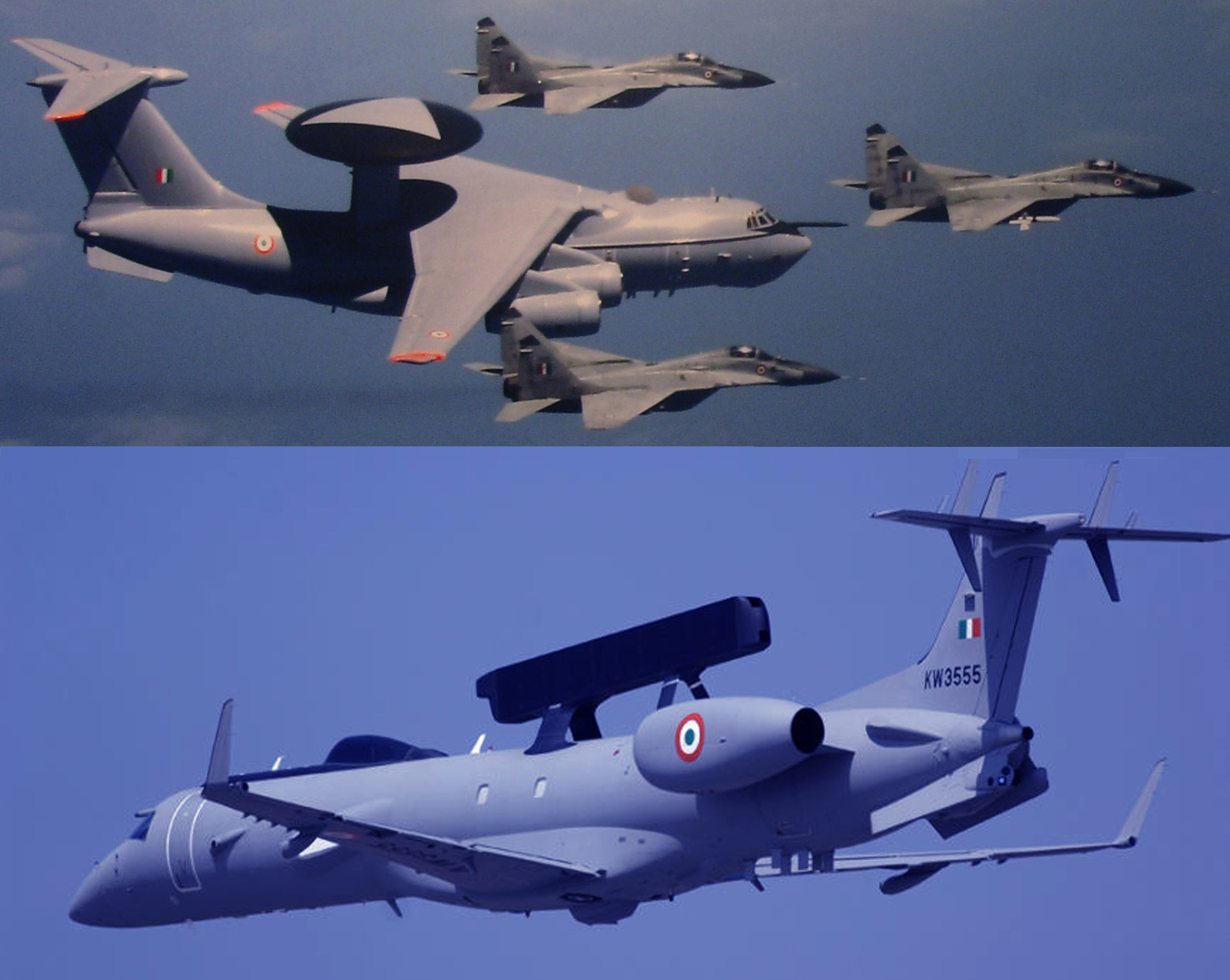
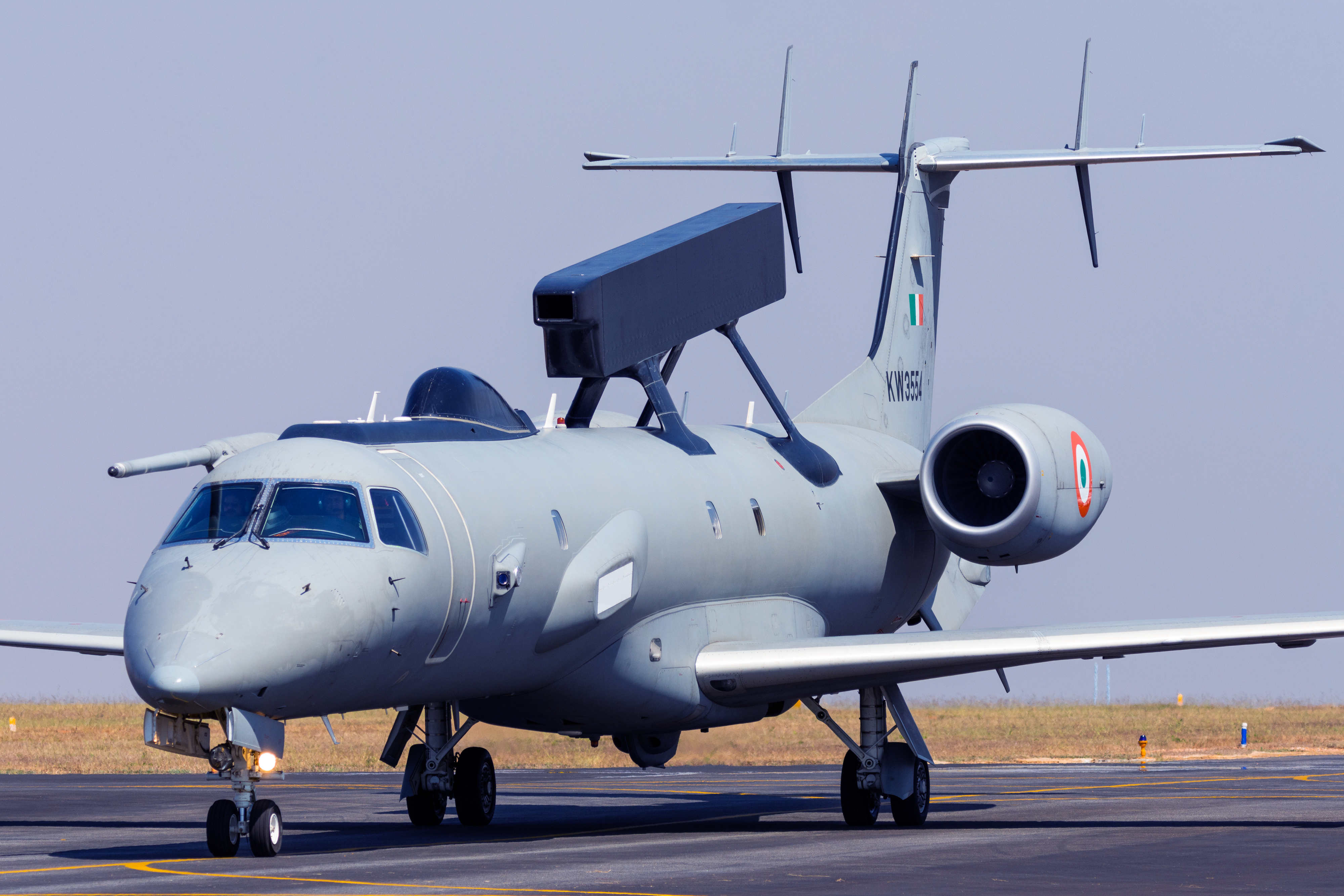
CLOCKWISE FROM TOP LEFT IAF’s A-50I PHALCON; IAF’s EMB-145I Netra AEW & CS; ZDK-03 Karakoram Eagle KE-3 AEW & CS of Pakistan Air Force
• Early AWACS Acquisition (Phalcon): India’s initial foray into high-end AEW capabilities began with the acquisition of the A-50EI Phalcon AWACS from Israel and Russia. Based on the Ilyushin Il-76 platform and integrated with the Israeli EL/W-2090 AESA L-band radar, these systems provide 360-degree coverage with a detection range of over 400 km. The first of three units entered service between 2009 and 2011. While formidable, this fleet has reportedly faced availability and maintenance challenges, highlighting the vulnerabilities of complete foreign dependency.
Subscribe To Force
Fuel Fearless Journalism with Your Yearly Subscription
SUBSCRIBE NOW
We don’t tell you how to do your job…
But we put the environment in which you do your job in perspective, so that when you step out you do so with the complete picture.






 VIDEO
VIDEO