

Indian Armed Forces Contingent Leaves for Joint Military Exercise Kazind-2026
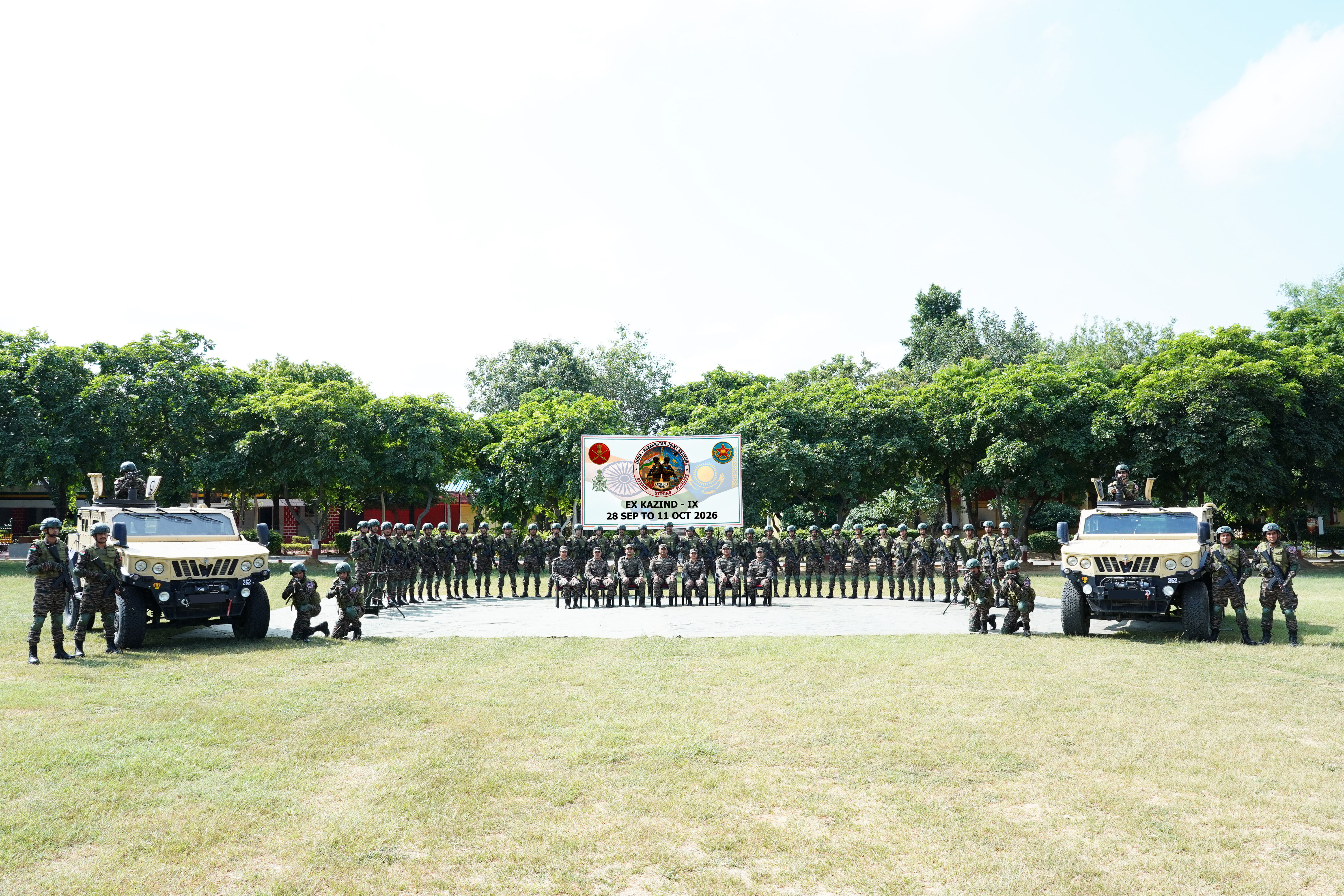
A
60-member Indian Armed Forces contingent is in Oskemen, Kazakhstan, to
participate in the ninth edition of the India–Kazakhstan Joint Military
Exercise Kazind, scheduled to be conducted from 28 September to 11 October
2026. The Indian contingent is drawn mainly from a battalion of the Garhwal Rifles,
along with troops from other arms and services, and personnel from the Indian
Air Force (IAF). The Kazakhstan Armed Forces will field a contingent of
matching strength, comprising primarily personnel from its Land Forces.
The
exercise aims to enhance interoperability and strengthen the joint capability
of both forces to undertake joint counter-terrorism operations in a
sub-conventional environment under a United Nations mandate.
Kazind-2026
will focus on joint counter-terrorism operations in semi-urban and mountainous
terrain, with an emphasis on joint planning and execution, air mobility and the
integrated employment of Unmanned Aerial Systems (UAS) and Counter-UAS
capabilities. The participating contingents will train together in joint
responses to terrorist actions, raids, search-and-destroy missions,
cordon-and-search operations, the securing of helipads and landing sites, and
Special Heliborne Operations, among other activities.
The
exercise will also involve the establishment of a joint command post and an intelligence
and surveillance centre to facilitate coordinated planning and execution. The
training will culminate in a comprehensive validation exercise wherein both
contingents will jointly apply rehearsed tactics, techniques and procedures
against a simulated terrorist threat.
Exercise
Kazind-2026 will provide an opportunity for both sides to benefit from each
other’s operational experience while strengthening professional bonds, mutual
trust and camaraderie. The exercise will further deepen military-to-military
cooperation between India and Kazakhstan and reinforce the shared commitment of
both nations towards regional peace, stability and collective security.


 VIDEO
VIDEO