Every one person in 88 is a refugee in the world. At least 89.3 million people around the world have been forced to flee their homes. Among them are nearly 27.1 million refugees, around half of whom are under the age of 18. There are nearly five million people seeking asylum, wanting to be officially recognised as refugees.
Who is a refugee?
The 1951 Refugee Convention defines a refugee as ‘someone who is unable or unwilling to return to their country of origin owing to a well-founded fear of being persecuted for reasons of race, religion, nationality, membership of a particular social group, or political opinion.’
A refugee is someone who had a home, a family, many times had a good job and a future to look forward to until one day his or her country is engulfed in violence, deadly conflicts and even wars. The person may become a target because he or she belongs to a particular ethnic community or has taken a political stand which has become so dangerous that it could land the person in jail or perhaps tortured and detained. There is no choice but to escape, often with nothing except the clothes he or she is wearing and usually without legal documents. Many times it is just too dangerous to have any identity paper so the person cannot carry any travel documents, not even an identity card.
The refugee crosses international borders without travel papers and since he or she does not have a passport or visa, their entry is illegal. If it was not for refugee laws, they would be classified as illegal migrants. Sometimes, they have to rely on human traffickers to take them across borders and sometimes they take dangerous boat rides across seas or walk across mountains and deserts only to be pushed back or detained.
The United Nations Convention for refugees passed in 1951 is still the basis of refugee protection laws around the world, even in countries like India which are not signatories to the convention. Despite all its imperfections it is the only legal protection that refugees have. Now even that mechanism is being dismantled, just when the world is faced with an unprecedented refugee crisis.
Refugee Crisis
The refugee crisis became the focus of media attention in 2015 when an estimated 1.3 million people, men, women and children arrived at the borders of Europe seeking asylum. It was the largest number of refugees since World War II. Those requesting asylum in Europe in 2015 were mostly Syrians, but there were also a significant number of Afghans, Nigerians, Pakistanis, Iraqis and Eritreans.
Refugee protection laws and mechanism have been undermined by changes in the laws designed to discourage refugees from entering Europe. In 2016, Sweden began issuing three-year residence permits to recognised refugees instead of permanent residency. The same year Denmark passed a law permitting the police to confiscate valuables like jewellery and cash from refugees.
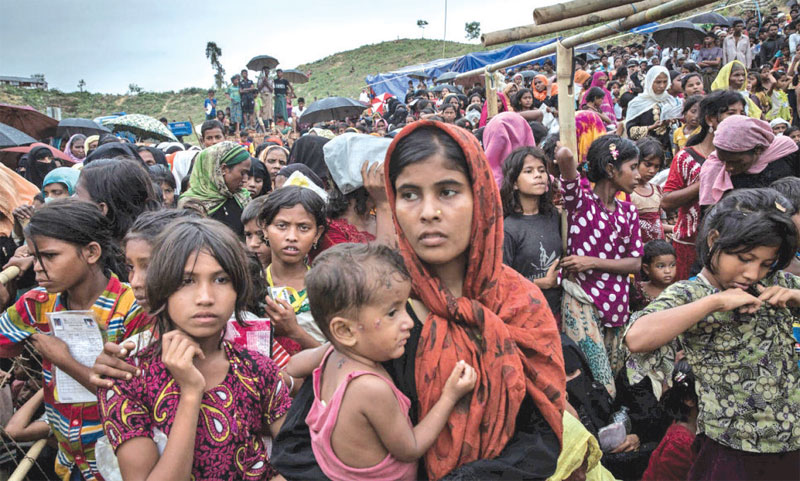
Rohingya refugees
Long before the refugee crisis of 2015, many countries had put in place laws and mechanisms that clearly violated all norms of international humanitarian and refugee law. For instance, in 2001, Australia’s offshoring asylum programme specifically targeted migrants arriving in Australian waters by boat. Asylum seekers have been taken to offshore detention centres in Papua New Guinea’s Manus Island and the South Pacific island nation of Nauru for their claims to be processed. However, the claims are not processed for years.


 VIDEO
VIDEO