The modern battlefield is characterised by high-technology and the one area that the Indian Air Force (IAF) has traditionally held an advantage over the Chinese People’s Liberation Army Air Force (PLAAF) is aerial weapons. The poor performance of Russian air-launched weaponry in the ongoing conflict with Ukraine will also be a source of worry for the PLAAF. In-fact, the conflict has proved a stunning vindication of western military equipment and training, even when provided to a numerically smaller force.
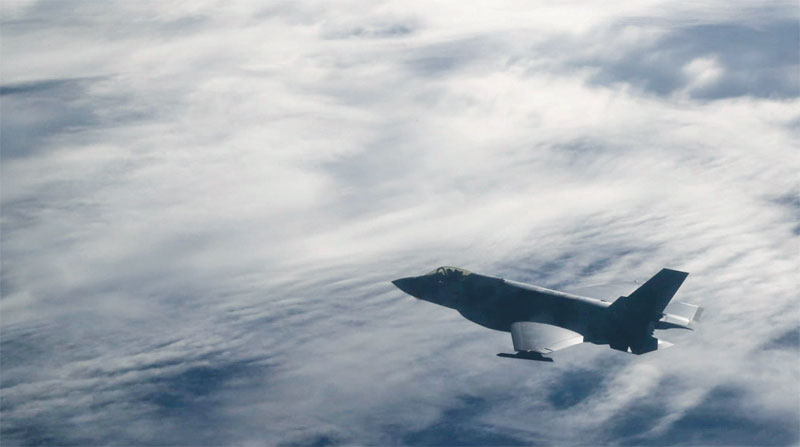
AIM-9X Sidewinder
While the IAF is still largely equipped with Russian air-to-air missiles (AAM) in the R-27, R-73 and R-77 families, it also has western AAMs in the European firm MBDA’s Meteor Beyond Visual Range Air-to-Air Missiles (BVRAAM) for the Rafale, the MBDA’s Missile d’Interception et de Combat Aérien (MICA) for the Rafale and upgraded Mirage 2000 I/TI and Israeli firm Rafael’s Derby and Python AAMs for the Tejas. The IAF has also selected the MBDA’s ASRAAM as its Next Generation Close Combat Missile (NGCCM) with first use on upgraded Jaguar DARIN III strike fighters. However, the new MICA NG could attract the attention of the IAF.
The MICA is a close-range air-to-air missile for self-defence combat and interception beyond direct sight. It is the only missile in the IAF inventory to be equipped with two interchangeable seekers: one being radio frequency/electromagnetic (EM) for all-weather interception and the other infrared (IR) for covert or self-defence interception. The highly manoeuvrable MICA can also be fired at targets behind the aircraft via a target designation, which is transmitted by the Link 16 datalink from another aircraft. The IR version also acts as an additional infrared standby sensor, which notably enables the carrier aircraft to detect heat sources in flight. The MICA also has an internal multi-target capability. The MICA entered service in 1997 and was designed as a single missile replacement for short-range MAGIC II and medium-range Super 530 D missiles. While the Super 530 D was fitted on IAF Mirage 2000s, the MAGIC II missiles were carried onboard IAF Mirage 2000s and Jaguars. MICA missiles have been exported to over 14 countries worldwide.






 VIDEO
VIDEO