

High on Promises
BRICS nations vow to combat illicit drug trafficking
Subhashis Mittra
The BRICS nations have pledged to prevent and combat illicit drug trafficking and related transnational organised crime. At a recent meeting in Guwahati, Assam, BRICS heads of anti-drug agencies adopted a joint declaration, underscoring the need to enhance the timely exchange of information, intelligence and best practices. The Guwahati Declaration also emphasised the promotion of innovative technologies, digital tools and data-driven approaches to strengthen law enforcement and regulatory efforts against illicit drug trafficking. The document mirrors a unified determination to protect the societies and strike a decisive blow against transnational organised crime.
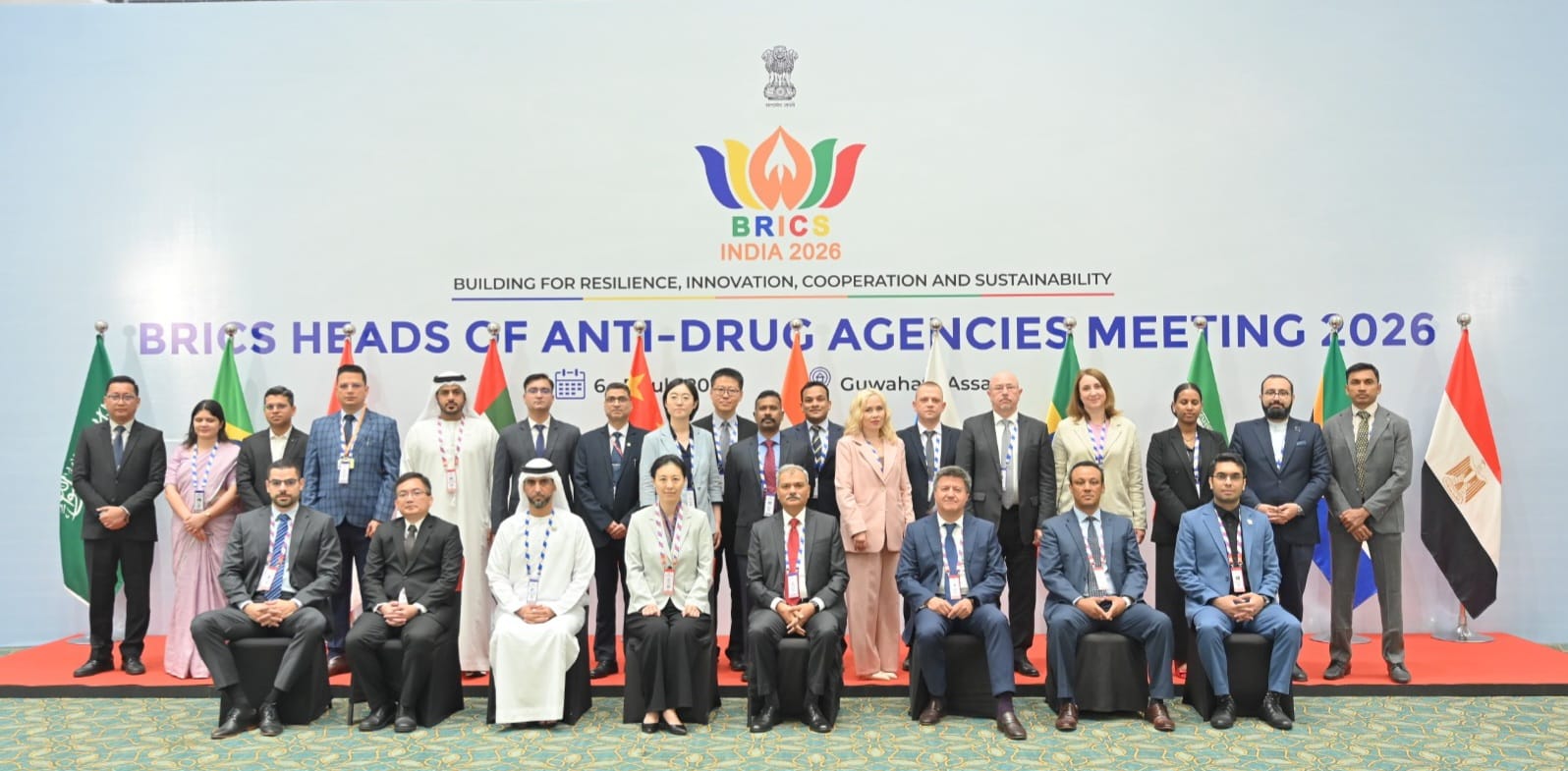
At the two-day meeting (6-7 July 2026), the BRICS countries voiced concern over the evolving nature of illicit drug trafficking, proliferation of synthetic drugs and New Psychoactive Substances (NPS), diversion of precursor chemicals, misuse of emerging technologies and virtual assets and exploitation of maritime routes and digital platforms by transnational criminal networks. The member countries underlined the need to strengthen specialised initiatives for drug demand reduction, promote healthy lifestyles and safeguarding those in vulnerable situations, particularly children and youth, through evidence-based, comprehensive and people-centric approaches.
During the meeting, India called upon BRICS drug law enforcement agencies to build a partnership founded on speed, mutual trust and seamless real-time intelligence sharing that transcends borders and enables decisive action against transnational drug syndicates. Leading the Indian delegation, director general (DG), Narcotics Control Bureau (NCB), Anurag Garg highlighted that India has adopted a zero-tolerance policy against drugs and a three-year roadmap (2026–29) based on a network-centric approach. The strategy focuses on dismantling entire criminal networks, preventing drug abuse through mass awareness campaigns and strengthening treatment, de-addiction, and rehabilitation measures.
Highlighting the hyper-connected and jurisdiction-less nature of 21st-century drug trafficking, the DG NCB observed that national anti-drug agencies have to make networks to break these transnational drug-trafficking nexus. He called upon the BRICS nations to carry forward the spirit of the Guwahati Declaration and work collectively towards the shared objective of a drug-free world. He highlighted India’s proposal of setting up a BRICS Virtual Working Group and enhanced cross-border training initiatives.
“Emergence of modern, highly sophisticated methods of trafficking has turned what was once a localised problem into a hyper-connected global threat,” Garg said, setting the tone for the key event that had three priority areas—combating synthetic drugs and precursor diversion, strengthening intelligence sharing and operational coordination, and capacity building and institutional cooperation, high on its agenda.
Underlining the role of BRICS in addressing the challenge, Garg said, “I propose the establishment of a dedicated BRICS Virtual Working Group to address these rapidly evolving trends. This mechanism would serve as a vital platform to meet regularly, exchange real-time intelligence, analyse shifting trafficking patterns, and seamlessly coordinate joint law enforcement operations,” he said, stressing the need to build the capacity of frontline officers through specialised cross-border training initiatives and continuous sharing of best practices among member agencies.
“Together, as an expanded BRICS family, we possess the collective strength to truly change the world and turn the vision of a drug-free society into a reality,” the NCB DG added, as he highlighted the expansion of the bloc to become one of the greatest and most influential collaborations at the global level.
Cautioning that the world today faces an aggressive narcotics landscape, Garg said, “The reality of 21st-century drug trafficking is stark. Criminal networks do not respect borders, they do not recognise sovereignty, and they do not wait for bureaucratic clearances.” To defeat these syndicates, law enforcement agencies must operate with a level of agility, mutual trust and seamless, real-time cooperation that cuts through traditional barriers, he said, and asserted that enhanced collaboration is no longer just a policy choice; it is an absolute necessity for our collective survival.
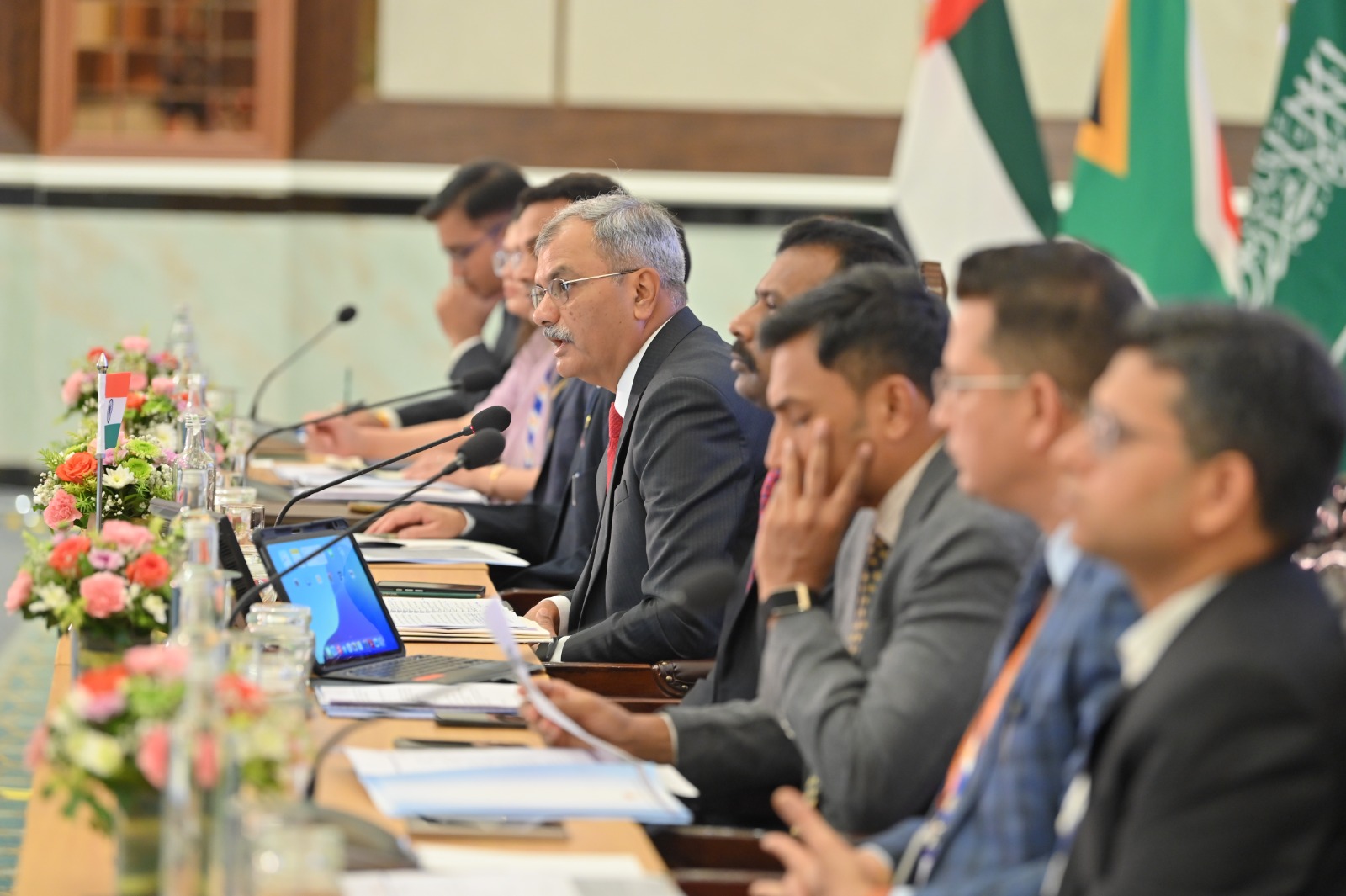
On India’s fight against drugs, the top official asserted that an unyielding, comprehensive zero-tolerance policy against narcotics has been institutionalised. For India, ‘zero tolerance’ means the complete disruption of trafficking networks, financial starvation of drug syndicates through asset forfeiture and the seamless integration of our state, national and international intelligence agencies under a unified government approach. Garg also underlined the country’s restorative attitude towards victims of drug abuse by rejecting the view that addiction is a simple law-and-order failure.
“We have established a futuristic model centred on harm reduction and holistic recovery, recognising victims as citizens who must be guided back to a productive life. By anchoring high-tech law enforcement alongside community-based healing, we are not just disrupting the drug trade; we are healing our social fabric and securing the future of our youth,” he maintained.
During the closed-door brainstorming sessions, the member nations deliberated on the prevailing drug situation in their respective countries and participated in thematic sessions focusing on pressing and emerging global challenges. The discussions covered key issues, including leveraging digital technology for real-time drug interdiction, countering drug trafficking through the darknet, tackling the growing threat of NPS, and reinforcing global supply chains against precursor diversion and chemical leakage.
To address emerging threats, specialised sessions targeting the exploitation of dark net platforms and digital technologies, the alarming rise of NPS and the critical need to prevent the diversion of precursor chemicals were held. Furthermore, the event dedicated a crucial, standalone session to maritime trafficking. “We know all too well that illicit drugs produced in source countries are increasingly being moved in massive bulk volumes through global maritime routes, polluting international waters to reach every corner of the globe. This reality demands that we move past localised policing and instead forge a unified, aggressive oceanic strategy to secure our maritime borders,” Garg noted.
The meeting provided India with an opportunity to showcase its decisive efforts to combat the drug menace as the abuse of narcotic drugs and psychotropic substances poses a serious threat to public safety and health, and the future of the nation’s youth. Over the past few years, India has significantly strengthened its fight against drug trafficking and substance abuse. While the government is taking stringent action against illicit drug trafficking and the organised criminal networks, it is also placing equal emphasis on awareness generation, community participation and treatment for those affected by addiction. India has recently released the Vision Document on Narcotics Control (2026–2029) to further strengthen institutional capacity in the fight against drugs.
As chair, New Delhi sought to strengthen cooperation through information sharing on clandestine laboratories and emerging synthetic drug trends, enhanced monitoring of precursor chemicals and pharmaceuticals, intelligence exchange, sharing of best practices, joint training programmes and expert exchanges.
India’s BRICS chairmanship in 2026 is guided by the overarching theme, ‘Building for Resilience, Innovation, Cooperation and Sustainability’ and it brought together Brazil, China, Ethiopia, India, Indonesia, Iran, Russia and United Arab Emirates in the meeting of BRICS Heads of Anti-Drug Agencies in Guwahati.
BRICS, initially comprising Brazil, Russia, India, China and South Africa, expanded in 2024 to include Egypt, Ethiopia, Iran, Saudi Arabia and the UAE, with Indonesia joining in 2025. The grouping has emerged as an influential bloc, bringing together 11 major emerging economies that account for around 49.5 per cent of the world's population, about 40 per cent of global GDP and nearly 26 per cent of global trade. In addition to the 11 member-nations, 10 partner countries joined BRICS in 2025—Belarus, Bolivia, Cuba, Kazakhstan, Malaysia, Nigeria, Thailand, Uganda, Uzbekistan and Vietnam.






 VIDEO
VIDEO